Your puppy grabs a sleeve, chases your ankles, and turns a quiet cuddle into a wrestling match. Learning how to stop puppy biting starts with making those moments predictable: pause the action, offer a suitable outlet, and reward the behavior you want next. Puppy mouthing is common, but painful or frightening interactions deserve attention.

Why puppies bite hands, feet, and clothes
Puppies explore with their mouths and practice social play through chasing and grabbing. Moving fingers, swinging sleeves, and shoelaces can become exciting targets. Teething can increase the urge to chew, but not every nip comes from sore gums. Frustration, overstimulation, insufficient activity, and missed rest can also contribute.
Look at what happens just before the biting. Does it begin after several minutes of tug, when someone walks past, or when you reach for a paw? The same action can have different causes. A puppy seeking play needs a different plan from one trying to stop uncomfortable handling.
The AKC guide to puppy biting emphasizes alternatives, consistent responses, and reinforcement. Start by preventing predictable trouble, rather than waiting for every interaction to go wrong.
A seven-step plan for gentler interactions
1. Prepare before play begins
Keep suitable toys near the places where biting happens. Choose one long enough to leave space between your hand and your puppy’s mouth. Set up a puppy-proofed area with a gate so you can separate safely without grabbing your puppy. Put away dangling cords and clothing within reach.
2. Pause calmly when teeth touch you
Stop the game and keep the targeted body part as still as safety allows. Avoid waving, pushing, or repeatedly pulling away. Those movements can turn an unwanted bite into another chase. You do not need to shout or imitate another puppy’s squeal; some puppies become more excited by that sound.
3. Redirect to a suitable toy
When your puppy releases or pauses, present the toy away from your body. Resume a gentle game if they engage comfortably. Better still, offer it before the usual lunge. Do not push a toy into a tense puppy’s face or pry their jaws open to make a swap.
4. Reward a clear alternative
Notice the moments your puppy gets it right: carrying a toy, keeping four paws down, or looking at you without grabbing. Mark the behavior with a quiet “yes,” then offer a small food reward or appropriate play. Practice these choices when your puppy is calm, so biting does not become the only route to attention.
5. Take a brief break if biting continues
If redirection fails, end the interaction and step behind your prepared barrier when safe. A short pause, such as 10–20 seconds, can interrupt ordinary play biting. Return calmly with an easier activity. Do not leave a distressed puppy to panic or repeatedly restart a game they cannot manage.
6. Check needs before repeating
After repeated attempts, stop testing the same situation. Check bathroom needs, access to water, recent meals, activity, and rest. Try a quiet supervised chew or a comfortable resting opportunity. A puppy who is tired may need less stimulation; a rested puppy may benefit from an appropriate game or exploration.
7. Give everyone the same plan
Agree that hands, feet, and clothing are never play toys. Tell helpers which toy to offer and where the barrier is. One person encouraging hand wrestling while another ends play makes the lesson confusing. Keep sessions manageable enough that caregivers can respond calmly and consistently.
For a new arrival, our first-week home routine can help organize care responsibilities and a quieter start.
Stop puppy biting hands during play and petting
Use toys for play instead of letting your puppy chase fingers. Hold a tug toy low, keep the game gentle, and pause before excitement becomes frantic. If teeth repeatedly catch your hand, change the toy or end the game. A longer toy can help, but it does not replace supervision.
For petting, try a brief touch on an area your puppy appears comfortable with, then pause. Let them choose whether to remain nearby. Turning away, moving off, becoming tense, or repeatedly mouthing your hand means the interaction needs adjustment. Avoid reaching over their head again and again to “get them used to it.”
Handling deserves its own practice. Start with a tiny, comfortable step, such as a brief touch near a shoulder followed by a reward. Work gradually toward necessary grooming tasks. If touching a particular area causes biting, stop unnecessary handling and contact your veterinarian about possible pain. Do not practice through distress.
Stop puppy biting feet and ankles while walking
Walking makes feet and pant legs move like chase targets. Carry a toy before entering a trouble spot. If your puppy grabs an ankle, stop moving when safe, wait for release, and redirect away from your legs. Avoid kicking, dragging your puppy along, or running away to escape the game.
Practice separately when your puppy is relaxed: take one slow step, then reward them for staying beside you without grabbing. Add another step only while the exercise stays easy. If they lunge, reduce the challenge. Use a gate to manage busy household traffic while you build this skill.
Children should not be responsible for stopping ankle biting. An adult should supervise closely, interrupt early, and separate child and puppy when needed. If supervision is unavailable, use secure separation. Keep running games away from the puppy, and protect resting and feeding spaces from disturbance.
What to do when your puppy grabs clothes
Stop pulling against the fabric. Tension can create a tug game, particularly with robe belts, sleeves, and loose pant cuffs. Stabilize yourself, keep hands away from the mouth, and invite a trade for an appropriate toy. Once your puppy lets go, create space and restart more calmly.
Temporarily choose clothing without swinging ties and tuck away shoelaces. This reduces rehearsals while you teach better choices. Do not leave loose fabric with your puppy as a substitute chew. If cloth is torn off and swallowed, contact your veterinarian promptly for advice; do not assume it will pass safely.
If grabbing is intense or you cannot disengage safely, prioritize a barrier and professional support over another training attempt. You should not have to endure injury to complete an exercise.
Quick action checklist for common situations
In the moment: steady yourself, stop the movement, allow release, offer an appropriate outlet, and create space if needed. Use the situation guide below to decide what to change before the next interaction.
During play
What to do: Pause, redirect to a longer toy, and resume only while play stays gentle.
Avoid: Hand wrestling or pushing your puppy away.
Grabbing ankles
What to do: Stop safely; practice one-step walking with rewards before the next ambush.
Avoid: Running, kicking, or dragging.
Overtired and frantic
What to do: Check needs and offer a quieter setting and rest.
Avoid: Adding a vigorous game automatically.
Pulling clothing
What to do: Remove tension, trade when safe, and manage dangling fabric.
Avoid: Tugging back or opening the jaws by force.
Biting during handling
What to do: Stop, consider pain or fear, and arrange help when needed.
Avoid: Restraining harder or punishing warnings.
Why puppy biting can get worse at night
Dogs Trust discusses several drivers of mouthing. Evening biting is a pattern to investigate, not proof of one cause. Review the day: interrupted naps, a long outing, exciting visitors, limited enrichment, hunger, or a bathroom need may all affect the evening. Keep a simple note of the time, preceding activity, and what helped your puppy settle.
Try moving stimulating play earlier and creating a quieter wind-down period. Reduce household commotion and offer a suitable chew under supervision. If your puppy cannot settle comfortably, consider whether the environment or routine needs adjustment. Our guide to helping a dog settle at home offers planning ideas.

Teething, chewing, and puppy bite inhibition
Chewing an object and nipping a person are related mouth activities, but they are not identical problems. Teething can make chewing soothing, while social play involves learning how to interact. Redirecting helps provide an outlet; training also teaches what to do around people.
Choose puppy-appropriate rubber chews sized so they cannot be swallowed. Follow the maker’s age and supervision instructions. Inspect toys for damage and remove them if pieces come loose. Avoid very hard objects such as antlers, hooves, and bones that can damage teeth. Ask your veterinarian about suitable options for your individual puppy.
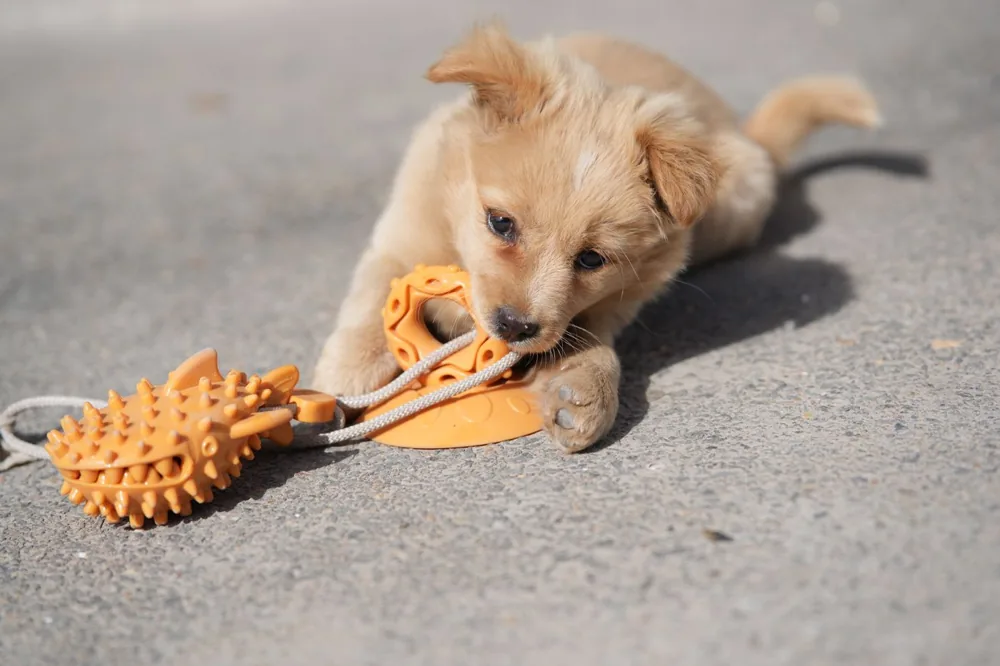
VCA’s teething-toy guidance explains chew hazards. A photograph illustrates an activity; it does not establish that the pictured product is right for every puppy.
Puppy bite inhibition means controlling bite pressure. Puppies begin learning about pressure during social interactions, but that does not mean your hands must become practice equipment. You can set a consistent boundary around teeth on people, reward gentle alternatives, and arrange suitable supervised social learning with professional guidance.
The ASPCA’s explanation of mouthing and bite inhibition provides background. No training exercise guarantees a dog will never bite when afraid, injured, or overwhelmed.
Mistakes that can make puppy nipping harder to manage
- Shouting or repeated “no” commands: these may add excitement without teaching an alternative.
- Hitting, nose tapping, scruff shaking, or holding the mouth shut: these can frighten or hurt a puppy.
- Sprays and startling noises: avoid aversive shortcuts; change the setup and reinforce useful behavior.
- Punishing growling or avoidance: respond to discomfort by creating space and investigating the cause.
- Using a crate as punishment: keep a familiar resting space comfortable and positively introduced.
The AVSAB humane training statement supports reward-based methods. If you need separation, choose a setup your puppy tolerates comfortably; our crate, pen, and bed comparison explains practical differences.
When do puppies stop biting?
Maturation and learning can make puppy biting easier to manage. PetMD’s veterinary behavior guide distinguishes development from learned habits. Permanent teeth are typically present by about seven months, but finishing teething does not automatically erase a practiced habit. There is no reliable birthday or number of training days that guarantees the behavior will stop.
Watch for fewer episodes, easier redirection, and calmer recovery. Compare similar situations rather than judging one difficult evening against a quiet morning. If biting remains intense, causes injury, or is not becoming manageable with consistent support, seek help now instead of waiting for a dental milestone.
Puppy biting vs. aggression: when to seek help
Common play patterns
Loose, bouncy movement and interest in toys can fit ordinary play. Even playful bites can hurt, and appearance alone cannot prove an interaction is safe. Interrupt early and adjust the activity before anyone gets injured.
Arrange veterinary and behavior support
Contact your veterinarian for sudden changes, apparent pain, or biting associated with touching, lifting, or grooming. Also seek qualified help for guarding food or objects, repeated stiffening or freezing, persistent hard bites, or interactions that leave people afraid. Do not test a suspected guarding problem by taking things away.
A veterinarian can assess medical contributors and refer you to a veterinary behaviorist when appropriate. A credentialed trainer or behavior consultant who uses reward-based methods can help with practical management; ask specifically about experience with fear, guarding, and bite cases.
Get prompt care for urgent concerns
Contact an emergency veterinarian for severe injury, breathing difficulty, collapse, or suspected obstruction. People injured by a bite should seek appropriate medical advice. Separate safely and avoid recreating the incident for a video. Share existing observations with the professional instead.

An example daily routine to adapt
This is a planning example, not a prescribed timetable. Adjust meals, bathroom trips, activity, and sleep to your puppy’s age, health, and veterinary advice.
- After waking: offer a bathroom opportunity, then food and water as appropriate.
- During an alert period: try a short toy game and one or two easy training repetitions. Stop before frantic grabbing begins.
- Between activities: provide a comfortable quiet space and watch for rest needs.
- Later: offer suitable exploration or a simple supervised food activity, followed by another break.
- Evening: review needs, reduce excitement, and prepare an easy wind-down.
Build variety with a manageable enrichment menu, and introduce food activities gradually using our puzzle-feeder guide. Remove activities that increase frustration instead of adding more difficulty.
Frequently asked questions
Why is my puppy biting me so much?
Look for a repeated trigger, such as moving hands, long play sessions, or unwanted touching. Several factors can overlap. Record the context so you can change the setup rather than treating every bite as the same problem.
How do I stop my puppy from biting my feet?
Prepare a toy before walking through a trouble spot. Practice calm steps separately, reward success, and use a barrier during busy moments. A puppy cannot learn an easier walking pattern if every trip becomes a chase.
Should I say no when my puppy bites?
A word alone does not explain the alternative. Calmly pause, then guide your puppy toward a toy or another familiar behavior. If saying “no” makes you louder or the puppy more excited, leave it out.
Why does my puppy bite more at night?
Review rest and stimulation across the whole day, plus immediate needs. An earlier break or quieter transition may help. Sudden nighttime distress or an unusual behavior change warrants veterinary advice.
Will my puppy grow out of biting?
Development helps, but repeated habits can persist. Continue teaching appropriate play and protecting people from injury. You do not need to wait until adulthood to ask for support.
How long does puppy biting training take?
There is no universal timeline. Track whether familiar situations are becoming easier. If progress stalls, check consistency, task difficulty, rest, and possible discomfort with a qualified professional.
Is puppy biting a sign of aggression?
It can be ordinary play, but fear, pain, frustration, or guarding may also lead to bites. Assess the full context with professional help when uncertain; one growl, bite, or wagging tail cannot establish a diagnosis.
Make the next interaction easier
Choose your puppy’s most predictable biting situation and change one thing before it happens: put a toy by the doorway, shorten the game, or prepare a quiet break. To stop puppy biting, repeat a calm, consistent response while making appropriate choices easier. Keep a brief record, protect children, and seek help early when safety or comfort is uncertain.
Sources checked October 19, 2026. Household exercises and the example routine are editorial planning aids. This article provides general education and has not received an individual veterinary or trainer review. See our editorial policy.
General guidance does not replace individual veterinary or behavior assessment.