Plan hot weather dog walks for cooler conditions, choose a short accessible bathroom route, carry water, and avoid hot surfaces. Adjust to the individual dog and the conditions that day. No single temperature or walking duration makes every outing safe.
Apartment living adds travel time before the walk even begins. A warm hallway, an elevator wait, and a sunny block between the entrance and the nearest grass can turn a familiar outing into a different task. Your summer plan should include that whole route.
This guide helps you reduce avoidable exposure and organize a practical care routine. It also explains when to contact a veterinarian. It does not provide a universal exercise allowance or replace advice about a dog’s health, medication, or heat tolerance.
Prepare for hot weather dog walks before departure
Check the current forecast and local conditions rather than relying on yesterday’s weather or a usual departure time. Consider humidity, direct sun, wind, and the surfaces along your route. Shade on one block does not establish that the next block will be comfortable.
The AVMA recommends cooler-hour activity, water, breaks, and avoiding hot surfaces. Use those principles to choose a route and time, then continue observing the dog. A plan made indoors is only a starting point.
Identify the shortest practical bathroom destination, an optional shaded route, and a place to turn back early. You should not have to finish a loop to get home. Avoid routes that require a long exposed segment before any shade or water access.
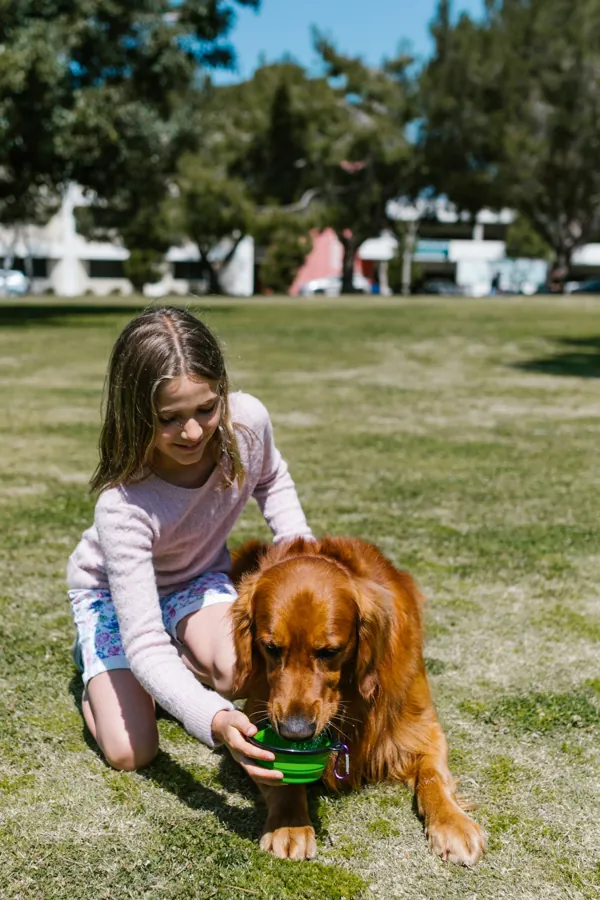
Keep necessary supplies together: secure walking equipment, waste bags, fresh water, a suitable portable drinking container, your phone, and keys. Prepare them before fitting the harness so your dog is not waiting in a warm doorway while you search for a bottle.
Separate bathroom access from a full exercise outing
A dog still needs appropriate bathroom opportunities when a longer walk is unsuitable. Treat those trips as essential care with a short, deliberate route. Do not use the fact that you are already outside as a reason to add several extra blocks.
Move suitable activity to cooler conditions where practical. If the weather remains unsuitable, ask your veterinarian about the dog’s needs and use appropriate indoor engagement. The goal is to maintain care while reducing exposure, not to make up every canceled minute outdoors later.
For example, a household might use a nearby bathroom spot during a warm period and reserve a familiar shaded outing for more favorable conditions. That is a scheduling illustration. It is not a safe duration or a promise that an evening walk will always be suitable.
High-rise residents should account for the trip through the building. Allow time for the elevator and avoid waiting outside in direct sun after the dog has finished. Our high-rise potty-training guide addresses bathroom access delays more fully.
Plan for puppies and changing bathroom needs
A puppy or a dog with increased urgency may need a different arrangement from a settled adult. Discuss outdoor access and any temporary alternative with your veterinarian. Do not withhold water to reduce the number of trips.
If bathroom needs have changed suddenly, contact the clinic rather than treating the problem only as a summer scheduling inconvenience. Record drinking, accidents, and any discomfort so you can describe the change accurately.
Think about the surface under your dog’s paws
Sun-exposed pavement can be much warmer than the air feels. Different materials and patches of shade can create different conditions within a short distance. Avoid hot asphalt and other surfaces that could injure paws; do not depend on an air-temperature cutoff alone.
A brief hand check is not a guarantee that a surface will remain safe throughout the outing. Look for a cooler route and be prepared to return. Footwear also does not turn unsuitable conditions into a safe exercise opportunity.
Watch for hesitation, lifting paws, or an unusual gait. Move away from the concerning surface and seek veterinary advice for pain, redness, injury, or persistent discomfort. Do not force your dog onward because home is “only a little farther.”
Before the hottest part of the season, walk the route without the dog if that helps you assess options. Find where shade actually falls at the times you need bathroom access. This is practical route planning, not a substitute for checking conditions again on the day.
Carry water and make breaks easy
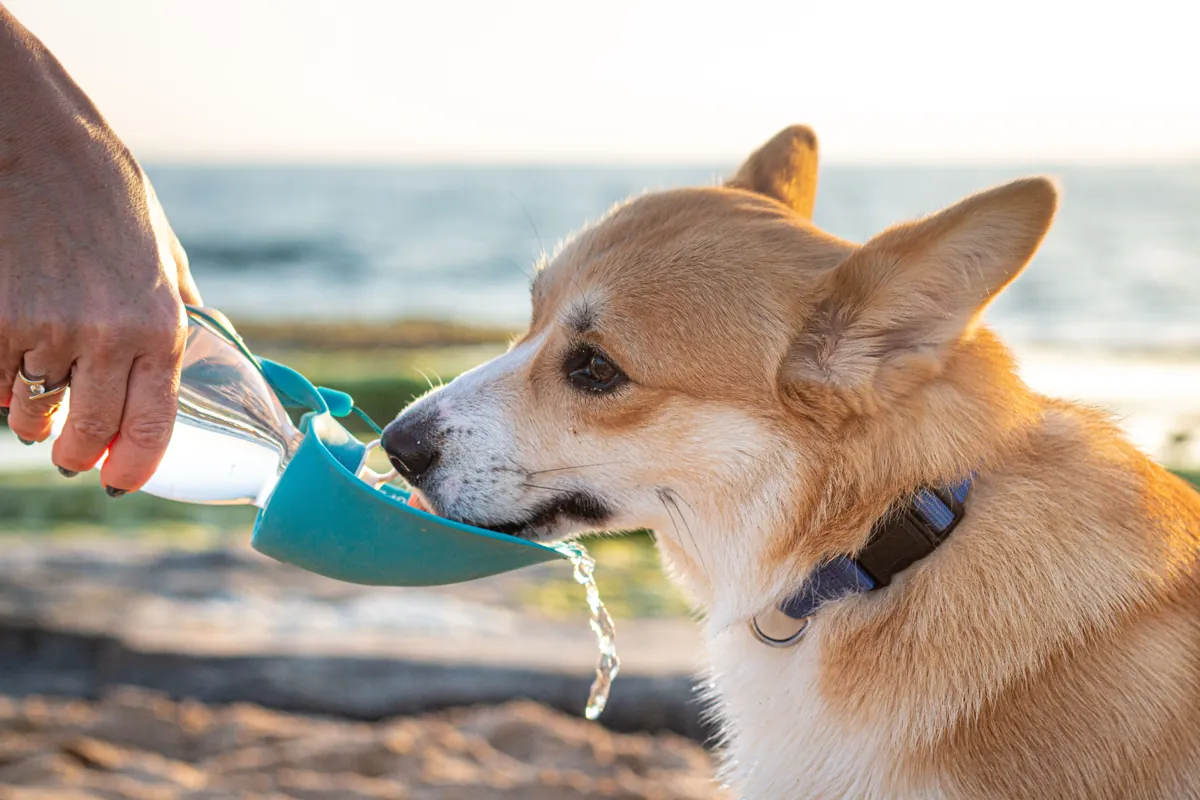
Bring enough fresh water for your dog and yourself, along with a container the dog will use. Test the portable bowl or dispenser during a comfortable outing before depending on it in challenging conditions. Some dogs need time to become familiar with a new drinking arrangement.
Offer opportunities to drink and pause in suitable shade. A break should reduce activity and exposure, not keep the dog waiting on a sunny corner while you finish an errand. Choose your stopping place before the dog becomes uncomfortable.
Do not plan around puddles, fountains of unknown suitability, or water you are unsure is clean. Carrying your own supply gives you a more dependable option. Clean the drinking equipment according to its instructions and refill with fresh water.
If your dog will not drink outdoors, note that limitation and discuss the outing plan with your veterinarian. Do not assume refusing a bowl means the dog is not thirsty or that you can continue without concern.

Adjust for your individual dog’s risk
The AVMA highlights increased warm-weather exercise risk for overweight pets and short-nosed dogs. Health, age, fitness, medication, and previous difficulties can also affect the plan. Ask your veterinarian what matters for your particular dog instead of estimating safety from coat length alone.
A dog who eagerly wants to keep going still needs you to manage the outing. Enthusiasm is not a medical clearance. Likewise, a dog who has completed the route before may struggle under different weather or health conditions.
Bring specific questions to the clinic: What activity is suitable? What signs should make us stop? Are there restrictions related to medication or an existing condition? What should we do if the dog becomes distressed while outside?
For older dogs, our senior apartment-care guide adds access and mobility considerations. Heat planning and mobility planning should support the same manageable route.
Recognize a possible heat emergency
Excessive panting or drooling, unsteadiness, abnormal gum or tongue color, and collapse are among the warning signs listed by the AVMA. If you suspect heat illness, seek emergency veterinary care promptly. Do not wait for every sign to appear.
Stop activity, move the dog out of the heat when you can do so safely, and call an emergency veterinary service for immediate instructions. Begin the cooling steps they advise while arranging transport. Do not delay care to see whether a rest alone will solve the problem.
Keep the emergency clinic’s current contact and directions available before a difficult day. If another person will transport the dog, agree on that arrangement now. A saved number is more useful when you also know how you will get there.
Never leave a dog in a parked vehicle, including in shade or with windows open. If an errand would require that, leave the dog in an appropriate safe home setting with needed care instead.
Include apartment cooling in the summer plan
Check the resting environment as well as the outdoor route. Keep water accessible and avoid placing the only bed in strong direct sun. Consider which part of the apartment remains comfortable at different times of day.
Do not assume a camera proves that the temperature is suitable. A picture can show behavior, but it does not by itself establish the conditions around the dog. Use appropriate monitoring and arrange someone who can respond if cooling fails.
Ask the building how service interruptions are communicated. Then identify an alternative safe location and a helper who has agreed to assist. Your backup plan should include access, transport, water, food, and any medication instructions.
Do not compromise window or balcony security to improvise ventilation. Check that any arrangement remains safe for the dog. If cooling is inadequate or the dog shows concerning signs, contact your veterinarian and move to an appropriate safer environment as advised.
Give caregivers the same instructions
Tell walkers and sitters which route to use, when to shorten or cancel an outing, and whom to call with concerns. Explain any health restrictions exactly as provided by the veterinarian. Avoid leaving them to interpret a vague message such as “Don’t overdo it.”
Our backup care plan offers a structure for those instructions. Review them when a new caregiver starts or the dog’s medical needs change.
Keep indoor activity manageable
Choose familiar options that fit the dog’s health and available space. A simple food search, suitable puzzle feeder, short reward-based exercise, or relaxed interaction may give the dog something enjoyable to do without an exposed outdoor route.
Keep the activity comfortable rather than trying to create an exhausting workout in a warm room. Account for food rewards within the diet plan, supervise unfamiliar materials, and stop if the dog is struggling or uncomfortable.
For practical choices, see our indoor enrichment plan. Although written for rainy days, its small-space planning ideas can help when weather changes your usual outing.
Common questions about hot weather dog walks
Is there one temperature at which every dog should stay inside?
No single number captures the dog, humidity, sun, activity, surface, and route. Use current conditions and individual veterinary guidance. Be ready to change the plan even when the forecast looks similar to a previous comfortable day.
Does an early walk automatically mean safe conditions?
No. Earlier or later hours may be cooler, but you still need to check the conditions and observe the dog. Warm nights, humidity, or a long exposed route can affect the outing. A departure time is not a safety guarantee.
Can I skip water so the dog needs fewer bathroom trips?
Do not restrict water to make the schedule easier. Provide dependable access and ask your veterinarian about any medical instructions. Build bathroom coverage around the dog’s needs instead of trying to reduce those needs through dehydration.
What is the simplest useful summer preparation?
Choose a nearby bathroom route, a suitable cooler-condition activity option, fresh water equipment, and a response plan for cooling failure or illness. Share those choices with every caregiver. That gives you a workable starting point without pretending that one checklist predicts every situation.
A good summer routine remains flexible. Check conditions, preserve essential care, shorten exposure when necessary, and act promptly when your dog shows concerning signs.
What should I review after an unexpectedly difficult outing?
Write down the route, departure time, weather conditions, surfaces, activity, drinking opportunities, and the behavior you noticed. Share medical concerns with your veterinarian promptly. For the household plan, identify whether an avoidable delay, exposed segment, or missing supply made the trip harder.
Change that practical detail before the next outing. For example, preparing the water container in advance may remove a doorway wait, while choosing a nearer bathroom spot may reduce exposure. This review does not establish that the revised route is medically safe; it helps you make a more informed plan alongside individual guidance and current conditions.
Sources & further reading
Source checked October 14, 2026. Route and household examples are editorial planning aids. This article does not set a medically safe temperature or exercise duration for an individual dog.
General guidance does not replace individual veterinary or behavior assessment.