Dog hair is easier to manage when you combine appropriate coat care, targeted cleaning, and washable resting surfaces. Identify where hair collects, choose tools for those surfaces, and use a repeatable routine. Seek veterinary advice for unusual hair loss or skin changes rather than treating every increase as a housekeeping problem.
You vacuum, sit down, and find another line of hair along the sofa seam. In a small home, the dog’s resting place, your clothes, and the main walking path may occupy the same few square feet. Cleaning the entire room every time can feel endless.
A more practical approach follows where hair actually goes. This guide helps you organize grooming, upholstery care, floors, laundry, and tool storage around those collection points. It works in larger homes too: the aim is manageable upkeep and comfortable surfaces, not a promise of a permanently hair-free house.

Separate normal shedding from a change that needs attention
Dogs’ coats differ, and the amount of visible hair in a home can change. However, bald areas, irritated skin, repeated scratching, or a marked new pattern deserve veterinary advice. More aggressive brushing or another supplement is not a reliable way to identify the cause.
The Merck Veterinary Manual distinguishes shedding from abnormal hair loss and explains that treatment depends on the underlying cause. Bring observations about when the change began and where it appears. A cleaning routine should not delay assessment of a dog who seems uncomfortable.
Keep a useful record
If something changes, photograph the affected coat or skin when the dog is comfortable with handling. Note itching, discomfort, and recent grooming or product changes. Do not repeatedly manipulate a painful area to improve the picture. Your veterinarian can tell you what information is useful and how urgently to arrange care.
A photo of hair in the vacuum bin does not establish a medical diagnosis. The dog’s skin, coat pattern, and overall condition matter. Avoid identifying allergies, parasites, or a nutritional problem from an online comparison alone. Those possibilities require different assessments and treatments.
Map the collection points before buying tools
Look at the favorite resting surface, sofa seams, rug edges, corners, and the route between bed and door. Spend a few ordinary days noticing where hair accumulates. You may find that a short targeted loop handles most visible buildup without moving every piece of furniture.
Include clothing and storage. A coat left on the dog’s preferred chair will collect hair differently from one hung behind a closed door. Keep clean laundry away from grooming and resting areas. Simple separation can reduce repeated cleaning without requiring the dog to lose every comfortable place in the home.
Use the map to decide what to clean first
Start with the surface people use most and the floor route where hair is being tracked. Then schedule less visible corners and beneath-furniture areas separately. This is a household priority system, not a hygiene standard. Adjust it for your surfaces, dog, and the people sharing the space.
If the bed location makes every cleanup difficult, consider moving it to a suitable accessible spot. Preserve the dog’s comfort and room to leave. Our resting-area guide explains how traffic, access, and noise affect that choice.
Choose coat care for your dog
VCA’s coat-care guidance describes how grooming needs vary with the coat. Ask a qualified groomer or veterinarian to show you a suitable tool and technique. A brush that works on one dog may be uncomfortable or ineffective on another.
Use manageable sessions on secure footing. Pay attention to the dog’s response and inspect the skin without scraping or repeatedly working one area. Stop when the dog shows discomfort, and seek help with tangles or difficult handling. Pulling through a mat can turn grooming into a painful experience.
Make the grooming setup easy to maintain
Choose a location with enough room, a cleanable surface, and equipment stored safely nearby. Collect loose hair during the session instead of allowing it to spread through the room. Keep brushes and cleaning materials inaccessible to chewing dogs. Finish by checking that no small tool parts have fallen into the dog’s area.
Reward-based handling practice can make necessary care more manageable, but it should be introduced gradually. If your dog is frightened or reacts defensively, get professional support rather than forcing a lengthy session. Veterinary care may be needed for pain or skin disease contributing to the response.
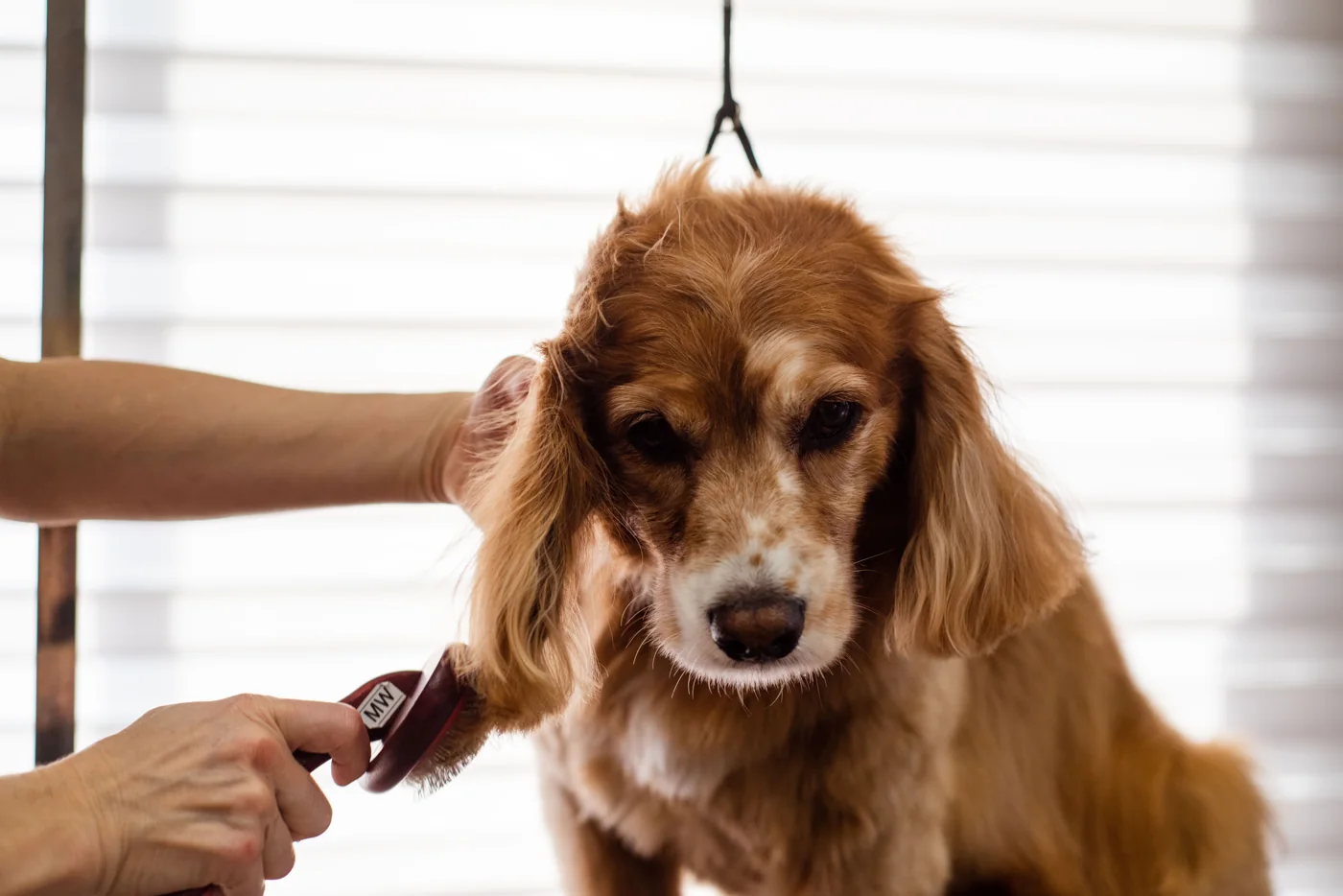
More grooming is not always the right adjustment
Do not repeatedly bathe or aggressively use a shedding tool simply because hair is visible on the floor. Follow an individual coat-care plan and product directions. Ask your veterinarian about frequent bathing or skin concerns. Routine maintenance and treatment for a medical condition have different purposes.
Clipping and shaving also require coat-specific judgment. A shorter coat is not a universal solution to shedding, heat, or household cleaning. Discuss the dog’s coat and circumstances with a groomer and veterinarian before making a major change. The photographs here illustrate grooming contexts, not a recommendation to copy a pictured technique.
Use washable covers where they solve a real problem
A removable cover can help on a favorite sofa spot or bed if it lies securely and the dog uses it comfortably. Choose a material you can wash according to its care label. Measure the surface and consider whether the cover slips or bunches when the dog stands up.
A spare cover makes laundry easier to schedule without removing the resting place. Store the clean spare separately from used bedding. Avoid buying several decorative layers if they add more washing than protection. One useful washable surface is easier to maintain than a stack of covers that never dry fully.
Respect the fabric and appliance instructions
Remove visible loose hair using a method suitable for the fabric before washing when appropriate. Follow the textile and washing-machine instructions for loading, temperature, and drying. Check appliance filters as instructed. Pet bedding can vary widely in construction; a universal hot-wash recipe may damage it.
Keep detergents and laundry products out of reach. Do not assume a strongly scented product improves pet hygiene or is suitable for direct contact with the dog. Wash the bedding according to its label and obtain veterinary advice if skin reactions are a concern.
Match cleaning tools to surfaces
| Surface or job | Question to check |
|---|---|
| Upholstery | Will the attachment or manual tool suit the fabric without damage? |
| Hard flooring | Is the cleaning head approved for the finish? |
| Rugs and carpet | Can the brush and collection system be maintained easily? |
| Washable bedding | Can the cover be removed, washed, and dried as directed? |
| Clothing | Is a compact fabric-safe hair tool enough for the task? |
A “pet” label is a starting point for reading specifications, not proof that a tool solves your particular problem. Check the surfaces it supports, attachment access, collection-bin care, and replacement parts. Compare those requirements with the equipment you already own before purchasing another appliance.
Include noise and storage in the comparison
If your dog is worried by the vacuum, arrange a comfortable separate location while cleaning. Do not chase the dog with the appliance or apply an ordinary vacuum attachment directly to their coat. If introducing a noise is necessary, seek an appropriate gradual plan rather than forcing proximity during cleanup.
Measure storage space and charging access if relevant. An appliance that blocks the doorway or leaves cords within reach creates another problem. Keep tools easy for caregivers to find but secure from the dog. A small manual tool may handle a sofa touch-up while your existing vacuum handles the floor.

Build a short cleaning loop
Use your collection-point map to choose a few tasks: lift hair from the main resting surface, clean the most-used floor route, and inspect bedding. Fit the sequence into a realistic household period. The frequency depends on actual buildup and the surfaces involved, not a universal daily quota.
Give deeper work a separate place in the week. Corners, upholstery seams, beneath furniture, and washing may require more preparation. Group tasks when that reduces setup, but follow each product’s instructions. Avoid allowing a missed deeper clean to make the whole routine feel impossible.
A worked example for one room
Imagine the dog uses a covered sofa corner and a bed near the living-room wall. Hair gathers along the sofa seam and on the path to the door. The household starts with a brief fabric-safe sofa cleanup and that floor route. Bedding is checked, with washing scheduled when the spare cover is available.
Once during a suitable longer period, they address the wall edge and under the sofa. If moving the sofa is unsafe or impractical, they choose an attachment that reaches without moving it. This hypothetical example shows how the layout sets the tasks; it is not a tested cleaning protocol.
Make the system easy to share
Agree where clean covers, grooming tools, and the floor-cleaning attachment belong. Identify who handles the deeper task and who checks appliance maintenance. “Clean the dog hair” is vague; “sofa cover, entry route, and bedding check” gives another person a repeatable starting point.
Keep dog care and cleaning responsibilities distinct. Someone cleaning the bed has not necessarily brushed the dog or arranged their next outing. A shared note can prevent assumptions. The most sustainable system leaves each task clear without requiring a complicated checklist for every ordinary day.
Does low shedding mean fewer allergy problems?
Visible hair and pet allergy are different questions. The American Academy of Allergy, Asthma & Immunology explains that no dog breed is truly hypoallergenic. Pet allergens involve proteins associated with sources such as dander and saliva; a low-shedding label does not guarantee that a person will tolerate the dog.
If someone has symptoms, seek advice from their healthcare professional or allergist. Do not present this hair-cleaning routine as a treatment plan. Breed selection, household cleaning, and medical management require their own decisions, and a cleaner-looking sofa cannot establish that allergen exposure is adequately controlled.
Common questions about controlling dog hair
Should I brush until no more hair comes out?
No. Follow an appropriate technique and session plan for the coat. Continued hair collection does not justify irritating the skin or forcing the dog through discomfort. Ask a professional to demonstrate safe use of the tool.
Do I need a new vacuum?
First identify which job your current equipment cannot handle. Check attachments, maintenance, and surface compatibility. A smaller fabric-safe tool or washable cover may address a specific problem without replacing the whole appliance.
When is shedding a veterinary question?
Seek advice for a marked change, bald areas, itching, irritated skin, or discomfort. Bring observations about the dog and the pattern. Do not wait for a cleaning product or grooming adjustment to reveal the underlying cause.
A home that is easier to maintain
Managing dog hair is a combination of suitable coat care and practical housekeeping. Follow the collection points, protect useful surfaces, and choose tools you can maintain. A repeatable modest routine leaves more time for living with your dog—and makes unusual changes easier to notice.
Sources & further reading
Sources checked October 13, 2026. AI-assisted editorial work by MyPupwise; professional review remains pending. No veterinary or medical review and no appliance testing is claimed. Cleaning examples and the surface table are original planning aids.
Compare tools for everyday hair cleanup
Once you have a manageable cleaning routine, our comparison of five robot vacuums for dog hair can help you assess floor-care features and upkeep. These machines are for appropriate routine cleaning; keep them away from fresh urine and feces. Explore Product Guides for broader equipment choices.
General guidance does not replace individual veterinary or behavior assessment.