
Create a dog-friendly zone in a quiet resting location and keep walking routes, doors, and essential access clear. A dog zone should support daily life without becoming the only place the dog is allowed to exist. Start with a comfortable bed, dependable water access, and a small amount of organized storage. Then test the arrangement during an ordinary day before buying furniture.
A dog-friendly zone works best when it solves a real problem: a bed underfoot, toys scattered across the couch, or supplies that disappear before every walk. It does not need to look like a pet-store display. The aim is a shared living room where your dog can relax and people can move, sit, clean, and spend time together comfortably.
Start with movement through the room
Draw a rough floor plan and mark the routes from the door to the kitchen, couch, and bathroom. Add the swing of cabinets and doors. Look for an area where a dog can rest without people repeatedly stepping over the bed.
Also account for everyday furniture changes. Pull out the dining chairs, open the recliner, and check where visitors leave their bags. A corner that looks empty in a photograph might become a busy passage when someone brings in groceries.
Use a temporary blanket to test the location before buying a large piece of furniture. Observe the dog’s choices at different times of day. A sunny spot may be appealing in the morning but uncomfortable later, and a quiet corner may become busy when guests arrive.
Watch without repeatedly moving the dog into position. If the chosen spot stays empty while your dog settles elsewhere, investigate why. Noise, temperature, visibility, or distance from familiar people may matter more than the neatness of your original plan.
Choose a comfortable bed for your dog-friendly zone
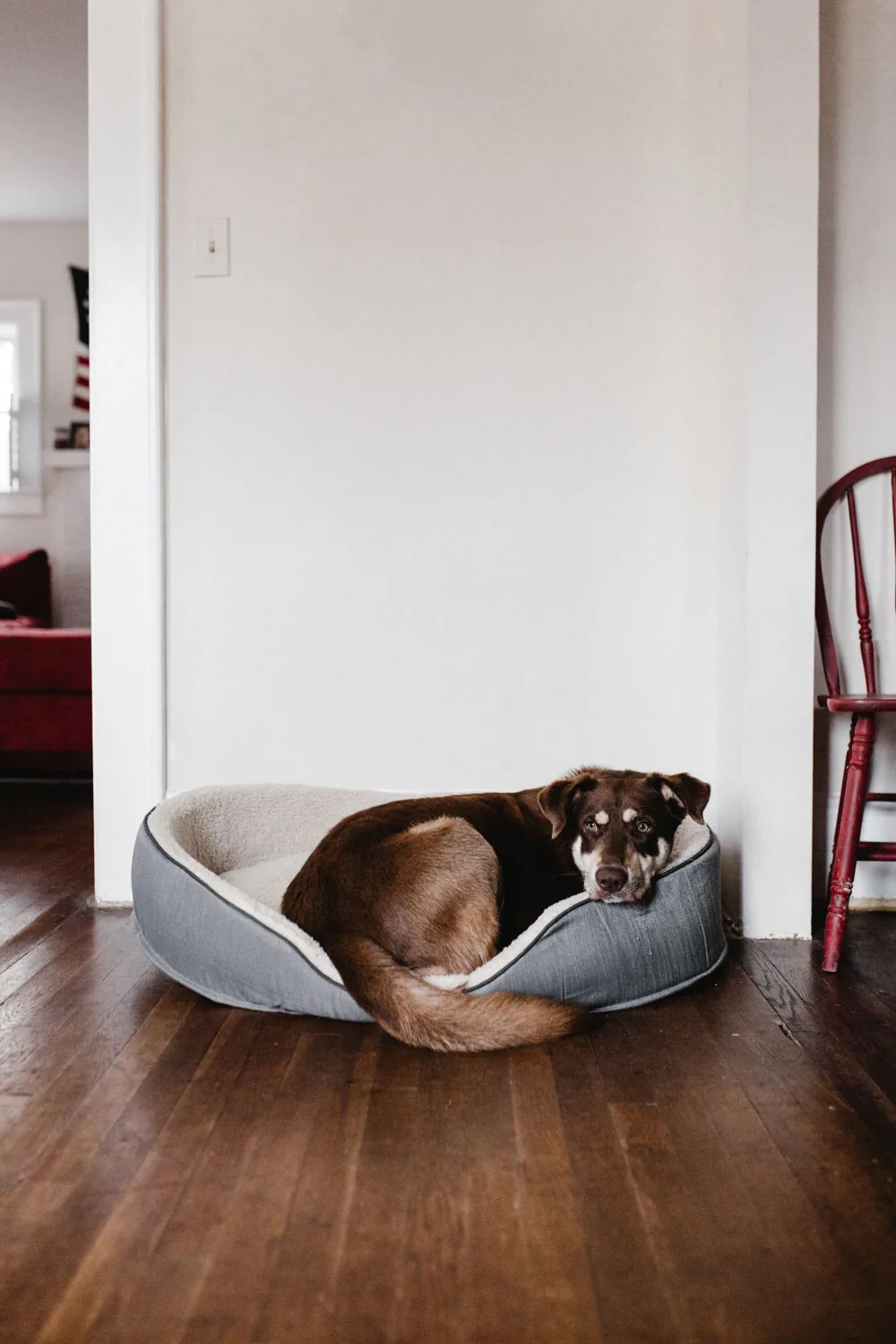
Measure the dog as well as the available floor space. Check the usable sleeping surface inside bolsters, not just the manufacturer’s outer dimensions. Your dog should be able to adopt its normal sleeping positions without being squeezed against the sides.
The RSPCA’s dog-bed guidance emphasizes room to stretch and a bed that can be washed. Use that as a practical starting point, then observe the individual: some dogs curl against a raised edge, while others spread across a flatter cushion.
Match access to the actual dog
A tall decorative frame may create an awkward step for a dog that struggles to climb. Before spending more on a special bed, discuss mobility or pain concerns with your veterinarian. A product labeled orthopedic is not an individual treatment plan.
Look at how the bed behaves on your floor. It should not shift every time the dog gets up. Check any mat beneath it for movement, curled edges, and chewing. Comfortable access matters more than a coordinated photograph.
If your dog enjoys company but needs quieter sleep, consider whether another resting option elsewhere is useful. You do not have to make the living-room bed meet every need throughout the day.
Give each essential item a purpose
Plan a resting surface, stable access to fresh water, and secure storage for supplies. ASPCA care guidance includes a comfortable place to rest and basic supplies; the exact arrangement should follow your dog’s needs and home layout.
Keep water accessible without placing the bowl in a narrow walkway. A washable surface can help contain ordinary spills, but check underneath it instead of allowing moisture to collect unnoticed. Make the bowl easy for the responsible person to refill and clean.
Offer a small, useful toy selection
Choose toys appropriate to your dog’s size and behavior. Inspect them for damage and put away items that need supervision when you cannot provide it. A full basket is not automatically more enriching than a few suitable toys used thoughtfully.
Rotate what is available rather than leaving everything across the floor. Store a supervised puzzle separately from the everyday toy selection. Our puzzle-feeder introduction guide can help if you want to add that activity without overwhelming the dog.
Make the dog-friendly zone safe to use
A living-room resting spot should be comfortable, clean, and reasonably quiet. The RSPCA’s home-environment guidance also highlights freedom from hazards and access to somewhere a dog can retreat. Keep the bed away from repeated foot traffic and avoid treating it as a place where everyone stops to pet the dog.
Check cables, charging leads, loose batteries, dropped snacks, and small decorative objects at the dog’s level. Review nearby plants before giving the dog access. Keep breakable ornaments and unstable arrangements out of reach rather than hoping that an attractive layout will discourage investigation.
Set a household rest rule
Ask family members and guests to leave a resting dog undisturbed. Children need adult supervision and clear guidance; placing a bed in a corner does not make every interaction safe. Let the dog approach for company instead of reaching into its resting area.
A dog’s access to the living room should remain part of a broader care routine. The zone is a useful home base, not a substitute for bathroom opportunities, activity, companionship, or other comfortable places to spend time.
Keep storage out of the dog’s reach
Use a closed location for cleaning products, medications, spare food, and objects that could be chewed or swallowed. A stylish open basket is not suitable for everything. Keep everyday handling equipment where the responsible person can reach it quickly.
Closed storage still needs a practical check. Can your dog push the lid aside, pull a drawer open, or reach a bag through an exposed shelf? Keep hazardous items securely inaccessible. The ASPCA’s household-product guidance explains why familiar cleaning and personal-care items need careful storage.
Separate supplies by how you use them
- Everyday access: keep the leash, waste bags, and a clean paw towel near the route to the door.
- Supervised activities: put grooming tools and special toys in a closed drawer or cupboard.
- Hazardous or tempting items: store cleaners, medicines, and spare food securely away from the dog.
You can reuse a cabinet you already own. A simple divider may prevent a leash from tangling with towels, while one labeled container makes supplies easier for another caregiver to find. The useful improvement is a reliable place for each item, not another basket to fill.
When someone else cares for the dog, explain where supplies belong and which toys need supervision. Agree who will refill water, reset the space after play, and notice damaged items. This avoids a room that looks organized but relies on one person to remember every detail. Keep the instructions short enough to use during a busy evening.

Blend the dog-friendly zone into the room
Choose a small number of colors already present in the room, but judge fabric by upkeep before appearance. Check the care label, removable-cover access, drying requirements, and how easily you can remove loose hair.
A patterned cover may make hair less noticeable; it does not make the surface cleaner. Similarly, a beautiful storage unit is not a good choice if cleaning behind it becomes difficult or it narrows the path to an exit.
If furniture access is allowed, a washable throw can define an easy-to-clean spot on the couch. Keep the household’s rules consistent and give the dog a comfortable alternative. If furniture access is not allowed, use patient, reward-based teaching rather than repeatedly pushing the dog away.
Spend first on things that affect actual use: a suitable resting surface, washable protection where needed, and secure storage. Matching accessories can wait until the basic arrangement works.
Three modest layouts to test
An example small-home arrangement is a bed beside a quiet wall, water on a stable washable surface nearby, and leash storage by the entry. It is a layout idea, not a universal design requirement.
Beside the couch: place the bed at a quieter end, outside the route to the seating. Use an existing closed sideboard for spare supplies. This keeps the dog near company without turning the bed into a stepping stone.
In an open-plan room: identify the space that stays calmer during cooking and meals. Check chair movement and the kitchen route before positioning the bed. Put water where both the dog and caregiver can reach it without interrupting food preparation.
In a narrow living room: reduce unnecessary furniture before squeezing the dog into the remaining gap. Relocate a bulky toy basket or occasional table if that restores usable space. A simple bed that fits the dog’s body is often a more practical starting point than a decorative enclosure.
These examples do not require a renovation or a fixed budget. Start with existing storage, a washable cover that fits safely, and a trial layout. Buy only what solves a problem you can describe.
Keep cleaning easy enough to repeat
Remove loose hair before washing a bed cover, follow its care instructions, and dry it completely before replacing it. Check the cushion and the floor underneath as well as the visible fabric.
Clear spills promptly and clean water bowls regularly. During cleaning, give the dog another comfortable place to rest. Keep it away from cleaning products and wet surfaces according to the product’s instructions, and store supplies securely afterward.
At the end of the day, put supervised toys away, return the leash to its place, and check whether the routes remain clear. A short reset is easier than waiting until every item in the room needs attention. For a broader cleaning loop, see our guide to managing dog hair in a small space.
Review the space after real use
Notice spills, blocked access, and whether the dog repeatedly leaves the chosen spot. Adjust the arrangement rather than insisting the first layout was correct. Consider age and mobility changes over time.
Common mistakes include choosing a bed by its exterior size, leaving every toy accessible, blocking a doorway with storage, and expecting the dog to stay in one designated spot. Another is buying an elaborate setup before finding out where the dog actually rests.
Measure success by an ordinary evening: can people use the couch, can doors open fully, and can the dog settle without being disturbed? Keep what works and change the part that causes friction. Revisit your dog-friendly zone when furniture, routines, or mobility change.
If the only way to fit the dog is to block exits or confine it for most of the day, reconsider the plan. A successful dog zone makes rest and care easier while preserving safe movement and a shared home that works for everyone.
Sources & further reading
Sources checked October 12, 2026. Layout examples and organization suggestions are editorial planning ideas, not product tests or individual treatment recommendations.
General guidance does not replace individual veterinary or behavior assessment.