American dog breeds tell more than one story. A Boston Terrier belongs to the history of city companionship; a Chesapeake Bay Retriever reflects the demands of coastal waterfowl work. The American Bully represents a much newer chapter. Their shared American connection does not give them a shared personality or a single set of care needs.
These seven American dog breeds show how people shaped dogs for different jobs and ways of living. Learning that history helps explain why a dog may love retrieving, notice every visitor, or need an outlet for athletic energy. It also makes choosing a companion more thoughtful. A photograph shows a face; a useful breed guide asks what living together will actually require.
Start with the individual. Breed tendencies offer context, not promises about friendliness, trainability, health, or safety. Age, inherited differences, early experiences, learning, and current surroundings all matter. The best match is a dog whose needs your household can meet consistently.
American Dog Breeds: Ancestry and Recognition
Ancestry, breed development, and registry recognition are different things. Many American dog breeds descend from European dogs. Their modern identities took shape in the United States as breeders selected for work, appearance, or companionship. Recognition came later, when a particular registry accepted a breed and its standard.
The American Pit Bull Terrier has British and Irish bull-and-terrier roots. The American Eskimo Dog developed from German Spitz ancestry. Neither history becomes less American because earlier generations crossed the Atlantic. Likewise, a recognition date marks a registry decision, not the year the first dog of that type existed. This guide explores seven examples, rather than ranking every breed developed in the country.
1. American Pit Bull Terrier: Athletic and People-Oriented
The American Pit Bull Terrier developed from nineteenth-century bull-and-terrier dogs brought from Britain and Ireland. Those ancestors were associated with animal fighting, a history that deserves clear acknowledgment without romanticizing it. In America, dogs from these lines also served as farm helpers, hunting-related workers, and companions. The United Kennel Club recognized the breed in 1898.
Today, the name requires care. “Pit bull” is often an umbrella label applied to several breeds and mixed-breed dogs. It does not always mean a registered American Pit Bull Terrier. A broad head and muscular body cannot establish ancestry, and the American Bully has its own separate breed identity.

Living With Strength and Enthusiasm
Many APBTs approach games and human interaction with considerable energy. That can make teaching enjoyable, especially when rewards include food, play, and opportunities to explore. Persistence can also become pulling, jumping, or difficulty leaving an exciting situation. Start leash practice in quiet places and teach a reliable release from toys before expecting cooperation around major distractions.
Plan walks, sniffing opportunities, short lessons, and suitable play alongside quiet recovery. Repeatedly adding harder exercise is not a complete answer to an overexcited dog. Reward settling, arrange predictable breaks, and increase physical demands gradually. The short coat is a simpler maintenance job than the daily training and companionship.
Responses to other animals need separate assessment. A dog may be affectionate with people yet selective or aggressive toward unfamiliar dogs. Socialization does not require crowded dog parks or forced greetings. Some individuals need lifelong management around other animals. Secure separation, suitable handling equipment, and qualified help can be essential.
Before choosing one: Ask for specific observations about behavior, medical history, and previous animal interactions. Confirm housing and local requirements directly. Our guide to Pit Bull genetics, temperament, and responsible care explains why neither blanket reassurance nor a blanket danger label describes every dog.
2. American Bully: A Modern Companion Breed
The American Bully emerged in the late twentieth-century United States from American Pit Bull Terrier lines with influences from other bull-type breeds. Development emphasized a substantial, recognizable build and companion qualities. UKC recognized the American Bully separately in 2013. Shared ancestry does not make it another name for the APBT.
Its broad chest and muscular outline draw attention, but those features reveal little about one dog’s confidence or comfort with strangers. Many Bullies enjoy close contact with familiar people. Others need patient introductions or additional behavioral support. A companion-oriented breeding goal is not a guarantee of easy handling or household compatibility.

Choose Comfortable Function Over Exaggeration
Physical proportions vary considerably among dogs marketed as Bullies. Avoid treating unusually heavy bodies, extremely short legs, or exaggerated heads as desirable simply because they look dramatic. Watch how a dog walks, turns, rises, and rests. Comfortable movement and breathing deserve more attention than a fashionable label. A brief observation cannot replace veterinary assessment.
Exercise should fit the individual dog’s structure, fitness, age, and health. Begin with manageable outings and interactive games, then adjust according to recovery and veterinary advice. Do not assume that a muscular dog needs weighted equipment, exhausting workouts, or repeated jumping. Learning to walk calmly and pause during play is more useful in ordinary family life.
Ask what health evaluations were performed, which dogs were tested, and what the actual results show. “Health tested” without records tells you very little. Discuss joint concerns, skin problems, and any noisy breathing with a veterinarian. No single DNA panel rules out every inherited or structural problem.
Before choosing one: Consider whether you can safely handle the adult dog, provide companionship, and maintain training. Ask about compatibility with resident pets and check relevant housing rules. Prioritize sound structure and documented care over claims about rarity, size, or appearance.
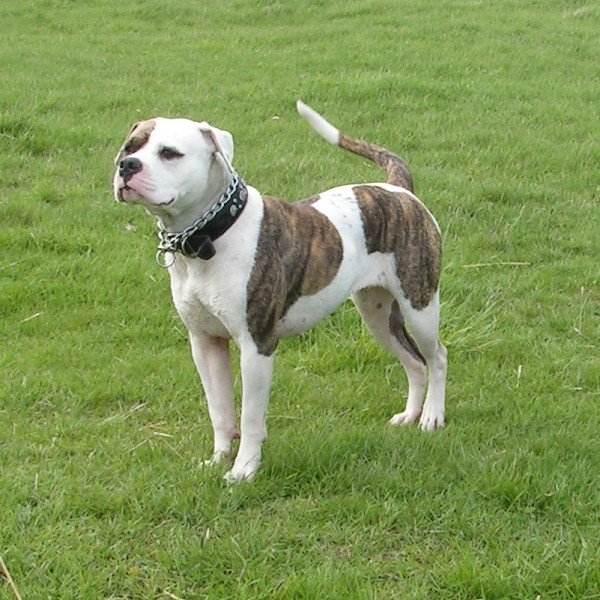
3. American Bulldog: A Farm Dog With Staying Power
The American Bulldog descends from working bulldog-type dogs maintained on American farms, particularly in the South. Their English ancestry predates the modern American breed. Catching and handling livestock, guarding property, and general farm utility favored strength and determination. Twentieth-century preservation efforts associated with John D. Johnson and Alan Scott helped retain different lines.
Those lines do not produce one identical body type or temperament. The American Bulldog is also distinct from the smaller, stockier English Bulldog. For registry context, AKC admitted it to its Foundation Stock Service in 2019; that program is different from full AKC breed recognition.
Make Everyday Manners a Priority
A substantial dog can knock someone over without intending harm. Teach four feet on the floor during greetings, comfortable leash walking, and waiting at doors while the dog is still easy to manage. Use gates and planned space when visitors arrive. Preventing repeated rough greetings makes teaching more effective than correcting the same rehearsal every day.
Many American Bulldogs enjoy purposeful activity with their people. Mix exploratory walks with scent searches, retrieval practice, or controlled tug, including clear pauses. A yard offers space but does not organize an exercise routine or teach cooperation. Puppies need age-appropriate activity, and adults need gradual conditioning before strenuous work.
The short coat needs brushing and skin checks, especially where equipment rubs. Hip and elbow evaluation are important breeding discussions. Ask to see results rather than accepting that a dog “runs fine.” Persistent limping, difficulty rising, or recurring skin irritation warrants veterinary attention.
Before choosing one: Think through adult strength, training time, safe separation, and the needs of children or older household members. Meet adult relatives when possible. The American Bulldog profile offers more questions about daily care and working background.
4. Boston Terrier: A City Companion With a Distinctive Face
The Boston Terrier took shape in Massachusetts during the nineteenth century. Judge, a dog with bulldog-and-terrier ancestry, played a central role in its early history. Later breeding produced a smaller, distinctive companion. AKC recognition followed in 1893. Its neat markings helped earn the traditional nickname “the American Gentleman,” although the tuxedo never came with automatic manners.
A Boston can bring considerable playfulness to a compact body. Many enjoy games, short lessons, and joining household activity. Small size can simplify transport and handling, but it does not remove the need for companionship, enrichment, and teaching. Individuals differ in how much activity and social contact they enjoy.

Plan Around Breathing and Heat
The Boston’s short muzzle places it among brachycephalic breeds. Some develop upper-airway obstruction that affects comfortable breathing and cooling. Noisy or labored breathing, poor exercise tolerance, or disturbed rest should prompt veterinary assessment. Do not dismiss those signs as simply normal for the breed.
Choose cooler conditions for walks, adjust duration to the dog, and provide a cool place to rest. Hot, humid weather can make breathing problems worse. A dog struggling to breathe or collapsing needs urgent veterinary care. Ask about airway comfort before planning strenuous activity or travel.
The prominent eyes also deserve attention. Squinting, redness, or an eye held closed needs prompt assessment rather than a home remedy. When considering a puppy, ask for eye, patella, and hearing screening records recommended by the breed club. A routine examination and breeding screenings answer different questions.
Before choosing one: Budget for the possibility of breathing or eye care alongside ordinary expenses. Enjoy the personality while taking physical comfort seriously. Our Boston Terrier profile expands on the practical care routine.
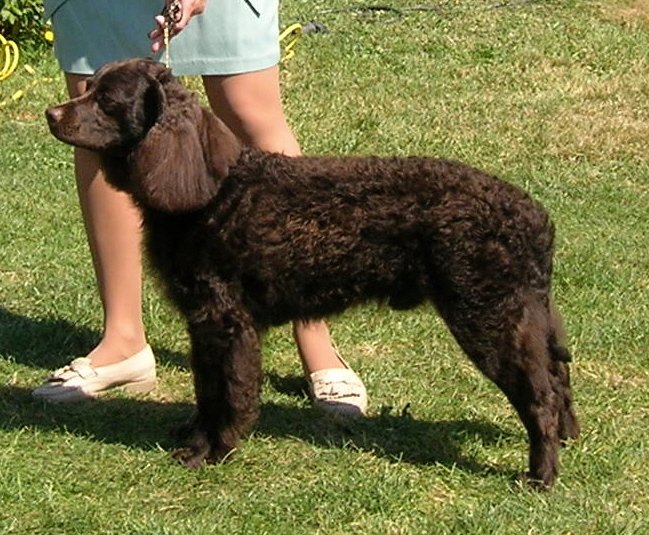
5. American Water Spaniel: Wisconsin’s Versatile Retriever
The American Water Spaniel developed in the Great Lakes region, where hunters wanted a dog that could retrieve from small boats and work on land. Its exact ancestral recipe is uncertain, so a precise list of founding breeds would overstate the evidence. AKC recognized it in 1940. Wisconsin named it the official state dog in 1986.
Its wavy or curly brown coat reflects that water-working background. So does an appetite for retrieving and participating in outdoor routines. Many are attentive companions, although unfamiliar people may receive a cautious welcome. A smaller sporting dog can still require substantial involvement; bathroom trips alone rarely make an engaging day.
Provide Work on Land as Well as Water
Try short retrieves, searches for a hidden toy, and walks with time to investigate scents. Teach returning an object and waiting before release in small, rewarding steps. Land-based activities matter when water is unavailable or unsafe. The useful question is whether you enjoy participating in the dog’s routine throughout the year.
Introduce swimming gradually, supervise closely, and provide an easy exit. Check currents, water quality, and conditions before entering. Use a properly fitted canine life jacket for boating and appropriate water activities. Sporting ancestry does not prove that a particular dog is a confident swimmer or safe in rough water.
Comb through the coat regularly and remove debris before tangles tighten. After swimming, dry thoroughly and check around the ears. Persistent head shaking, odor, or discomfort needs veterinary attention. Prospective puppy buyers should ask about hip, eye, and cardiac evaluations, with the actual findings and dates available.
Before choosing one: Plan for companionship, active learning, and post-outing coat care. The American Water Spaniel profile helps turn its working history into practical ownership questions.
6. Chesapeake Bay Retriever: Shaped by Maryland’s Waters
The Chesapeake Bay Retriever developed around the bay’s demanding waterfowl work. Breed histories traditionally connect early development to Sailor and Canton, two Newfoundland-type dogs rescued near Maryland in 1807. They were contributors to a longer breeding story, not a complete explanation of the modern breed. AKC recognized the Chesapeake in 1878.
Its dense, water-resistant coat and substantial build suited difficult retrieving conditions. Those abilities do not make cold water safe for every modern Chessie. Age, conditioning, weather, and individual health still determine sensible activity. A dog bred for demanding work also needs recovery and comfortable shelter.

A Retriever With Its Own Approach
A Chessie may be deeply attached to familiar people while taking longer to warm to strangers. Many bring determination and independent judgment to tasks. Avoid assuming that every retriever behaves like a Labrador. Use clear cues, worthwhile rewards, and manageable steps, building trust through predictable interaction.
Retrieving, scent work, hiking, and supervised swimming can provide satisfying outlets for a suitable adult. Practice stopping, waiting, and moving away from distractions alongside the exciting parts. Reward-based training is especially useful when strength and enthusiasm make mistakes difficult to manage. Forced greetings do not create confidence.
The coat sheds and needs regular brushing, even though it is relatively short. Ask about hip and elbow evaluations, eye examinations, and relevant DNA results before buying a puppy. A genetic risk result requires interpretation; it does not predict every future health outcome. Discuss family history and the dog’s physical condition with a veterinarian.
Before choosing one: Make room for a substantial sporting dog whose needs extend beyond a weekend adventure. The Chesapeake Bay Retriever profile outlines more questions about activity and household fit.
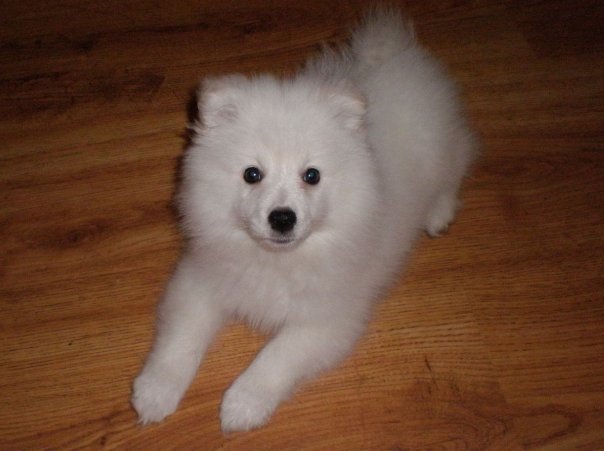
7. American Eskimo Dog: German Roots, American Identity
The American Eskimo Dog’s name obscures its ancestry. German immigrants brought Spitz-type dogs to the United States, where the modern breed developed its American identity. Inuit communities were not involved in founding it. Its history belongs to European Spitz dogs and American companionship, rather than an origin as an Arctic sled dog.
In the late nineteenth and early twentieth centuries, white Spitz dogs also became familiar performers in traveling entertainment. Their agility and ability to learn tricks helped draw attention. AKC recognized the American Eskimo Dog in 1994. Today’s breed comes in toy, miniature, and standard varieties, with white or white-and-biscuit coats.
Give a Clever Dog Something to Learn
Many Eskies are alert, curious, and interested in household life. Try trick training, scent searches, or brief learning games with clear rewards. Intelligence does not eliminate frustration, fear, or the need for patient teaching. Some dogs are vocal or cautious with strangers, so practice quiet observation and allow introductions to unfold comfortably.
Plan regular brushing through the double coat, with additional attention during heavier shedding. Check behind the ears and other areas where tangles form. A white coat is not a promise of low maintenance. Introduce brushing and handling gently so grooming becomes a routine the dog can tolerate comfortably.
For a puppy, ask about hip evaluations, specialist eye examinations, and relevant progressive retinal atrophy testing. Learn which variety and adult size the line produces, too. A toy Eskie and a standard Eskie create different handling considerations, but both need movement, social contact, and opportunities to think.
Before choosing one: Consider your tolerance for shedding and alert barking alongside the appealing appearance. Read the American Eskimo Dog profile for more detail about care and companionship.
American Dog Breeds at a Glance
When comparing American dog breeds, use these differences to guide questions, not to predict one dog’s behavior. On small screens, swipe the table to read every column.
| Breed | American connection | Plan for |
|---|---|---|
| American Pit Bull Terrier | Established from British and Irish ancestry | Athletic outlets and careful animal introductions |
| American Bully | Modern U.S. development | Sound structure and responsible handling |
| American Bulldog | Southern farm work | Strength, manners, and purposeful engagement |
| Boston Terrier | Massachusetts companion breeding | Breathing, eyes, and heat management |
| American Water Spaniel | Great Lakes sporting work | Activity, coat care, and water safety |
| Chesapeake Bay Retriever | Chesapeake Bay retrieving | Training, conditioning, and regular outlets |
| American Eskimo Dog | American development from German Spitz dogs | Grooming, learning, and companionship |
Choosing American Dog Breeds for Your Everyday Life
Build a picture of an ordinary weekday before choosing a dog. Include work hours, walks, grooming, training, rest, and help when plans change. A sporting dog needs meaningful activity on inconvenient days, too. A smaller companion still needs company and teaching. Use our guide to daily exercise needs to think about age and health alongside breed background.
Next, consider the household. Can everyone handle the adult dog? Is there a quiet resting area and a workable way to separate animals? Children need respectful boundaries, active adult supervision, and separation whenever that supervision is unavailable. No breed nickname substitutes for this arrangement.
Meet the individual and request examples. How does the dog recover after excitement? What happens around visitors or other animals? Ask caregivers about medical records, known difficulties, and support after adoption. Our questions to ask before adopting can help structure that conversation. Foster observations are valuable, although behavior can change as a dog settles in.
Finally, compare costs and care commitments honestly. Veterinary needs, training help, equipment, grooming, and emergency expenses belong in the plan. Explore the Dog Breeds directory and use the breed comparison tool to organize further research. Neither tool can replace getting to know a particular dog.
Common Questions About American Dog Breeds
Are American Pit Bull Terriers and American Bullies the Same?
No. They share ancestry but have separate breed identities and UKC standards. The broader visual label “pit bull” can create confusion, especially when applied to mixed-breed dogs.
Are They All Large or Highly Active?
No. Boston Terriers are compact, and American Eskimo Dogs come in three sizes. Activity needs also vary within breeds and change with age, health, and conditioning.
Can They Be Good Family Companions?
Some individuals fit family life very well. Compatibility depends on the particular dog, household, supervision, and ability to meet care needs. Breed alone cannot guarantee a safe relationship with children or other pets.
American Dog Breeds: History Is a Starting Point
These seven American dog breeds reflect farms, cities, waterways, immigration, and changing ideas about companionship. Their histories make familiar faces more interesting, but everyday care gives that knowledge its value. Choose with curiosity and realistic expectations. Then keep learning from the animal sharing your home: its comfort, preferences, abilities, and needs matter throughout the relationship.
Photo credits, licenses, and editorial references
Photographs are identified in their original source records. Images illustrate individual dogs and do not establish registry status, health, or temperament. Existing local copies are used for the Boston Terrier, American Water Spaniel, Chesapeake Bay Retriever, and American Eskimo Dog. Other photographs were uploaded unchanged. All are displayed with their proportions preserved.
- American Pit Bull Terrier: Theboywholived. Source: https://commons.wikimedia.org/wiki/File:American_Pitbull_Terrier.jpg . CC BY-SA 3.0: https://creativecommons.org/licenses/by-sa/3.0/ .
- American Bully Jaxson: Rock City Kennels. Source: https://commons.wikimedia.org/wiki/File:American_Bully_Stud_Male_(11527292106).jpg . CC BY 2.0: https://creativecommons.org/licenses/by/2.0/ . Commons version has watermark removal by Hasenläufer.
- American Bulldog: sannse. Source: https://commons.wikimedia.org/wiki/File:American_Bulldog_600.jpg . CC BY-SA 3.0: https://creativecommons.org/licenses/by-sa/3.0/ .
- Boston Terrier: Andreas Schlaugat. Source: https://commons.wikimedia.org/wiki/File:Boston-terrier-carlos-de.JPG . CC BY 3.0: https://creativecommons.org/licenses/by/3.0/ . Existing resized copy.
- American Water Spaniel: Awsguy1. Source: https://commons.wikimedia.org/wiki/File:Chien_d%27eau_americain_champion_1.JPG . CC BY-SA 3.0: https://creativecommons.org/licenses/by-sa/3.0/ .
- Chesapeake Bay Retriever: George Makatura. Source: https://commons.wikimedia.org/wiki/File:CH_Chesapeake.jpg . Public-domain dedication by the copyright holder.
- American Eskimo Dog: Jillian Schoenfeld. Source: https://commons.wikimedia.org/wiki/File:American_Eskimo_Dog_puppy.jpg . Public-domain dedication by the copyright holder.
Share-alike photographs retain their stated licenses. License and source addresses are supplied as plain text to preserve this article’s internal-link-only format. Factual references: American Kennel Club breed profiles and recognition records; United Kennel Club American Pit Bull Terrier and American Bully standards and recognition records; VCA Animal Hospitals, Brachycephalic Airway Syndrome in Dogs. Health information is general education and does not replace assessment of an individual dog.
General guidance does not replace individual veterinary or behavior assessment.