Choosing between a dog water bowl and a fountain starts with a simple goal: dependable access to fresh water in a place your dog can use comfortably. In a small apartment, the best setup is also one you can refill, clean, and maintain without blocking everyday movement.
A conventional bowl holds still water. An automatic pet fountain uses a pump to circulate water, often through a filter. Neither design is universally better. A fountain adds moving water and maintenance tasks; a bowl offers a simpler routine. Compare those tradeoffs against the individual dog and your available space.
Updated October 12, 2026.
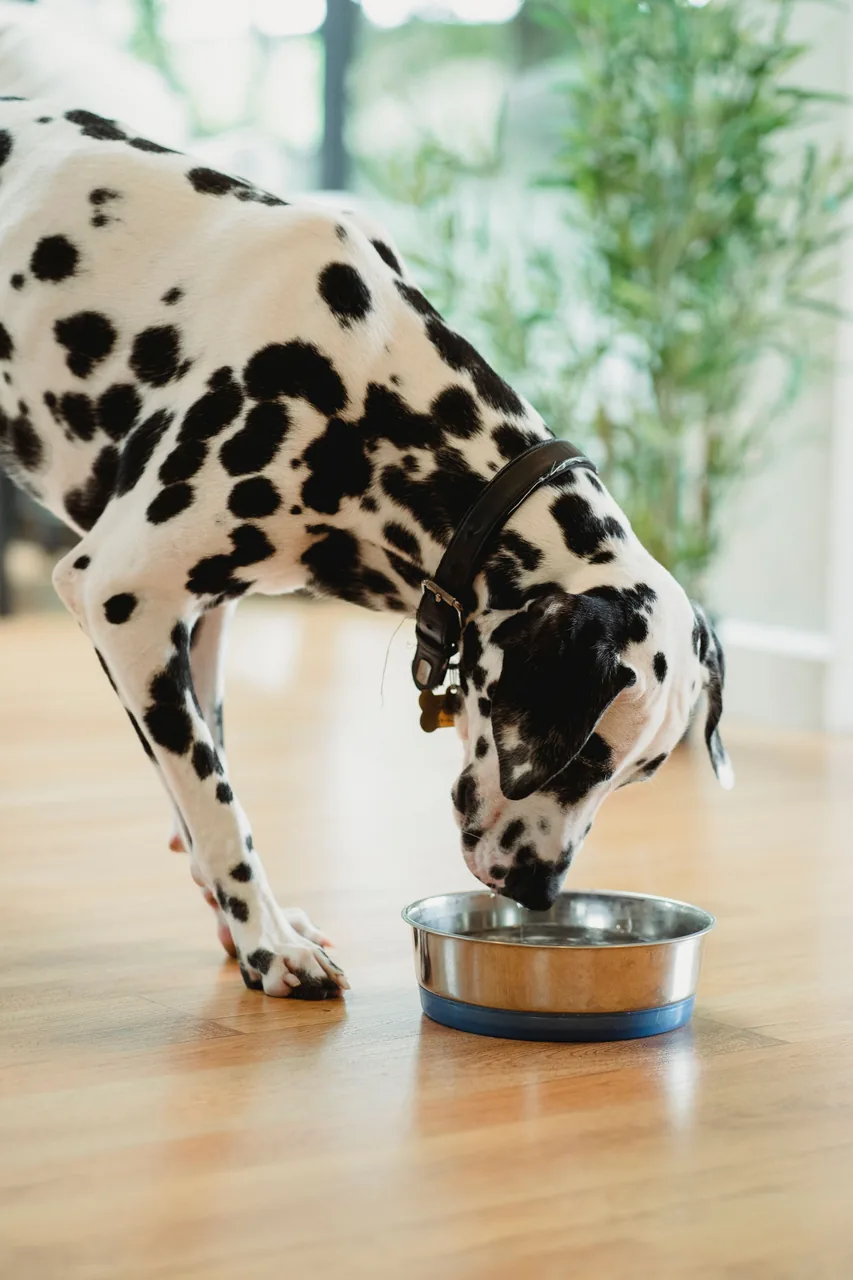
Keep dependable water access at the center of the decision
The ASPCA’s dog nutrition guidance emphasizes access to fresh, clean water. Choose capacity and placement that support that access throughout the day. A large reservoir is useful only if you still check its level, cleanliness, and operation.
Your dog’s needs can vary with body size, activity, weather, food, age, and health. Observe actual use rather than treating the amount printed on a container as a daily drinking target. If your veterinarian has provided an individual water-management plan, follow that guidance.
A noticeable change in thirst or urination deserves attention. VCA explains why increased drinking may require investigation. Do not assume that replacing a bowl with a fountain resolves the cause, and do not restrict water simply to reduce bathroom trips.
Compare a dog water bowl and a fountain by the work involved
“Special features” can mean a nonslip base, a spill-resistant rim, an adjustable stand, or another modification to an ordinary bowl. Identify the particular feature and its tradeoff rather than treating every enhanced design as one product category.
| Setup | Possible practical advantage | Routine and limitations |
|---|---|---|
| Traditional bowl | Few components; easy to move and replace; no electricity required | Needs washing, refilling, and a stable position; water may spill or collect debris |
| Bowl with special features | A suitable base or rim may address a specific slipping or splashing problem | Added pieces can complicate cleaning; check drinking access and the full footprint |
| Automatic fountain | Circulates water; some dogs may be comfortable with its drinking surface | Requires pump care, water-level checks, electricity, and sometimes replacement filters; noise and failures are possible |
This comparison describes design differences, not tested performance. We have not measured spill resistance, sound, filtration, or drinking behavior for any model. There are no affiliate links or brand rankings in this guide.
Choose features that solve an observed problem
If a bowl slides whenever your dog drinks, examine a stable base and the surface beneath it. If water splashes onto a narrow passage, consider location and mat coverage before buying a complicated container. A feature is useful when it improves that specific situation without making another task harder.
For a fountain, check the accessible drinking area as well as the reservoir capacity. A wide dog muzzle may not fit comfortably beneath a narrow spout. Likewise, a small dog should not need an awkward reach. Watch the dog drink instead of assuming that a design marketed “for pets” suits every animal.
Measure the station, not only the container
Allow for the bowl or fountain, a washable mat if needed, and room for your dog to approach and turn away. Include cabinet doors, chair movement, and nearby foot traffic. A narrow device can still be inconvenient if its reservoir must lift out under a low shelf.
Try a temporary outline on the floor before ordering. Open adjacent doors and walk past with a laundry basket. Check whether water would spill into a walkway or onto an electrical connection. A quiet corner is helpful only if the dog can reach it without being crowded or repeatedly disturbed.
When choosing a dog water bowl or fountain, consider weight and stability. A light bowl may be easy to wash but easy to move. A heavy bowl may stay put but be harder to lift when full. A fountain also needs a safe cord route and space for disassembly. Our guide to designing a dog zone can help you organize the surrounding space.
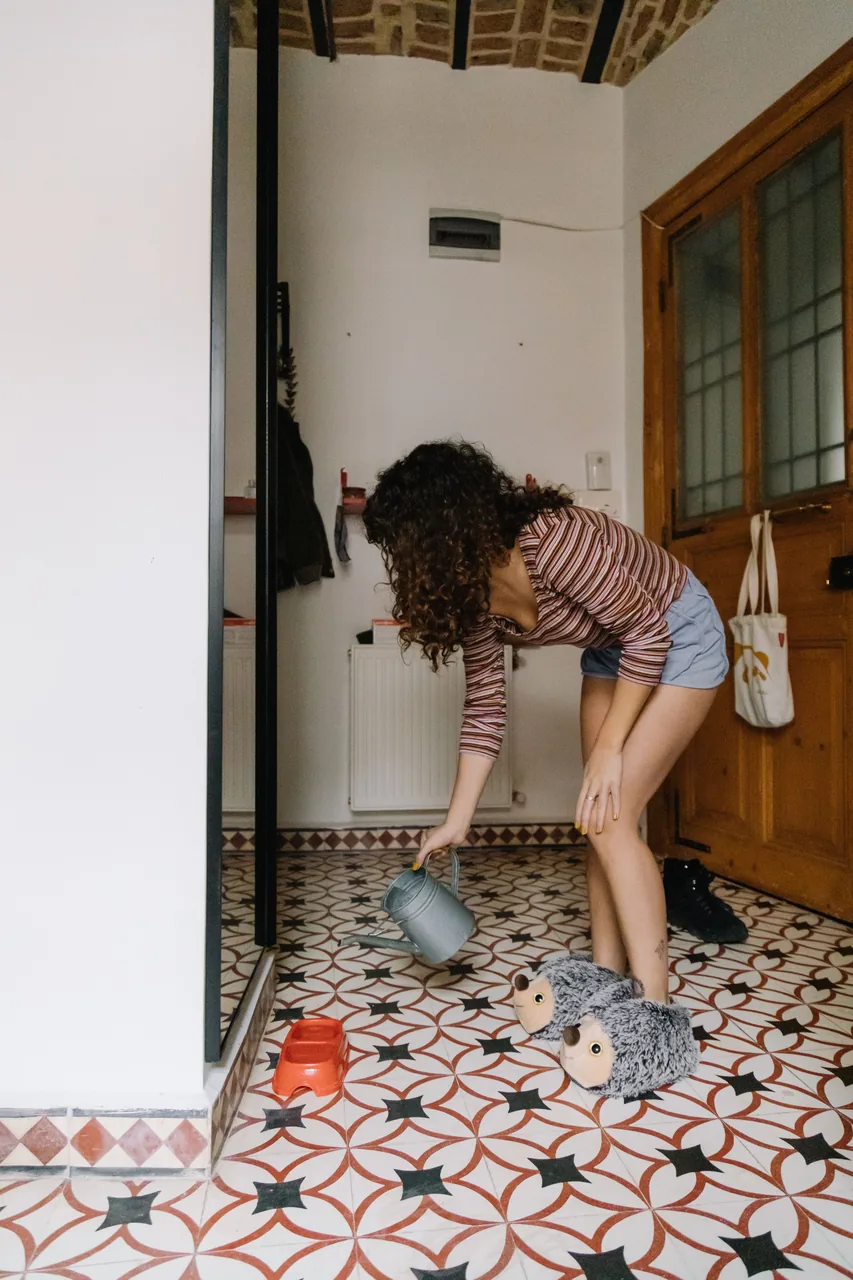
Examine materials and cleaning access together
Common options include stainless steel, ceramic, and plastic. Look for a product intended for pet drinking and confirm the manufacturer’s care instructions. A material name alone does not establish build quality, safety, or easy cleaning.
Inspect the surfaces you will actually wash. Are the rim and underside accessible? Does a silicone base detach? Can water enter a hollow stand or a narrow seam? For ceramic, check for chips or cracks. For plastic, inspect wear and damage. Follow the product’s replacement guidance when a surface can no longer be maintained properly.
Also verify dishwasher claims for each part. A dishwasher-safe basin does not mean the pump, cord, lid, or filter can go in the dishwasher. If handwashing is required, check that the parts fit your sink and that you can reach their corners with a suitable brush.
A filter does not replace washing
The CDC recommends cleaning water bowls daily, and more often when needed. Wash with soap or detergent and warm water, rinse thoroughly, and dry as appropriate before use. Follow instructions for items with their own cleaning directions.
A fountain adds parts to that routine. Look up how to take apart and clean the reservoir, drinking surface, tubing, and pump. PetSafe’s pump-cleaning instructions illustrate why maintenance extends beyond replacing a filter. They are a technical example, not a recommendation to buy that brand.
Use the specified filter type and replacement schedule. Check whether hair, debris, or mineral buildup requires attention sooner. Do not describe filtered water as sterile or assume circulation makes stale water safe. Keep checking and refreshing the water itself.
The FDA’s pet-food handling guidance also supports cleaning feeding equipment and washing hands. For disinfection, use products compatible with the item and follow their labels, keeping pets away as directed. Cleaning and disinfecting are different tasks.
Account for fountain noise, power, and failure
A pump can produce motor sound, and flowing water can add splashing noise. Whether that matters depends on the device, its condition, placement, and your household. We have not tested sound levels; “silent” in advertising is not a verified result.
Consider a studio apartment where the drinking station sits close to a bed or desk. Check the return policy before relying on a promise of quiet operation. If the sound changes later, inspect water level and maintenance requirements according to the manual rather than simply ignoring it.
Follow the supplied electrical instructions, including use of the specified adapter. Keep plugs and connections dry, route cords beyond chewing reach, and unplug as directed before cleaning. Do not submerge components that are not designed for it. The CPSC’s home electrical safety checklist provides general guidance about damaged cords and water-related electrical hazards.
Ask whether drinking water remains accessible when the pump stops. Some designs retain an open pool; others may not offer adequate access at low water levels. Verify the exact model. Keep a clean conventional bowl available during power outages, cleaning, repairs, or a difficult transition.
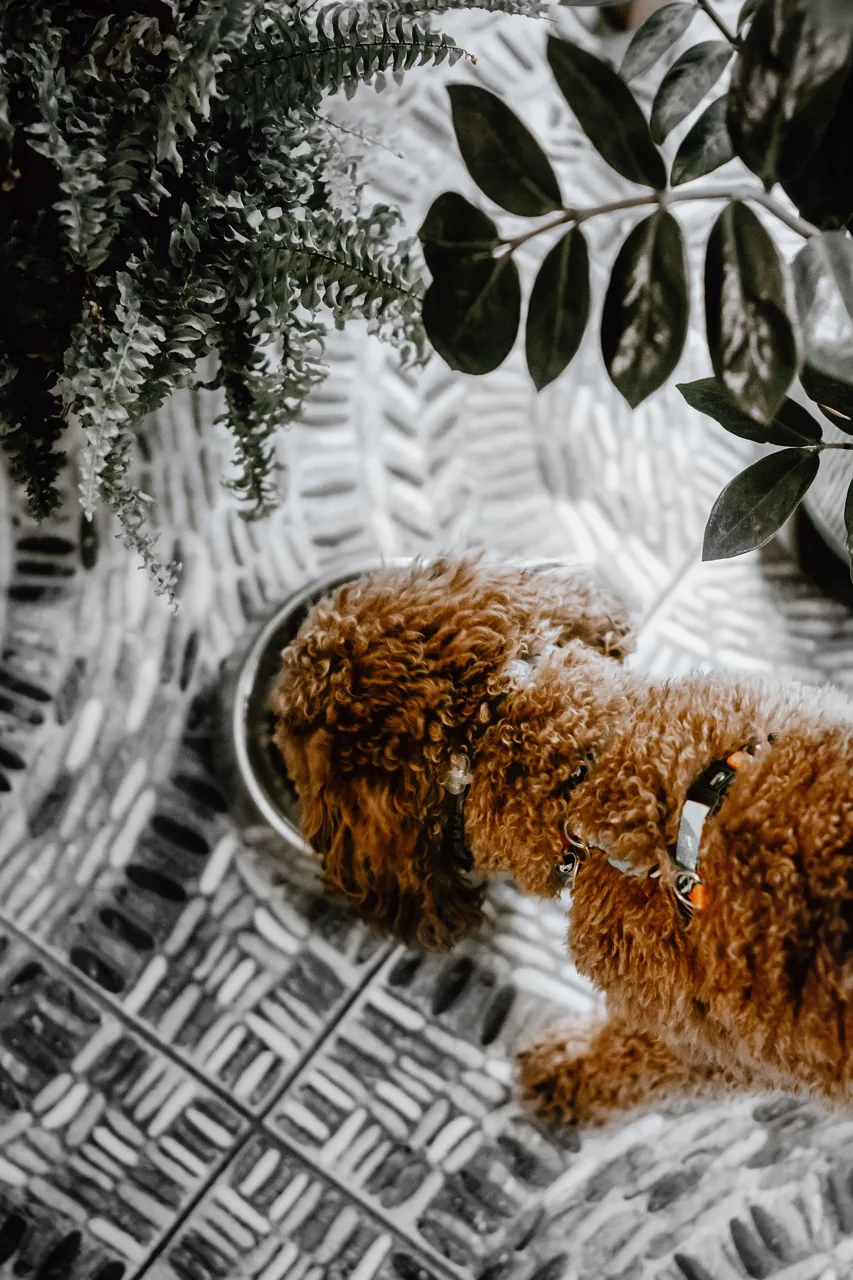
Compare the recurring costs before choosing
A dog water bowl and a fountain can have very different ongoing requirements. List the purchase price, replacement parts, filters, cleaning supplies, electricity, and your time. Check that compatible filters and pumps are currently available, and record the exact model rather than a general product-family name.
Estimate filter costs from the manufacturer’s replacement interval and current pack price. Include shipping if it changes the practical cost. Avoid treating a longer advertised filter life as proof that your own cleaning routine can be reduced.
You can estimate electricity with a simple calculation: watts ÷ 1,000 × hours used × your utility’s price per kilowatt-hour. For example, a hypothetical 3-watt device running continuously for 30 days uses 2.16 kWh. This is arithmetic, not a measurement of any fountain; use the actual rating and your local rate.
For a bowl, the recurring task may mainly be washing, refilling, and replacing a damaged item. For a fountain, consider whether you can realistically complete the additional maintenance during a busy week. A spare simple bowl can make both routines easier without committing to a second powered device.
Plan access for each dog in a multi-dog home
A bigger reservoir does not necessarily make one drinking spot comfortable for several dogs. Observe whether one dog blocks the station, whether a timid dog waits to approach, or whether different muzzle sizes create different access needs.
More than one station may be useful when dogs use different rooms or need space from each other. Keep each location easy to reach and maintain. Also consider extra saliva, hair, and use when planning inspection and cleaning. This is a household-access decision, not an assumption that every group of dogs needs the same arrangement.
Introduce a new setup without removing the dependable one
Place the new container in a calm location and let your dog investigate without pressure. Keep familiar water access available while you observe drinking, comfort around any pump sound, and practical spill patterns. Do not withhold the old bowl to force acceptance.
To compare a dog water bowl and a fountain, keep a short record of dimensions, drinking access, parts to clean, replacement costs, and uncertain details. Leave unknowns visible until you verify them. A conventional bowl may already meet your needs; a fountain may be reasonable if its extra work fits your routine.
The goal is a reliable water station for this dog and this home. Fresh water, comfortable access, sensible placement, and consistent maintenance matter more than purchasing a particular device or assuming moving water has a medical benefit.
Sources, scope, and photograph notes
Sources and photo licenses checked October 12, 2026. MyPupwise prepared this independent guide with AI-assisted research and writing. No product testing, consumer-review analysis, or veterinarian review is claimed. No brand endorsement is intended.
General guidance does not replace individual veterinary or behavior assessment.