Is pet insurance worth it in 2026? For a U.S. dog owner, the useful starting point is the gap between a bill you could pay today and a bill you would struggle to fund. A policy may transfer some eligible veterinary expense to an insurer. It will not turn every treatment into a covered claim, and reimbursement may arrive after you have paid the clinic.
This guide builds a decision around three separate numbers: the premium, your share of an eligible claim, and the cash needed before reimbursement. It uses a clearly fictional example to show the arithmetic, then a document checklist to test a real quote. It does not recommend an insurer, provide an individual quote, or predict a dog’s future medical costs.

Start with the bill you could handle this week
Write down the amount of accessible savings you could use for veterinary care without missing rent, essential bills, or another necessary expense. Keep that number separate from hoped-for income, an unused credit limit, and money already committed elsewhere. This is a household planning exercise, not a prescribed emergency-fund target.
Next, ask the clinic how payment works for a substantial treatment plan. Then ask the insurer how claims are submitted and whether the clinic must be paid first. The NAIC’s overview notes that most pet policies work through reimbursement. Do not assume that a policy solves an immediate payment problem unless the actual payment arrangement has been confirmed.
Use three tests to evaluate a real policy
1. Is the event within the coverage?
Read the accident-only or accident-and-illness description, exclusions, waiting provisions, and definitions. Check the treatment categories that matter to you, including examinations, diagnostics, medication, dental treatment, rehabilitation, and ongoing care. A broad marketing phrase is not enough to establish that each expense is eligible.
Pre-existing-condition wording deserves special attention. Ask how the insurer evaluates earlier symptoms, veterinary notes, undiagnosed problems, and any exceptions it offers. Do not assume that the absence of a formal diagnosis guarantees future coverage. Ask what medical records will be reviewed and whether a review can be obtained before you rely on the policy.
2. How is an eligible payment calculated?
A deductible, reimbursement percentage, benefit schedule, eligible-charge calculation, and payment limit can each affect the result. Learn whether a deductible is annual or works another way, how it interacts with the percentage, and when it resets. Ask for a written worked example using the terms of your proposed coverage.
The California Department of Insurance’s consumer questions specifically flag exclusions, waiting periods, deductibles, limits, and reimbursement formulas. Those are useful questions for a shopper, but the page is not proof that a particular policy covers a particular dog or that one state’s rules apply nationwide.
3. Can you keep the arrangement affordable?
Convert the actual premium quote to an annual amount and record the quote date, state, dog’s age, selected deductible, percentage, and limit. Ask how renewal pricing can change. A monthly price that works today does not guarantee the same price throughout the dog’s life.
Keep ordinary care in the budget. If routine preventive services are excluded, premiums do not replace the money needed for them. If a wellness arrangement is offered, compare its own fee and service limits separately rather than automatically treating it as the same protection as accident-and-illness insurance.
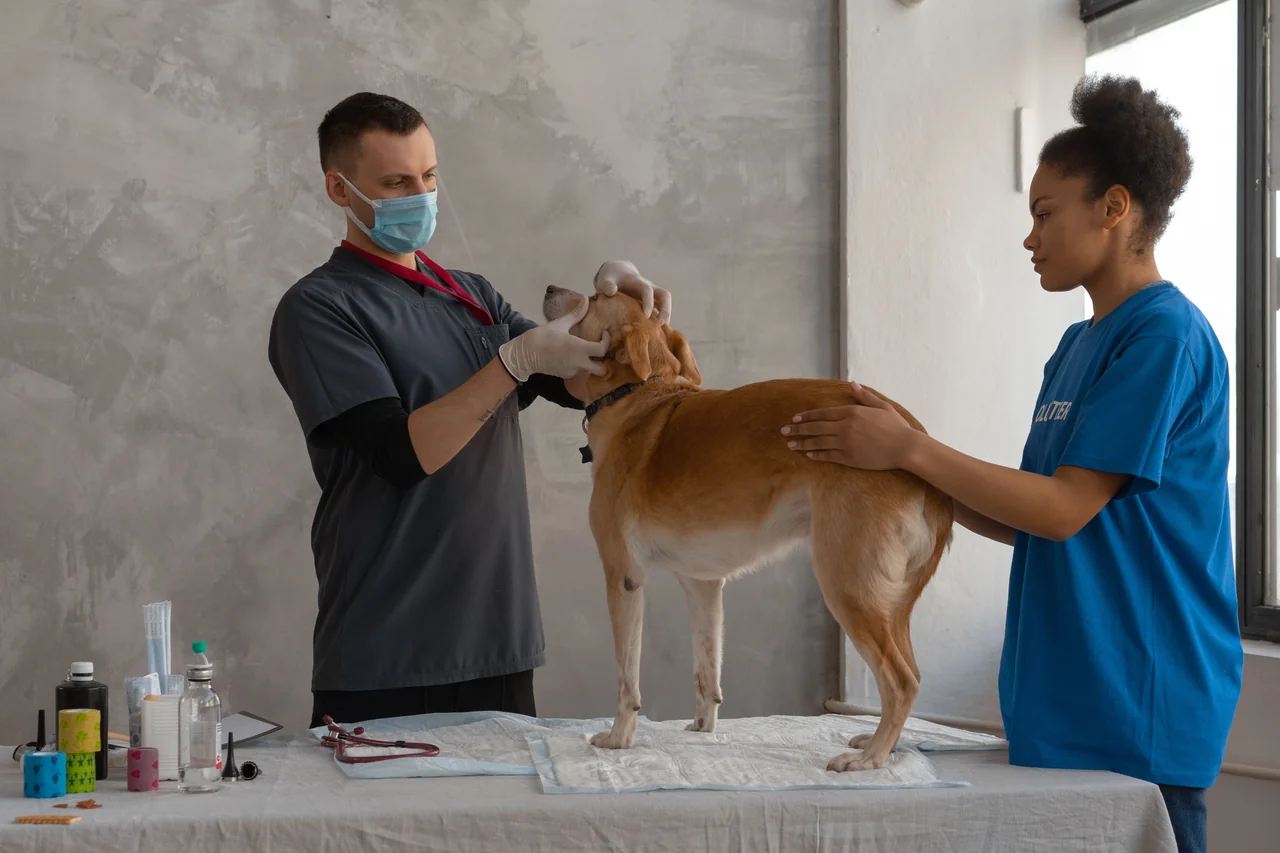
A fictional $3,000 claim: keep four amounts separate
Illustration only, not a quote or veterinary estimate. Suppose a hypothetical policy costs $50 a month, has a $500 annual deductible not yet met, and reimburses 80% of eligible charges after that deductible. Assume a $3,000 bill is entirely eligible, within all limits, and no other adjustment applies.
| Step | Calculation | Amount |
|---|---|---|
| Annual premium | $50 × 12 | $600 |
| Eligible balance after deductible | $3,000 − $500 | $2,500 |
| Hypothetical insurer payment | 80% × $2,500 | $2,000 |
| Owner’s share of this bill | $3,000 − $2,000 | $1,000 |
| Premium plus share of this bill | $600 + $1,000 | $1,600 |
The $1,600 total is not necessarily what you hand the clinic that day. If you must pay first, the initial cash requirement is $3,000, followed by a hypothetical $2,000 reimbursement after claim processing. Premiums are paid on their own schedule. Timing and ultimate cost are different problems.
Change one assumption and the answer changes. If some charges are ineligible, if a limit applies, or if the insurer calculates benefits differently, this arithmetic no longer describes the claim. If the year has no payable claims, the hypothetical $600 premium still bought coverage during that year; it did not become a savings balance.
Compare insurance with saving without promising a winner
In the same fictional example, putting $50 a month into a separate savings account creates $600 after twelve deposits, ignoring interest and withdrawals. That money remains yours, but a large bill in the first month can arrive before the fund grows. Saving does not transfer the risk of an early expensive eligible event to an insurer.
Insurance also leaves costs with you: premiums, deductibles, coinsurance, excluded care, expenses above limits, and potentially the full bill while a claim is processed. Some households choose coverage plus accessible savings. Others accept the risk and build their own reserve. The right comparison depends on actual terms and the household’s capacity, not a claim that every policy must pay back its premium.

Build a quote worksheet with evidence, not checkmarks
Put competing offers on one sheet. When an answer is missing, write “not confirmed” and ask for the relevant policy provision. Do not fill the gap using a competitor’s terms, a reviewer’s summary, or a promise that a category is “usually” covered.
- Identity: licensed insurer, product name, state-specific policy form, and current quote date.
- Dog and eligibility: age, history, enrollment conditions, and any required records or examination.
- Coverage: accident-only or accident-and-illness terms; exclusions; definitions of pre-existing, hereditary, congenital, and chronic conditions.
- Start date: effective date and any waiting provisions, including conditions treated differently.
- Claim arithmetic: deductible type, reimbursement basis, percentage, eligible-charge rules, and limits.
- Continuity: renewal pricing, changes in benefits, cancellation provisions, and how continuing conditions are treated.
- Cash flow: who pays the clinic, required documents, claims process, and any stated payment timelines.
Check the insurer or agent with the appropriate state insurance department when needed. Keep the actual documents and written explanations together. A sales conversation helps identify questions, but you should be able to point to the provision supporting an important assumption.
Be particularly careful when changing coverage
A lower new premium does not establish that switching is better. Ask the proposed insurer how the dog’s existing history and any applicable waiting provisions would affect the new coverage. Ask the current insurer about renewal and cancellation before taking action. Do not assume that continuous ownership of some policy makes all future conditions transferable.
This is especially relevant when a dog already has symptoms, tests in progress, or ongoing treatment. Disclose the history accurately and obtain clear information. This article cannot decide whether a particular condition will be accepted; that requires the actual policy and insurer’s determination under applicable rules.

When the decision remains unresolved
If the premium only fits by eliminating the money needed for ordinary care, revisit the budget. If a policy looks affordable but its claim-payment sequence is unclear, resolve the cash-flow question. If a known concern appears excluded, do not count a future claim for that concern as part of the justification for buying.
For a dog owner comparing options, a useful next step is to request two written quotes with understandable terms and discuss payment arrangements with the clinic. Review the documents when they arrive rather than choosing solely from a headline monthly figure.
Frequently asked questions
Does pet insurance cover routine appointments?
Check the specific product and any separate wellness arrangement. Routine care, examination fees associated with illness, and preventive services are different categories and can be treated differently. Do not infer one from another.
Is there one best age to enroll?
This guide establishes no universal enrollment age. Age, eligibility, history, premium, and exclusions need to be evaluated together. Ask how the actual dog’s records would be assessed before assuming that an offer provides the protection you want.
Can a policy guarantee that I can afford every treatment?
No such guarantee is made here. Coverage limits, exclusions, your share of charges, and payment timing still matter. Ask the clinic and insurer about the actual situation and arrange appropriate care rather than relying on this illustration.
Does “worth it” mean I must receive more than I pay?
That is only one way to look at past spending, and it does not describe the whole risk decision. A household may value protection against an uncertain eligible expense even in a year without claims. Another household may reasonably decide the actual terms and premium do not fit its needs.
Sources, date, and limits
Reviewed November 21, 2026: NAIC: Pet Insurance and California Department of Insurance: Questions to Consider When Purchasing Pet Insurance. They support the general coverage and comparison questions. Neither source endorses this guide or its fictional calculation.
The worksheet, decision sequence, and numerical example are original MyPupwise editorial analysis. No live premiums, insurer rankings, guaranteed claims outcomes, or individualized financial or legal advice are supplied. State rules and policy terms vary; consult the relevant regulator, licensed insurance professional, or insurer for your situation. Read our editorial policy and explore dog-care budgeting guides for related planning.
General guidance does not replace individual veterinary or behavior assessment.