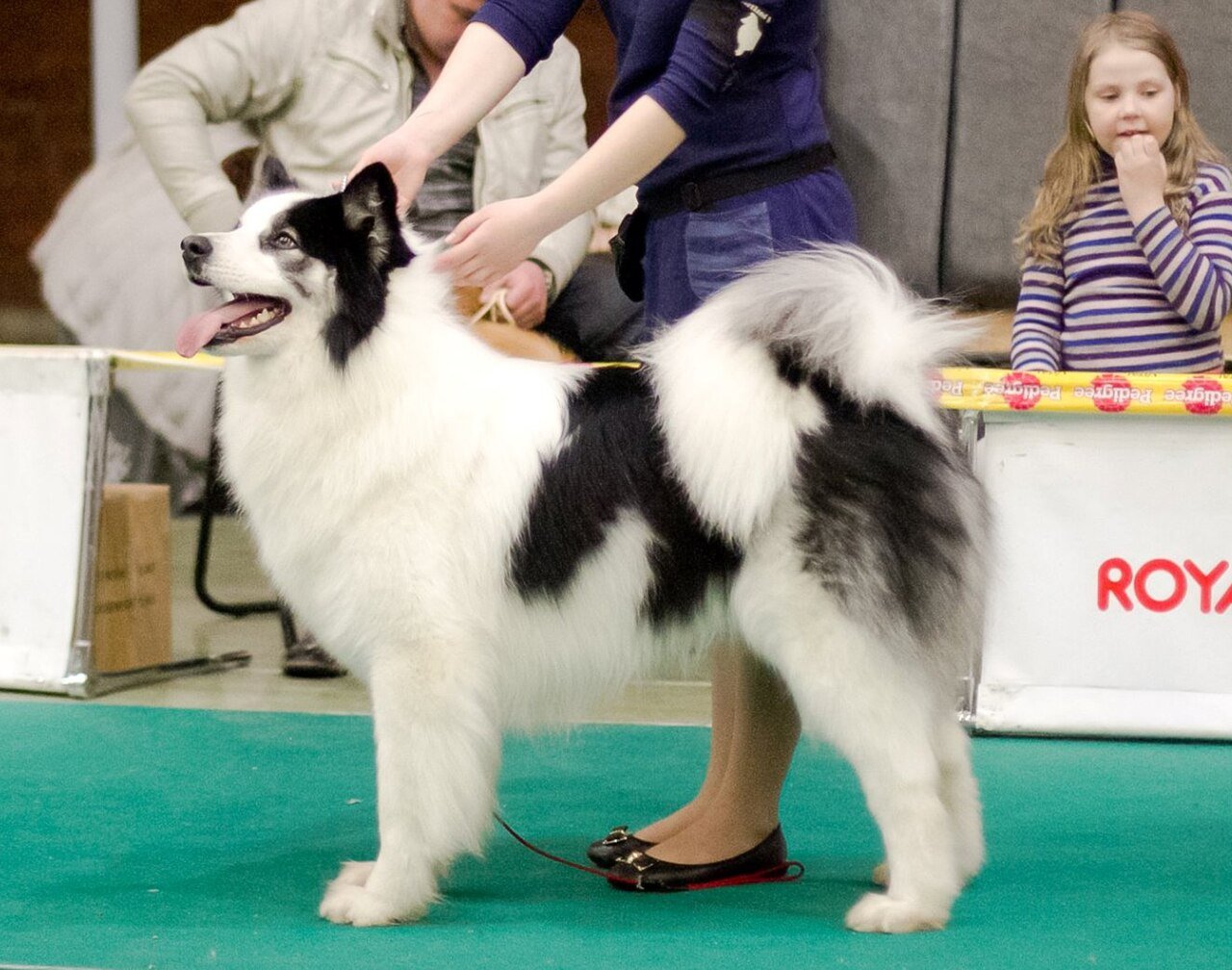
Ranges describe the registry profile, not a measurement, life expectancy, or health prediction for a particular dog. Separate sex or variety ranges are preserved where the source supplies them.
Source characteristics at a glance
The registry uses an ordinal 1–5 scale. A higher number indicates more of the named trait, not a better dog or a compatibility score. These descriptions are general and are not clinical measurements.
History and original work
The Yakutian Laika comes from Yakutia in Siberia, where dogs worked with Sakha communities in transport, hunting, and other practical roles. Modern preservation rebuilt the breed after numbers declined as transport changed. Sled ancestry still requires learned handling and appropriate conditioning in a companion routine.
Training & behavior
Teach separate cues for pulling in suitable equipment and walking beside you. Reward waiting at gates and returning attention during easy searches. Introduce unfamiliar dogs with supervision and room to disengage. Do not assume sled heritage supplies safe stopping, turning, or group skills without training.
Daily needs & enrichment
Offer progressively conditioned hikes, scent work, and carefully taught harness activities after suitable maturity. Choose cool conditions, check feet and equipment, and adapt workloads to recovery. Secure boundaries remain important around prey. Combine physical work with mental tasks and quiet rest rather than simply increasing distance.
Coat care
Brush weekly with a pin brush and metal comb, lifting the thick coat in sections to reach the undercoat. During a heavy shed, daily work can help remove loose wool. Check behind ears, at the ruff, armpits, groin, and tail base, avoiding repeated scraping of the same skin.
Bathe only when necessary for dirt or a specific care plan, rinse dog shampoo completely, and dry the dense inner layer with towels and comfortable airflow. Tidy hair beneath foot pads to reduce trapped snow and debris while preserving natural body length. Avoid excessive sculpting, hot drying, and leaving damp compacted wool beneath a dry-looking outer layer.
Living Environment & Daily Needs
Give a Yakutian Laika substantial outings and mental challenges that engage a versatile northern worker. Plan comfortable shelter, rest, shedding cleanup, and guidance for vocal enthusiasm within an involved routine with people.
Practical question
Does sled ancestry mean a dog can safely start harness work without instruction?
No. Teach stopping, turning, waiting, and equipment acceptance, then build conditioning gradually. Inherited enthusiasm is not a complete training or fitness plan.
Plan care for the individual dog
Budget, time alone and household compatibility depend on the individual dog and your circumstances. Use our care budget guide, time-alone planning guide and questions before adopting alongside the breed-specific source information above.
Health questions for a veterinarian
Hip and elbow dysplasia and eye abnormalities are documented screening concerns. Ask for actual joint and ophthalmologist records and family history rather than relying on a hardy working reputation. Persistent limping, visual change, or unexplained poor stamina warrants assessment. Bloat is also reported: unproductive retching, abdominal swelling, weakness, or collapse needs emergency care immediately. Reliable population-wide frequencies remain limited, and a normal screen cannot exclude every later orthopedic, ocular, or internal problem.
Editorial update: October 24, 2026. General information; individual care requires veterinary assessment. No veterinary review is claimed. See our Editorial Policy for sourcing and review practices.