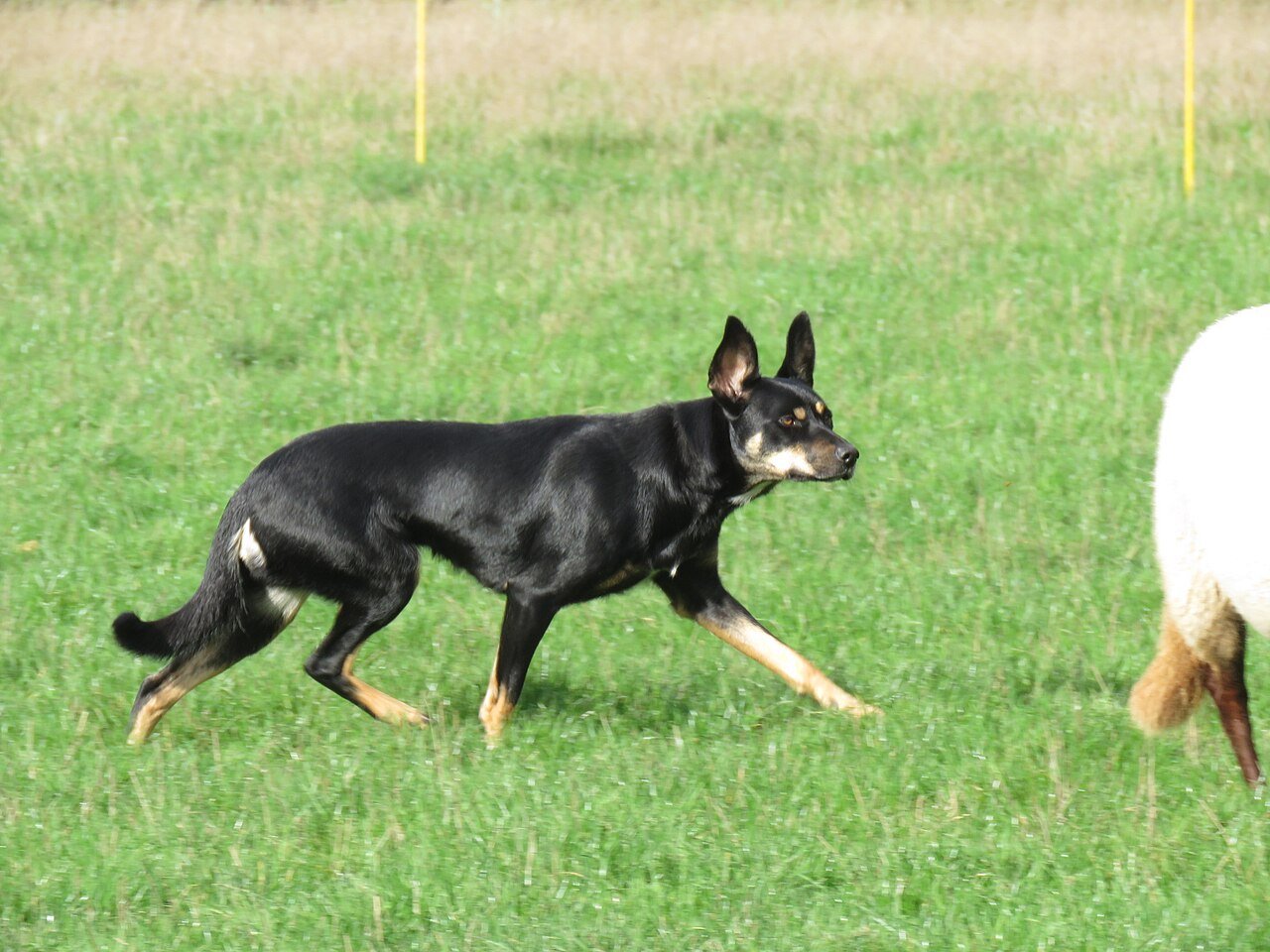
Ranges describe the registry profile, not a measurement, life expectancy, or health prediction for a particular dog. Separate sex or variety ranges are preserved where the source supplies them.
Source characteristics at a glance
The registry uses an ordinal 1–5 scale. A higher number indicates more of the named trait, not a better dog or a compatibility score. These descriptions are general and are not clinical measurements.
History and original work
The Working Kelpie developed in Australia from imported British sheepdogs selected for practical livestock work. Its registry identity emphasizes working ability, including mustering and driving with considerable independence. It shares history with the Australian Kelpie, but the two catalog entries should not be treated as interchangeable descriptions of breeding goals or an individual dog's needs.
Temperament and training
A dog selected to make decisions around stock may invent tasks when the household offers none. Teach a stop, recall, and change of direction with rewards before adding moving distractions. Manage attempts to control running children or other pets. Work on waiting and relaxing near activity, not just faster responses. An experienced stock-dog instructor can help distinguish useful initiative from rehearsed chasing.
Daily needs & enrichment
Suitable livestock training requires appropriate stock, supervision, and attention to both animals' welfare. Away from a farm, searches for a hidden object, directional games, and well-taught agility foundations can supply structured problems. Rotate tasks and include recovery; endless high-speed retrieving is not a substitute for learning to switch off. Adjust physical demands to the dog's development and conditioning.
Coat care
The short functional coat usually needs a grooming mitt or brush to remove loose hair and dried dirt. After rough-ground work, inspect pads, between the toes, and places a harness rubs instead of focusing only on coat shine. Check ears for field debris and teach calm nail handling. A low-maintenance coat does not make work-related skin or foot injuries easy to ignore.
A weekly mitt or suitable soft brush is a practical starting point, with extra checks after field work. Bathe occasionally for dirt, rinse fully, and dry comfortably. Avoid harsh scraping; prioritize inspecting feet, ears, and harness contact points over elaborate styling.
Living Environment & Daily Needs
A Working Kelpie needs meaningful tasks and substantial activity suited to strong herding instincts and stamina. Plan caregiver participation and recovery time deliberately; casual amusement or available acreage alone does not provide a dependable working role.
Care through life stages
Puppies need safe movement and foundations for stopping and returning, not a full working workload. Progress adults’ conditioning with suitable stock-dog instruction and recovery. In seniors, adapt terrain and tasks and investigate new tremor or incoordination rather than intensifying exercise.
Frequently asked questions
Does a clear ataxia result exclude every form of poor coordination? No. Available tests address particular known variants or markers. Ask which tests were used and have new neurological signs assessed regardless of the screening summary.
Questions to ask before choosing a dog
What work were the parents selected for, and how does this dog behave away from livestock? Request a concrete daily routine, evidence of recovery after work, and the names and reports of ataxia tests rather than a generic DNA-clear claim. Establish who can supply meaningful tasks and skilled guidance when work demands or family schedules change.
Plan care for the individual dog
Budget, time alone and household compatibility depend on the individual dog and your circumstances. Use our care budget guide, time-alone planning guide and questions before adopting alongside the breed-specific source information above.
Health questions for a veterinarian
The Working Kelpie Council highlights cerebellar abiotrophy, a group of inherited neurological disorders that can cause progressive incoordination, exaggerated steps, tremor, or difficulty eating. Its guidance supports DNA screening of breeding dogs but explains that tests address known variants or markers; a clear result should not be sold as proof that every form of ataxia is excluded. Ask which tests were performed and how the results relate to the mating. Carriers of the recessive forms discussed are not equivalent to dogs showing the disease. New stumbling, a head tremor, or deteriorating coordination warrants veterinary assessment, not a harder conditioning program. Discuss orthopedic history and current soundness before demanding work, and ask which assessments suit the family history and intended activity.
Updated October 25, 2026. General information; see our Editorial Policy for sourcing and review practices.