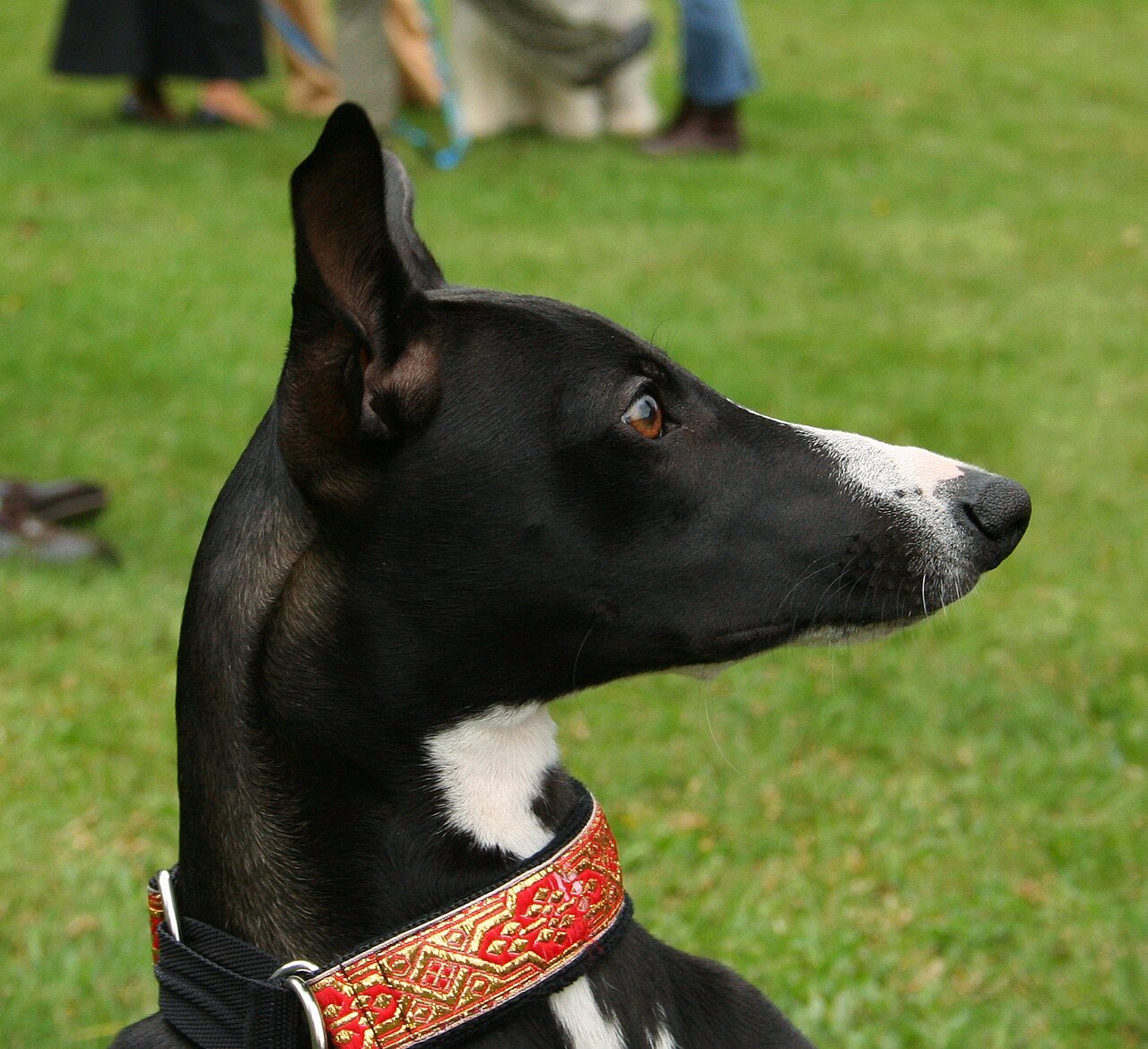
These are the registry ranges recorded for the breed. They do not predict one dog’s size, health, or lifespan. Retain the male and female ranges when comparing profiles.
Source characteristics at a glance
Read the registry’s five-point trait labels as broad descriptions. A larger number means more of that trait; it is neither a quality grade nor an individual compatibility result.
Read the background, then inspect the home
The American Whippet Club describes a sighthound developed in England for coursing and racing. That background helps explain why movement and secure exercise arrangements matter. It does not tell you how a particular dog will handle your staircase, another pet, visitors, or time alone.
Before placement, describe those circumstances to the breeder, rescue, or foster caregiver. Ask for direct observations: where the dog rests, how it is transported, what handling it accepts, and what happens when the routine changes. Write down what remains unknown rather than filling the gap with an appealing breed label.
Make an exit-and-return plan
The AKC profile recommends leash use outside safely fenced areas. Walk the route from your front door to the place where the dog will exercise. Check shared entrances, gates, loading into the car, and who holds the leash while a door is open.
For example, a renter using a shared courtyard should establish whether its gates and use rules actually provide an appropriate area. A convenient patch of grass is not automatically a secure running space. If the arrangement is uncertain, keep outings controlled while seeking a suitable alternative.
Build the ordinary weekday before the special activity
Write a realistic schedule for walks, meals, rest, company, and backup care. Ask your veterinarian how the individual dog’s age, conditioning, health, and comfort should shape activity. A sprinting reputation does not provide a daily mileage target.
Then investigate optional activities with a qualified organizer. Ask about eligibility, preparation, footing, equipment, and how beginners are introduced. An exciting demonstration should help you ask informed questions, rather than become an exercise test to reproduce immediately with your dog.
Keep grooming manageable and observations useful
AKC describes weekly brushing and occasional bathing for the short coat, alongside nail and ear care. Follow suitable product instructions and seek help for painful handling or a persistent change. A simple coat routine still includes noticing the dog’s skin, feet, and comfort.
Set supplies in one place and decide who does the task. Keep brief notes on anything unusual to discuss at the clinic. Avoid turning a care observation into a diagnosis, or repeatedly handling a sore area to see whether the dog reacts again.
Ask for health records with dates
The American Whippet Club’s health guidance discusses eye, hearing, and cardiac screening, including BAER hearing testing and echocardiography. Request the actual reports for relevant breeding dogs and discuss the candidate’s own history with your veterinarian.
A test result answers a particular question at a particular time; it is not a lifelong guarantee. Ask what was examined, when, by whom, and what follow-up was advised. Bring any change in movement, stamina, hearing, vision, or body condition to the clinic rather than explaining it away as normal for the breed.
A useful question about a lean-looking dog
Should I increase food because a Whippet looks slimmer than another breed? Ask for an individual body-condition and nutrition assessment. Build, muscle, growth, and health belong in the discussion. Neither a photograph nor a fixed visible-bone rule establishes the right amount of food for your dog.
Put the decision on one page
Record the candidate’s known history, secure outing arrangement, weekday care, backup caregiver, and questions for the veterinarian. Our care-budget worksheet, time-alone planning guide, and adoption questions help fill out the practical details.
Sources and editorial limits
Reviewed November 22, 2026: AKC’s Whippet profile and the American Whippet Club’s breed and health pages, linked above. Registry data and general care points are source information. The route audit, renter example, and planning questions are MyPupwise editorial analysis. No physical temperament testing or veterinary review is claimed. Read our Editorial Policy.