Ranges describe the registry profile, not a measurement, life expectancy, or health prediction for a particular dog. Separate sex or variety ranges are preserved where the source supplies them.
Source characteristics at a glance
The registry uses an ordinal 1–5 scale. A higher number indicates more of the named trait, not a better dog or a compatibility score. These descriptions are general and are not clinical measurements.
History and physical characteristics
Despite its name, the Tibetan Terrier developed as a Tibetan companion and watchdog rather than a conventional earth-working terrier. Its history also includes herding and guarding. Assess the individual’s watchfulness and sensitivity rather than using the English name to predict behavior.
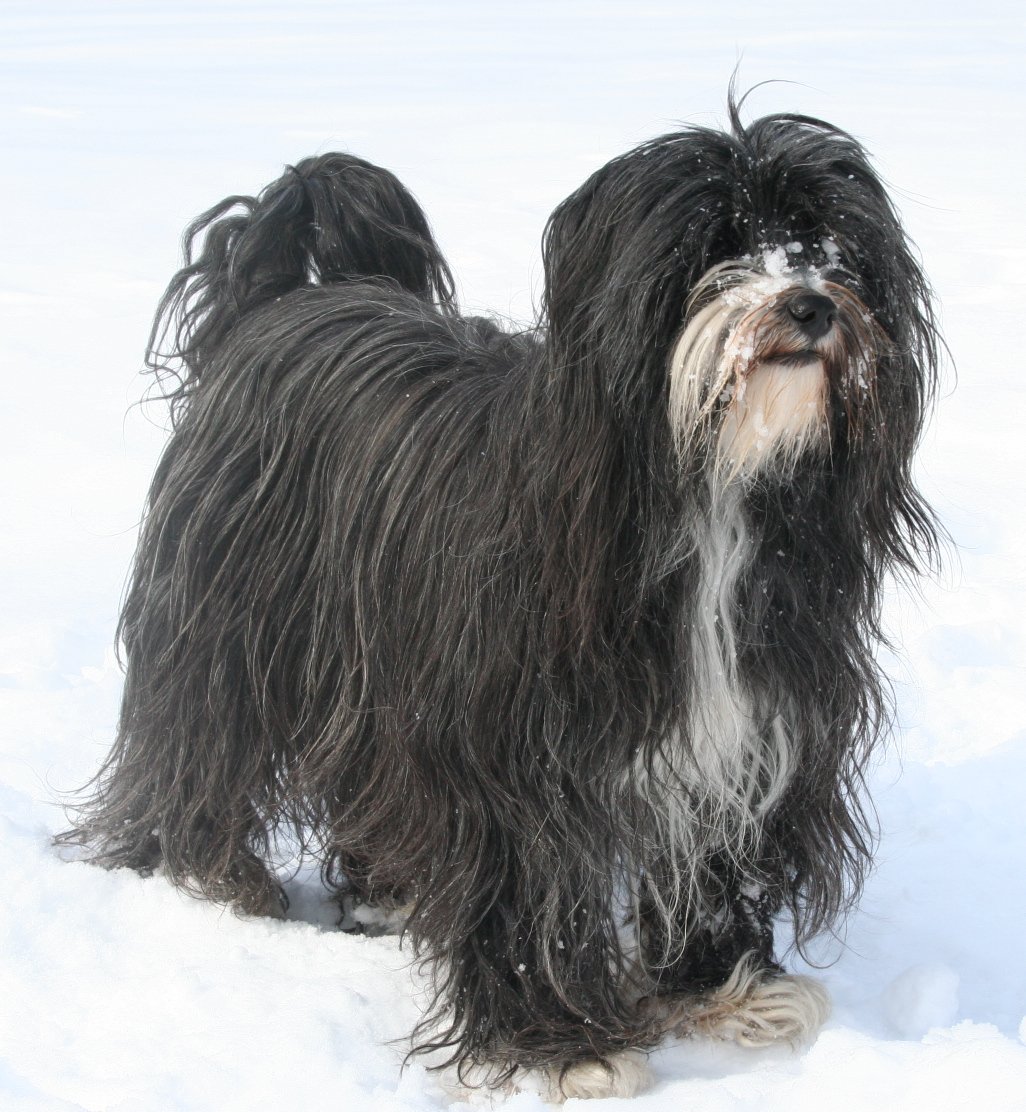
The long double coat, square outline, and broad feet reflect a distinctive mountain background. Hair can conceal tangles and obscure feet, so grooming includes checking the skin, pads, and nails rather than only arranging the surface.
Temperament and training
A Tibetan Terrier is a watchful companion rather than a conventional earth-working terrier. Use gentle, varied lessons to build confidence with visitors and handling. Reward pauses in alerts and introduce new experiences without forcing contact. Children should respect withdrawal while a sensitive dog learns to trust grooming and examination.
Daily needs & enrichment
Offer exploratory walks, scent games, and small learning challenges with regular caregiver involvement. Vary tasks without making every encounter demanding. Include quiet recovery after unfamiliar events and adapt activity to age and movement rather than assuming a companion label means little engagement is needed.
Coat care
Check for tangles daily and brush and comb thoroughly several times a week, increasing attention for long or changing coats. Lift sections with a suitable pin or slicker brush and check roots with a metal comb. Watch behind ears, armpits, belly, leg junctions, feet, and equipment areas.
A shorter trim simplifies some maintenance but does not replace combing. Address small tangles before bathing, rinse dog shampoo fully, and dry to the roots with towels and comfortable airflow. Avoid hot drying, pulling through mats, and scissors against skin. Teach relaxed foot and nail handling in manageable sessions.
Living Environment & Daily Needs
Provide a Tibetan Terrier active outings and mental involvement with patient guidance through new experiences. Comfortable rest and regular grooming belong alongside that sensitive watchdog character; the name should not substitute for assessing the actual dog.
Care through life stages
Puppies need pleasant introductions to grooming and new people without forced contact. Maintain adult outings and thinking tasks alongside coat care. Improve traction and grooming comfort for seniors; new visual difficulty, imbalance, or stiffness needs assessment.
Frequently asked questions
Does one PRA result cover the recommended eye DNA tests? No. PRA3 and PRA-rcd4 are distinct, and PLL is a different condition. Clinical eye examinations remain important because DNA testing does not cover every eye disorder.
Questions to ask before choosing a dog
Request separate NCL, PLL, PRA3, and PRA-rcd4 results plus clinical eye, joint, and hearing records. What does any clearance-by-parentage claim mean? Observe responses to strangers, paw handling, and combing rather than judging maintenance from a freshly groomed coat.
Plan care for the individual dog
Budget, time alone and household compatibility depend on the individual dog and your circumstances. Use our care budget guide, time-alone planning guide and questions before adopting alongside the breed-specific source information above.
Health questions for a veterinarian
The club recommends hip, patellar, BAER hearing, and current clinical eye evaluations. Hip imaging and kneecap assessment address different joint questions; BAER assesses hearing. An eye examination at one date cannot promise lifetime freedom from disease. Ask for identifiable reports and follow-up advice.
Separate DNA results address neuronal ceroid lipofuscinosis (NCL), primary lens luxation (PLL), PRA3, and PRA-rcd4. Verify the basis of clearance through parentage. A painful or suddenly cloudy eye or abrupt visual change needs prompt care; neurological changes also warrant investigation regardless of inherited screening.
Updated October 25, 2026. General information; see our Editorial Policy for sourcing and review practices.