Ranges describe the registry profile, not a measurement, life expectancy, or health prediction for a particular dog. Separate sex or variety ranges are preserved where the source supplies them.
Source characteristics at a glance
The registry uses an ordinal 1–5 scale. A higher number indicates more of the named trait, not a better dog or a compatibility score. These descriptions are general and are not clinical measurements.
History and original work
The Spanish Water Dog developed as a versatile herder and water worker on the Iberian Peninsula. Proposed earlier routes into Spain differ, so a single migration story should not be treated as established fact. Its working name does not mean every individual will swim readily or arrive knowing how to behave around livestock.
Temperament and training
Teach a clear start and finish to work, and reward turning away from movement instead of rehearsing herding of people. Arrange visitor introductions without pressure, allowing a watchful dog to observe calmly. Use reward-based lessons and handling practice. Introduce livestock only with qualified guidance, and assess compatibility with children and animals through actual behavior.
Daily needs & enrichment
Lay a short scent trail to a familiar object, then ask for a calm delivery and a break. Walks and progressive outdoor work can complement the task. Build swimming skills in a controlled setting if the dog enjoys water; supervise access and provide an easy exit. Mature athletic ability is not a reason to impose adult workloads on a puppy.
Coat care
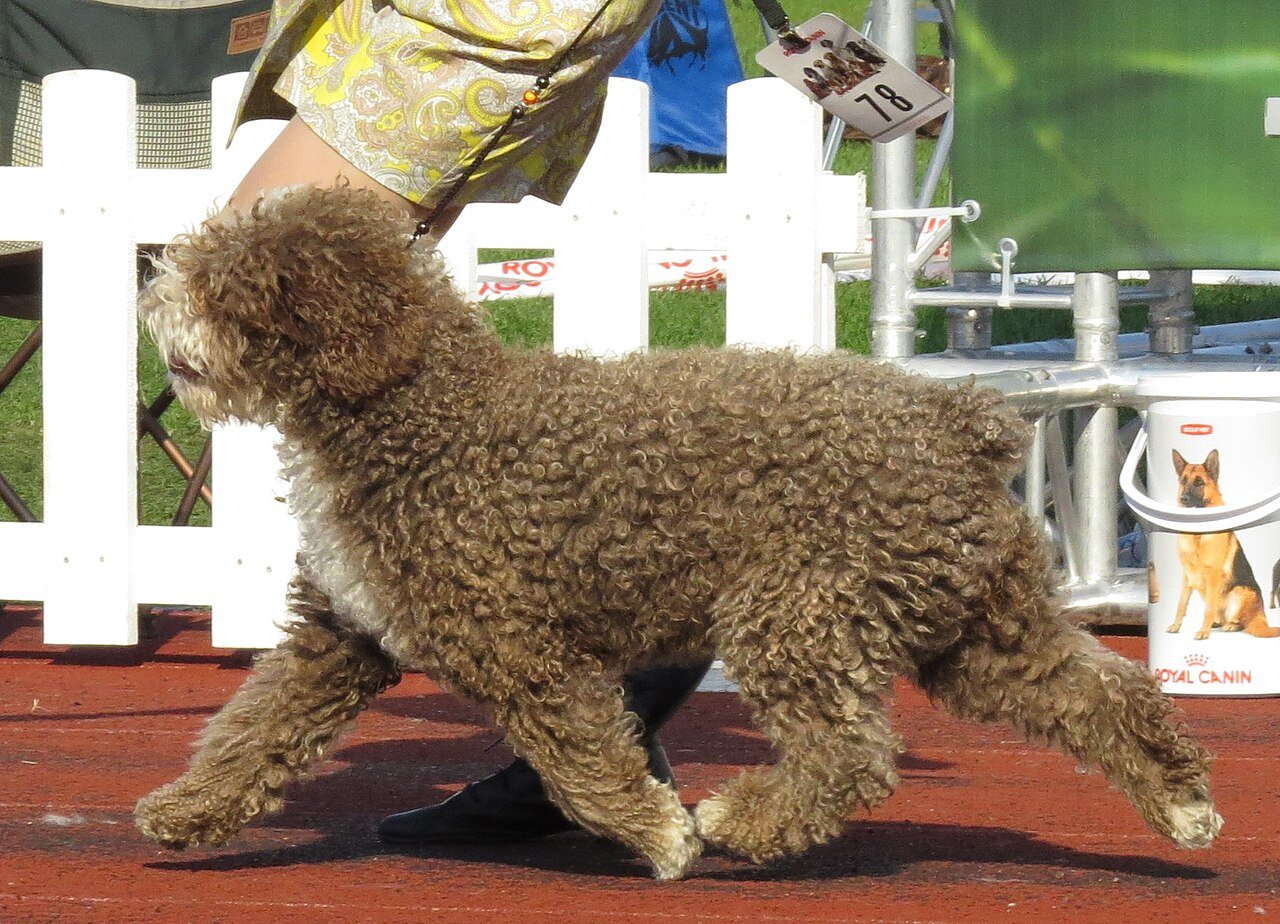
Inspect the woolly coat regularly without routine brushing. Plan an even clip and its timing with someone experienced in Spanish Water Dog coats, according to length and condition. If keeping cords, learn this breed’s method rather than borrowing the technique for a Komondor or Bergamasco.
After wet or dirty work, remove debris gently and rinse as needed. For baths, use dog shampoo, rinse completely, and dry through the dense coat with towels and comfortable airflow. Avoid hot drying, pulling clumps against skin, and leaving a wet coat packed beneath equipment. Check feet and visible ears and introduce cooperative nail care.
Living Environment & Daily Needs
Provide a Spanish Water Dog purposeful movement and thinking tasks through shared training. Learn its particular coat-care routine and guide watchfulness calmly, with rest between activities rather than assuming woolly curls describe the whole care plan.
Care through life stages
Teach puppies calm clipping, handling, and disengagement from moving people. Build adult water confidence and endurance gradually with a safe exit and supervision. Seniors may need shorter tasks and easier access; poor coordination or unusual lethargy deserves assessment rather than more training.
Frequently asked questions
Does the name mean my Spanish Water Dog will naturally swim safely? No. Assess the individual, introduce water gradually, supervise access, and provide an easy exit. Retrieving ancestry does not replace water-safety teaching.
Questions to ask before choosing a dog
Which PRA variants, CHG and NAD were tested, and can you show the reports alongside hip, eye and thyroid assessments? Ask how this dog handles movement, visitors and the end of a task. Request a coat-care demonstration and observe water confidence before planning swimming activities.
Plan care for the individual dog
Budget, time alone and household compatibility depend on the individual dog and your circumstances. Use our care budget guide, time-alone planning guide and questions before adopting alongside the breed-specific source information above.
Health questions for a veterinarian
Beyond hips and eye examinations, US breed-club guidance addresses thyroid disease and distinct DNA tests for prcd-PRA, early-onset PRA and congenital hypothyroidism with goiter (CHG). These conditions affect vision or thyroid-hormone production; one result labeled 'PRA clear' does not cover every variant. Neuroaxonal dystrophy (NAD), an inherited neurological disorder, is another documented testing topic. Request the exact parental reports and discuss their scope with the veterinarian. New poor coordination, vision difficulty or unexplained lethargy needs investigation rather than assuming it is a training problem.
Updated October 25, 2026. General information; see our Editorial Policy for sourcing and review practices.