Ranges describe the registry profile, not a measurement, life expectancy, or health prediction for a particular dog. Separate sex or variety ranges are preserved where the source supplies them.
Source characteristics at a glance
The registry uses an ordinal 1–5 scale. A higher number indicates more of the named trait, not a better dog or a compatibility score. These descriptions are general and are not clinical measurements.
History and original work
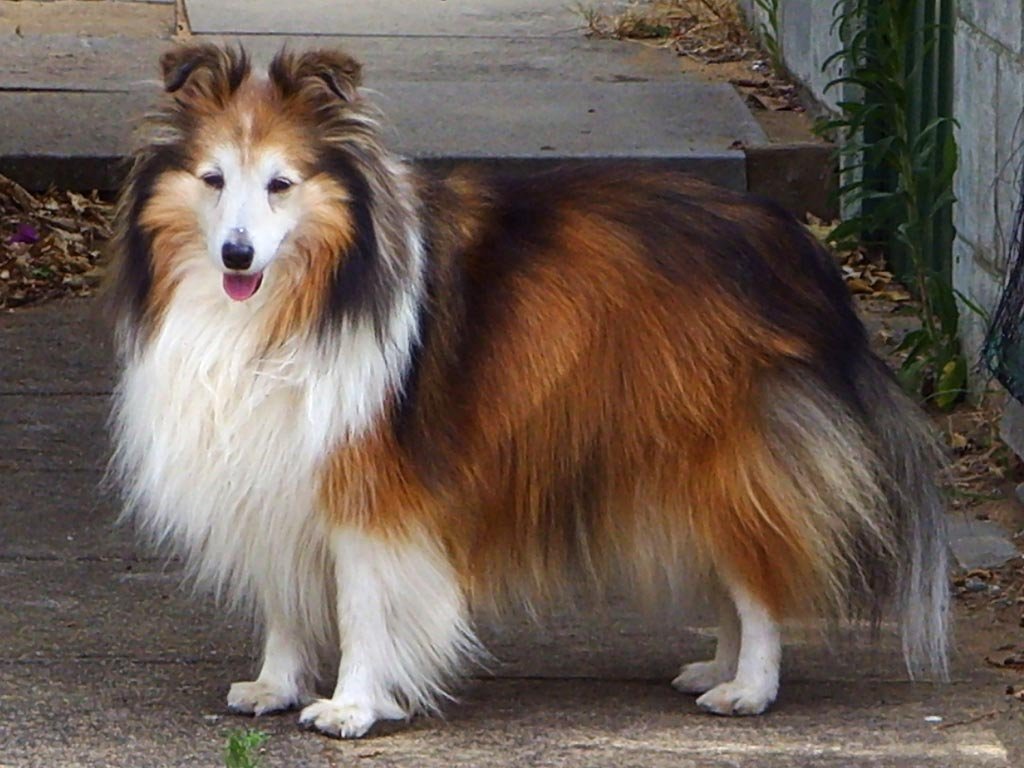
The Shetland Sheepdog developed in the Shetland Islands as a compact farm herder, working around livestock such as sheep and poultry. Mainland Collie influence contributed to modern development, but the complete earlier pedigree is not recorded. Alertness and quick responses still accompany the long coat.
Training & behavior
Reward looking back at you when a sound or movement appears. Teach a station away from busy windows and reinforce quiet pauses rather than joining the barking. Keep children’s running games separate from herding practice. Use gradual exposure with enough distance for a sensitive dog to remain comfortable.
Daily needs & enrichment
Combine varied walks with searching, rally skills, and age-appropriate agility foundations. Reward stopping and waiting as well as quick movement. Build coordination before repetitive jumps and allow undisturbed rest afterward. A fenced yard cannot teach a motion-sensitive herder how to disengage.
Coat care
Line-brush the double coat weekly, lifting the long harsh outer hair to reach dense undercoat. Check behind ears, beneath elbows, at the collar, and through the pants under the tail with a metal comb. Work more frequently during shedding and remove loose wool without scraping skin.
Bathe occasionally as needed, detangling first and rinsing dog shampoo fully. Dry down to the roots with towels and comfortable airflow, especially in thick rear furnishings. Keep feet and sanitary hair practical without routine body shaving. Avoid hidden mats, hot drying, and assuming an outer layer that looks tidy has a dry inner coat.
Living Environment & Daily Needs
Provide a Sheltie engaging tasks and active outings, with practice in responding calmly to household changes. Its substantial voice and collie-like coat need a practical noise and grooming plan alongside quiet recovery time.
Practical question
Will more running automatically stop a Sheltie announcing every sound?
No. Provide suitable activity while teaching a quiet alternative and reducing rehearsed window barking. Recovery and predictable routines matter alongside exercise.
Plan care for the individual dog
Budget, time alone and household compatibility depend on the individual dog and your circumstances. Use our care budget guide, time-alone planning guide and questions before adopting alongside the breed-specific source information above.
Health questions for a veterinarian
Hip evaluation and eye examination are core recommendations, with additional testing relevant to dermatomyositis, vWD, MDR1 drug sensitivity, and other concerns. Dermatomyositis risk testing does not diagnose every skin lesion; MDR1 information should be shared with the veterinary team before medication decisions, without changing prescribed drugs on your own. Ask about family seizure and thyroid history too. Persistent skin damage, abnormal bruising, impaired sight, or unexplained neurological signs deserves assessment despite normal screening.
Editorial update: October 24, 2026. General information; individual care requires veterinary assessment. No veterinary review is claimed. See our Editorial Policy for sourcing and review practices.