Ranges describe the registry profile, not a measurement, life expectancy, or health prediction for a particular dog. Separate sex or variety ranges are preserved where the source supplies them.
Source characteristics at a glance
The registry uses an ordinal 1–5 scale. A higher number indicates more of the named trait, not a better dog or a compatibility score. These descriptions are general and are not clinical measurements.
History and original work
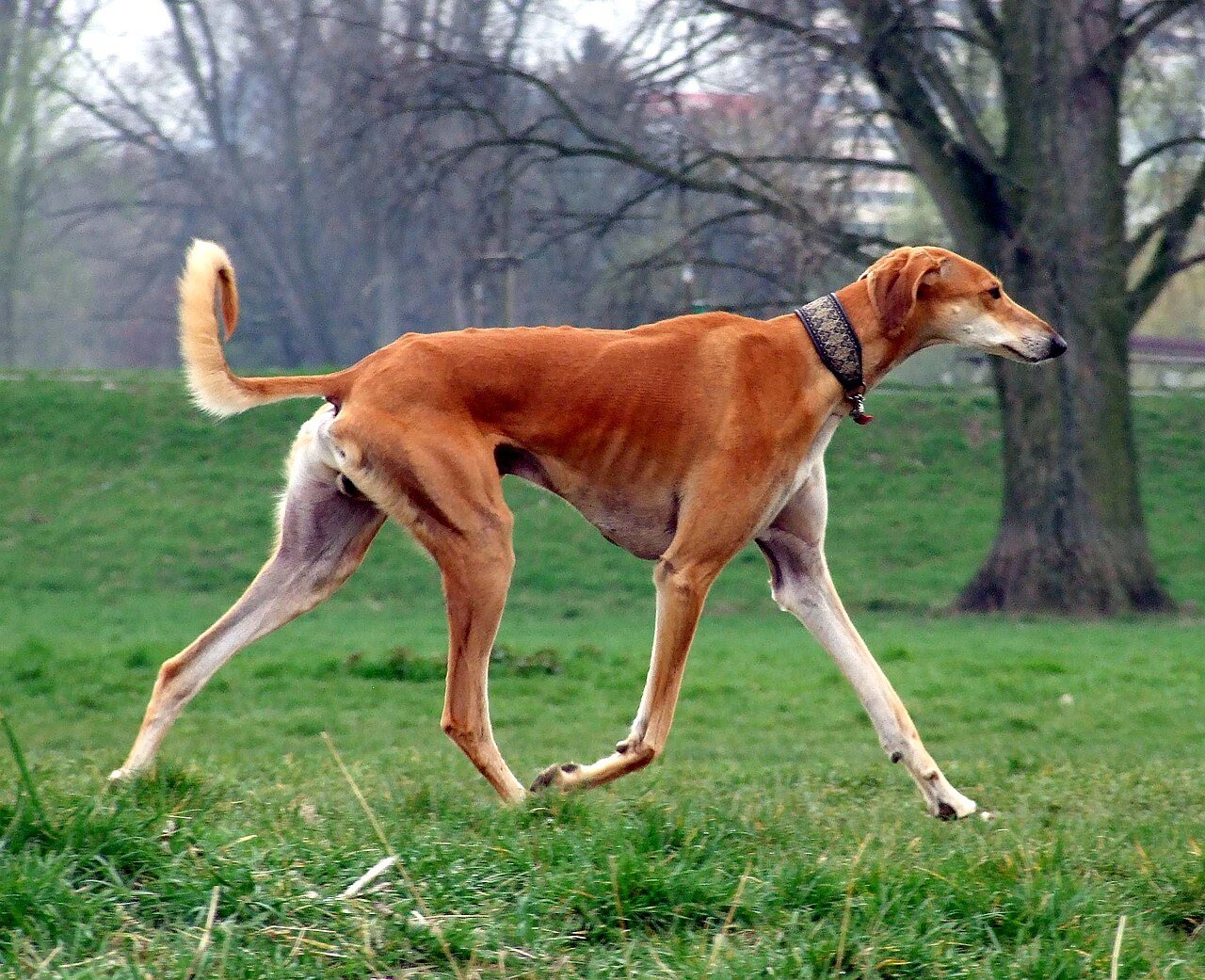
The Saluki belongs to the hunting traditions of the Middle East, where speed and endurance helped pursue game across open country. Ancient depictions resemble this type of hound, but an uninterrupted modern pedigree cannot be dated from artwork alone. Smooth and feathered coats occur. AKC recognition dates to 1927.
Training & behavior
Reward a brief check-in before releasing the dog to explore inside a secure enclosure. Practice comfortable confinement for travel and cooperative nail care without forcing long repetitions. Keep recalls rewarding, but use physical boundaries around wildlife rather than assuming affection overrides a sudden chase.
Daily needs & enrichment
Provide walks and opportunities for free running in a safely enclosed area with suitable footing. Condition before demanding coursing and allow recovery rather than repeated abrupt turns after a thrown ball. Young hounds need appropriate coordination and self-paced movement instead of forced distance.
Coat care
Brush the smooth body weekly with a soft brush. In the feathered variety, add gentle combing behind ears and through leg and tail fringes, removing seeds before they tighten into knots. A clean, comfortably fitted snood can keep long ear hair out of food; remove it when unnecessary.
Bathe when dirty with dog shampoo, rinse completely, and towel-dry, finishing feathering with comfortable airflow if needed. No routine body clipping is required. Avoid pulling fine ear hair, abrasive shedding blades, or leaving a wet snood against skin. Keep nails suited to safe running and check feet after rough ground.
Living Environment & Daily Needs
Arrange secure running opportunities and patient lessons for a Saluki, alongside gentle familiar company and comfortable rest. Its independent pursuit interest calls for realistic boundaries and recall expectations rather than reliance on attachment alone.
Practical question
Does a reliable recall at home make open-country running safe?
No. Sudden pursuit can overwhelm a practiced response. Choose a properly enclosed running area and use a lead elsewhere.
Plan care for the individual dog
Budget, time alone and household compatibility depend on the individual dog and your circumstances. Use our care budget guide, time-alone planning guide and questions before adopting alongside the breed-specific source information above.
Health questions for a veterinarian
Heart and thyroid assessment are documented recommendations. Salukis can have thyroid values different from general canine reference ranges, so a low result needs interpretation with symptoms and appropriate sighthound knowledge rather than an automatic diagnosis. A cardiac examination assesses particular findings and may lead to specialist imaging. Fainting, exercise intolerance, or unexplained weight loss needs investigation. Sudden abdominal swelling and repeated unproductive retching require emergency attention. Neither athletic performance nor normal screening proves freedom from disease.
Editorial update: October 24, 2026. General information; individual care requires veterinary assessment. No veterinary review is claimed. See our Editorial Policy for sourcing and review practices.