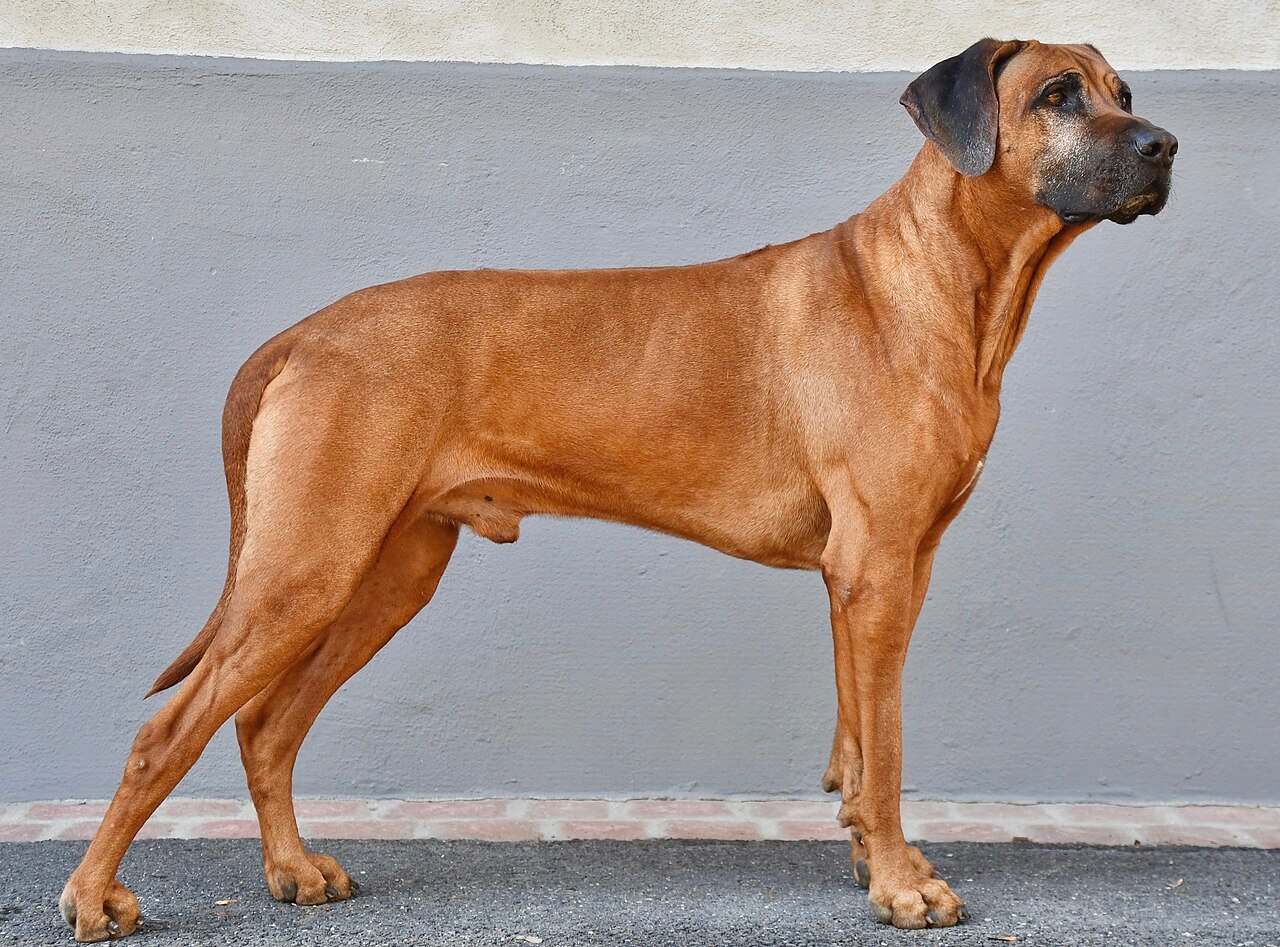
Ranges describe the registry profile, not a measurement, life expectancy, or health prediction for a particular dog. Separate sex or variety ranges are preserved where the source supplies them.
Source characteristics at a glance
The registry uses an ordinal 1–5 scale. A higher number indicates more of the named trait, not a better dog or a compatibility score. These descriptions are general and are not clinical measurements.
History and original work
The Rhodesian Ridgeback developed in Southern Africa from local ridged dogs and imported working ancestry. Its hunting role included holding lions at bay, rather than killing them. The original standard was drawn up in Bulawayo, in present-day Zimbabwe, in 1922. The ridge reflects hair growing in the opposite direction along the back.
Training & behavior
Teach a rewarded station away from the entry and introduce visitors with distance and predictable routines. Practice loose-lead walking before strength makes pulling difficult. Use clear reward-based lessons and avoid confrontation over resources. A watchful dog needs managed choices rather than encouragement to challenge unfamiliar people.
Daily needs & enrichment
Combine exploring walks, scent work, and progressively conditioned running on suitable footing. Develop young dogs with low-impact coordination and wait for appropriate maturity before strenuous repetitive work. Use safe boundaries around prey and provide a calm finish after activity rather than expecting exercise alone to teach household manners.
Coat care
Brush the short coat weekly with a soft hound mitt, checking the belly, feet, and harness line. Treat the ridge gently rather than scrubbing against the skin to flatten its opposite-growing hair. Look along the midline for an unusual opening, swelling, or discharge without probing it.
Bathe for dirt with dog shampoo, rinse completely, and towel-dry. The coat needs no routine body clipping. Keep nails comfortable for an athletic gait and dry outer ears after wet outings. Avoid squeezing a draining lump or treating a suspicious tract as a cosmetic blemish; it needs veterinary assessment.
Living Environment & Daily Needs
Plan consistent, rewarding lessons and suitable exercise for a strong Ridgeback's independent judgment. Introduce strangers thoughtfully and manage chasing around other animals, with comfortable rest and dependable access suited to the individual.
Practical question
Is the ridge simply a reason to brush harder along the back?
No. It is an opposite-growing hair pattern. Groom gently and obtain assessment for a skin opening or discharge instead of trying to scrub or squeeze it away.
Plan care for the individual dog
Budget, time alone and household compatibility depend on the individual dog and your circumstances. Use our care budget guide, time-alone planning guide and questions before adopting alongside the breed-specific source information above.
Health questions for a veterinarian
Dermoid sinus is a congenital skin tract that can become infected and requires veterinary evaluation; an opening or draining swelling should not be probed at home. Documented screening also addresses hips, elbows, thyroid, heart, and eyes, and the club also encourages DNA testing for degenerative myelopathy, juvenile myoclonic epilepsy (JME), and early-onset adult deafness (EOAD). A DM-associated result is a risk marker, not a diagnosis of every weakness. Sudden abdominal swelling with unproductive retching or collapse is an emergency. No collection of screening reports guarantees lifelong health.
Editorial update: October 26, 2026. General information; individual care requires veterinary assessment. No veterinary review is claimed. See our Editorial Policy for sourcing and review practices.