Ranges describe the registry profile, not a measurement, life expectancy, or health prediction for a particular dog. Separate sex or variety ranges are preserved where the source supplies them.
Source characteristics at a glance
The registry uses an ordinal 1–5 scale. A higher number indicates more of the named trait, not a better dog or a compatibility score. These descriptions are general and are not clinical measurements.
History and original work
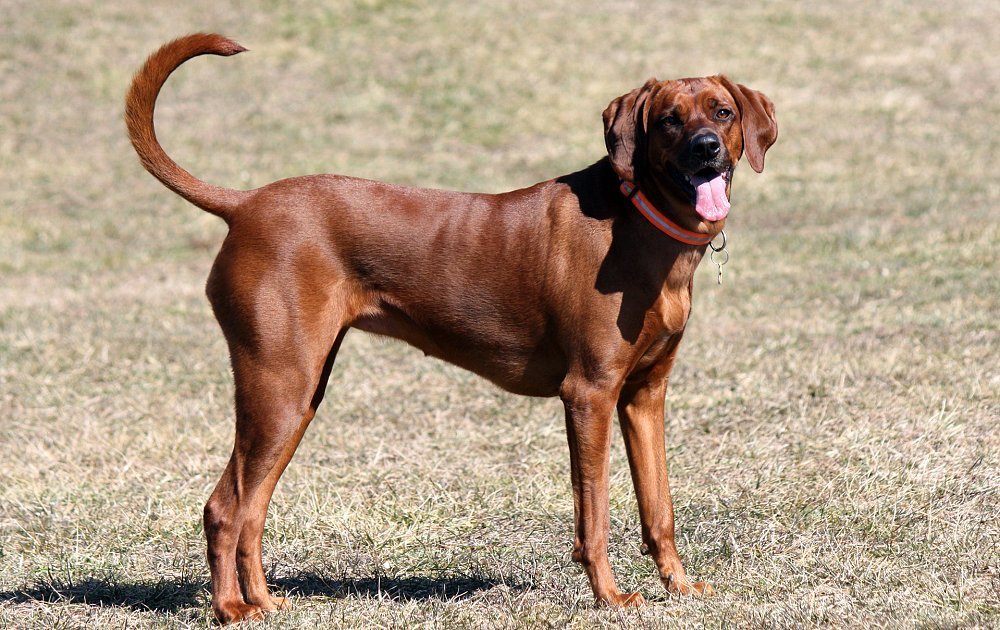
The Redbone Coonhound developed in the United States as a persistent tracking hound, especially associated with raccoon hunting. Its red coat and relaxed moments at home should not obscure a strong nose and a carrying voice. Purposeful scent work remains useful in a companion routine.
Training & behavior
Reward a return of attention before giving permission to follow a trail. Practice a quiet settle after searching and reinforce pauses in vocal excitement. Rehearse gates and vehicle loading on a lead. Do not punish a hound for using its voice while leaving the situations that trigger prolonged calling unmanaged.
Daily needs & enrichment
Provide scent trails, exploring walks, and gradually conditioned hikes. Use a long line or secure enclosure around wildlife; a tracking device does not prevent pursuit or a road accident. Check feet after rough ground and give breaks before persistent searching becomes work through fatigue.
Coat care
Use a soft-bristle brush or rubber mitt at least weekly to lift loose hair from the short red coat. Run your hands over the body as you brush to find ticks, small abrasions, or a sore equipment contact point. Inspect between toes and beneath the long ear flaps after cover or water work.
Wash significant soiling with dog shampoo, rinse fully, and towel-dry. No routine body clipping is required. Dry outer ear folds gently and investigate recurring odor instead of putting swabs deep into the canals. Avoid abrasive scraping of the glossy coat or repeated perfumed baths to hide skin or ear inflammation.
Living Environment & Daily Needs
Give a Redbone safe scent work and active outings alongside familiar downtime. Keep recall expectations realistic, and consider its carrying voice around household and neighborhood sounds, with comfortable rest after exploration.
Practical question
Does wearing a GPS collar make off-leash tracking safe near roads?
No. It can help locate a dog but cannot stop a chase or approaching vehicle. Use secure boundaries and appropriate lead management.
Plan care for the individual dog
Budget, time alone and household compatibility depend on the individual dog and your circumstances. Use our care budget guide, time-alone planning guide and questions before adopting alongside the breed-specific source information above.
Health questions for a veterinarian
Reliable breed-wide disease frequencies and formal test recommendations are limited. Request documented family health rather than treating an absence of recommended tests as proof of freedom from disease. Field injuries and persistent ear inflammation deserve individual assessment, with dental and preventive care maintained between outings. A lasting limp, altered hearing, unexplained weight loss, or reduced recovery after an ordinary walk needs investigation. A working pedigree alone cannot establish that joints, ears, or internal organs are sound.
Editorial update: October 26, 2026. General information; individual care requires veterinary assessment. No veterinary review is claimed. See our Editorial Policy for sourcing and review practices.