Ranges describe the registry profile, not a measurement, life expectancy, or health prediction for a particular dog. Separate sex or variety ranges are preserved where the source supplies them.
Source characteristics at a glance
The registry uses an ordinal 1–5 scale. A higher number indicates more of the named trait, not a better dog or a compatibility score. These descriptions are general and are not clinical measurements.
History and original work
The Portuguese Podengo developed in Portugal as a hunting dog in different sizes and coat varieties. This profile concerns the medium and large varieties; the separately listed Pequeno has a smaller working scale. Searching and pursuit remain important considerations in a companion home.
Training & behavior
Reward turning toward you before releasing the dog to investigate a scent. Practice secure gate routines and teach a calm pause around movement. Introduce household animals through barriers and controlled sessions; familiarity does not automatically remove hunting interest. Keep recalls rewarding and prevent pursuit outside safe boundaries.
Daily needs & enrichment
Offer searching walks, short laid trails, and running opportunities in securely enclosed space. Adjust distance to the size, age, and condition of the dog. Check fencing for escape routes and give recovery after exciting activity. A strong recall in a quiet room is not proof it will hold during a chase.
Coat care
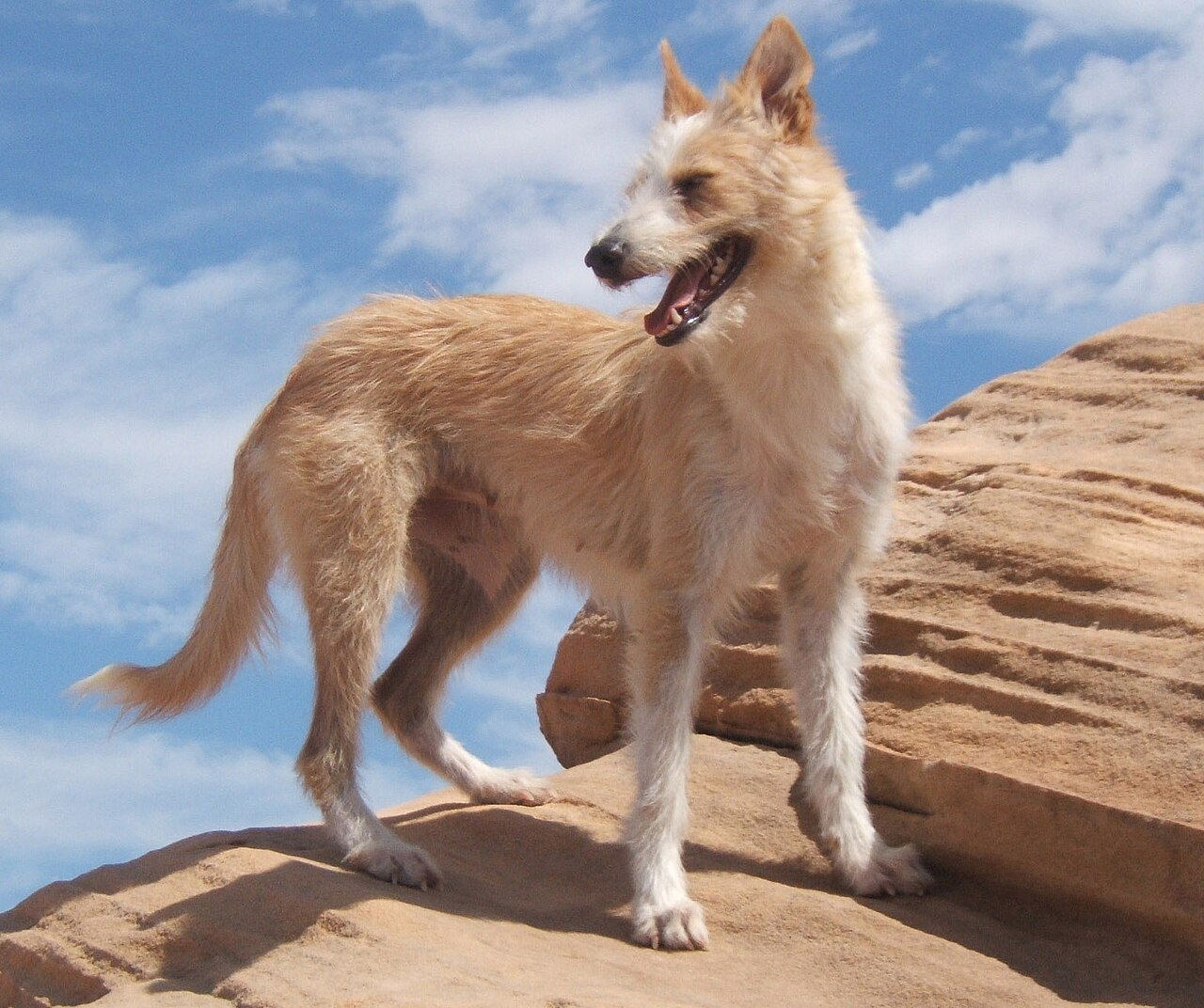
Identify whether the coat is smooth or wirehaired and include a weekly grooming check. A soft brush or rubber mitt lifts loose hair from the smooth variety; a pin brush and comb help separate debris in the longer wire coat. Check behind ears, beneath equipment, and around the feet, using light pressure rather than pulling the rough hair.
Neither variety needs routine stripping or a sculpted terrier outline. Wash when genuinely dirty with dog shampoo, rinse well, and dry the roots and any rough facial hair completely. Keep nails and feet practical. Avoid routine clipping to create a different texture, aggressive plucking, or assuming the wire variety needs the same care as every other rough-coated breed.
Living Environment & Daily Needs
Plan varied activity and secure exercise for a medium or large Portuguese Podengo. Allow newcomers a measured introduction and teach patiently around independent hunting decisions, with resting space and access suited to the actual variety.
Practical question
Should the wirehaired Podengo be hand-stripped like a show terrier?
Routine stripping is not part of its normal coat care. Remove loose hair and debris gently and preserve the natural coat instead of imposing another breed’s grooming pattern.
Plan care for the individual dog
Budget, time alone and household compatibility depend on the individual dog and your circumstances. Use our care budget guide, time-alone planning guide and questions before adopting alongside the breed-specific source information above.
Health questions for a veterinarian
Available breed-wide health data are limited. Discuss documented family history, including hearing, thyroid, skin, and other recurring problems, without treating reported conditions as prevalence estimates. A hearing concern needs an appropriate assessment; an ordinary response to noise is not a formal hearing test. Persistent itching, weight or activity changes, or altered hearing deserves investigation. Screening choices depend on the record and individual, and a normal test result cannot establish lifelong freedom from disease.
Editorial update: October 26, 2026. General information; individual care requires veterinary assessment. No veterinary review is claimed. See our Editorial Policy for sourcing and review practices.