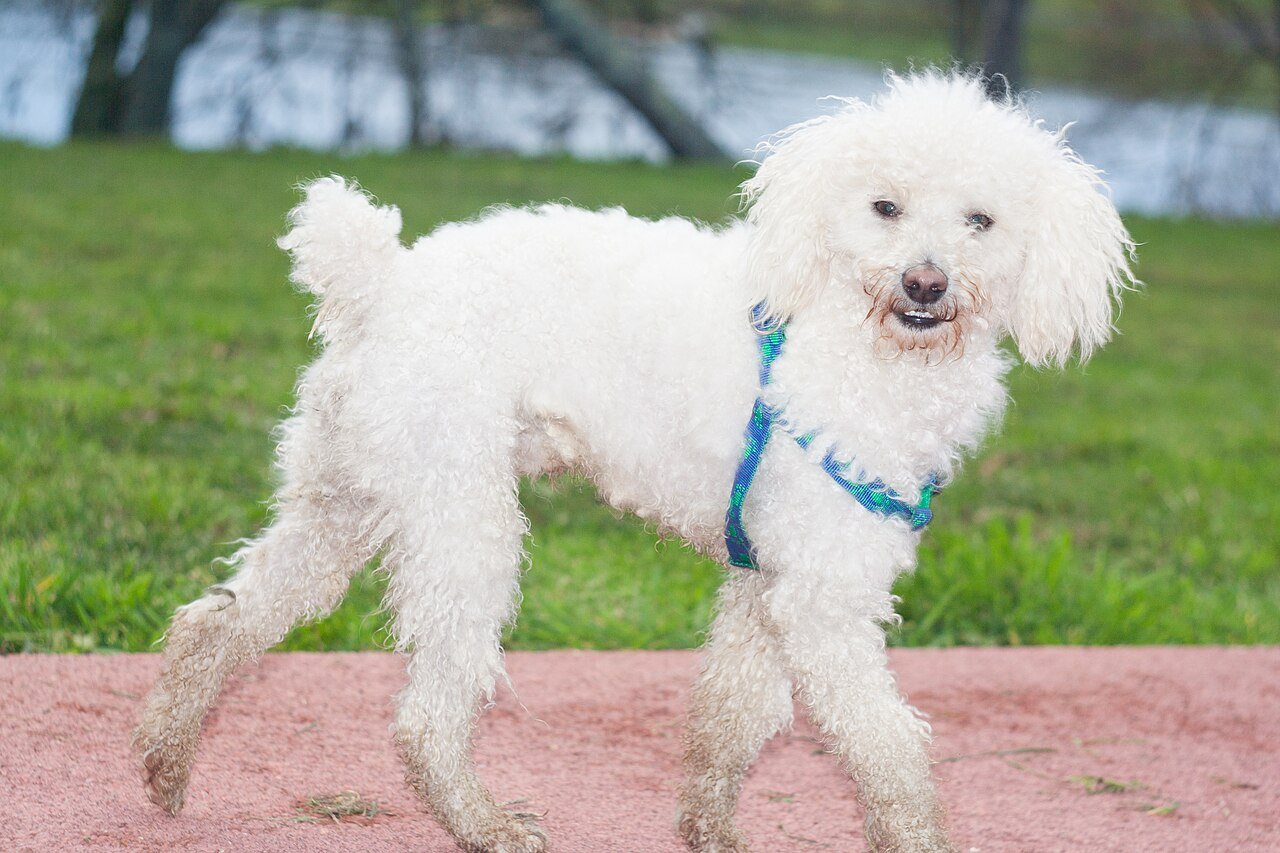
Ranges describe the registry profile, not a measurement, life expectancy, or health prediction for a particular dog. Separate sex or variety ranges are preserved where the source supplies them.
Source characteristics at a glance
The registry uses an ordinal 1–5 scale. A higher number indicates more of the named trait, not a better dog or a compatibility score. These descriptions are general and are not clinical measurements.
History and original work
The Toy Poodle shares the European Poodle’s German water-dog roots and strong later association with France, but its small companion variety has distinct screening priorities. It should not automatically receive the Standard variety’s medical checklist. Curly hair and a quick learning style remain practical daily commitments.
Temperament and training
A Toy Poodle often enjoys an active learning partnership. Rotate tricks, scent searches, and everyday manners, and reward quiet waiting as deliberately as exciting games. Quick learning can establish unwanted routines too when household responses are inconsistent.
Daily needs & enrichment
Offer daily walks, suitable play, and several brief thinking tasks rather than relying on being carried between activities. Introduce dog sports gradually with appropriate equipment and guidance; a tiny athlete still needs protection from falls and excessive impact.
Coat care
For a full coat, brush daily in lifted layers and check to the roots with a metal comb. Pay close attention to ear bases, collar line, armpits, groin, legs, and tail. A short pet trim still needs friction-area checks, and facial hair should stay clean and away from the eyes.
A clipped trim commonly needs renewal around four to six weeks. Detangle before bathing, rinse dog shampoo completely, and dry sections with comfortable airflow and gentle combing. Support the small dog securely on nonslip footing. Avoid clipping over hidden mats, scissors against concealed skin, hot drying, and assuming low shedding guarantees allergy compatibility.
Living Environment & Daily Needs
Set aside time for learning and cooperative grooming as well as a quiet resting space. Keep equipment sized for the dog and make furniture access safe. This small Poodle needs a daily role beyond looking decorative.
Care costs and grooming budget
Obtain local clipping prices and plan for brushes, combs, training, and dental care. Frequent coat maintenance can outweigh savings on food; ask what home care a groomer expects between visits.
Independence and backup care
Teach independent settling in small steps and observe the individual during short departures. Mental activity before an absence is useful, but it does not establish a safe duration or replace toilet access and caregiver support.
Safe family and animal introductions
Supervise gentle games and prevent children from lifting the dog by its front legs. Match larger playmates carefully and provide escape routes. Confidence during learning does not make a four-to-six-pound reference body resistant to injury.
Comfort in different weather
Adjust outings to coat length, weather, conditioning, and health. A freshly clipped Toy Poodle may need additional protection in cold conditions, while hot or humid weather calls for shorter, comfortable activity and shelter.
Preparing for your first dog of this breed
A beginner who enjoys daily teaching and can sustain grooming may appreciate this responsive variety. Learn cooperative handling and make room for mental engagement; intelligence does not mean finished manners arrive automatically.
Care through life stages
Puppies should learn to accept clippers, combs, and toothbrushing through gradual positive practice. Keep adults physically and mentally involved. Adapt games, footing, and grooming sessions when an older dog's comfort or vision changes.
Questions to ask before choosing a dog
How does this Toy Poodle settle after activity and tolerate combing or clipping? Request patella and ophthalmologist evaluations and relevant PRA-prcd DNA results, with explanations of what the results mean for the proposed litter or individual.
Practical question
Can a Toy Poodle use a Standard Poodle’s screening records as its complete checklist?
No. Request records appropriate to the Toy variety, particularly patellar, clinical eye, and prcd-PRA assessment, with explanations of their limits.
Health and screening questions
Toy-variety recommendations include patellar assessment, regular ophthalmologist examination, and a prcd-PRA DNA test. These address knees and particular eye risks rather than every condition seen across all Poodle sizes. Legg-Calve-Perthes and patellar problems can cause lameness; a clear retinal test does not address hip pain. Request variety-specific reports and family history. Repeated skipping, visual change, unexplained episodes, or persistent discomfort needs assessment. Protect the small frame from hard landings while maintaining appropriate activity and dental care.
Editorial update: October 24, 2026. General information; individual care requires veterinary assessment. No veterinary review is claimed. See our Editorial Policy for sourcing and review practices.