Ranges describe the registry profile, not a measurement, life expectancy, or health prediction for a particular dog. Separate sex or variety ranges are preserved where the source supplies them.
Source characteristics at a glance
The registry uses an ordinal 1–5 scale. A higher number indicates more of the named trait, not a better dog or a compatibility score. These descriptions are general and are not clinical measurements.
History and original work
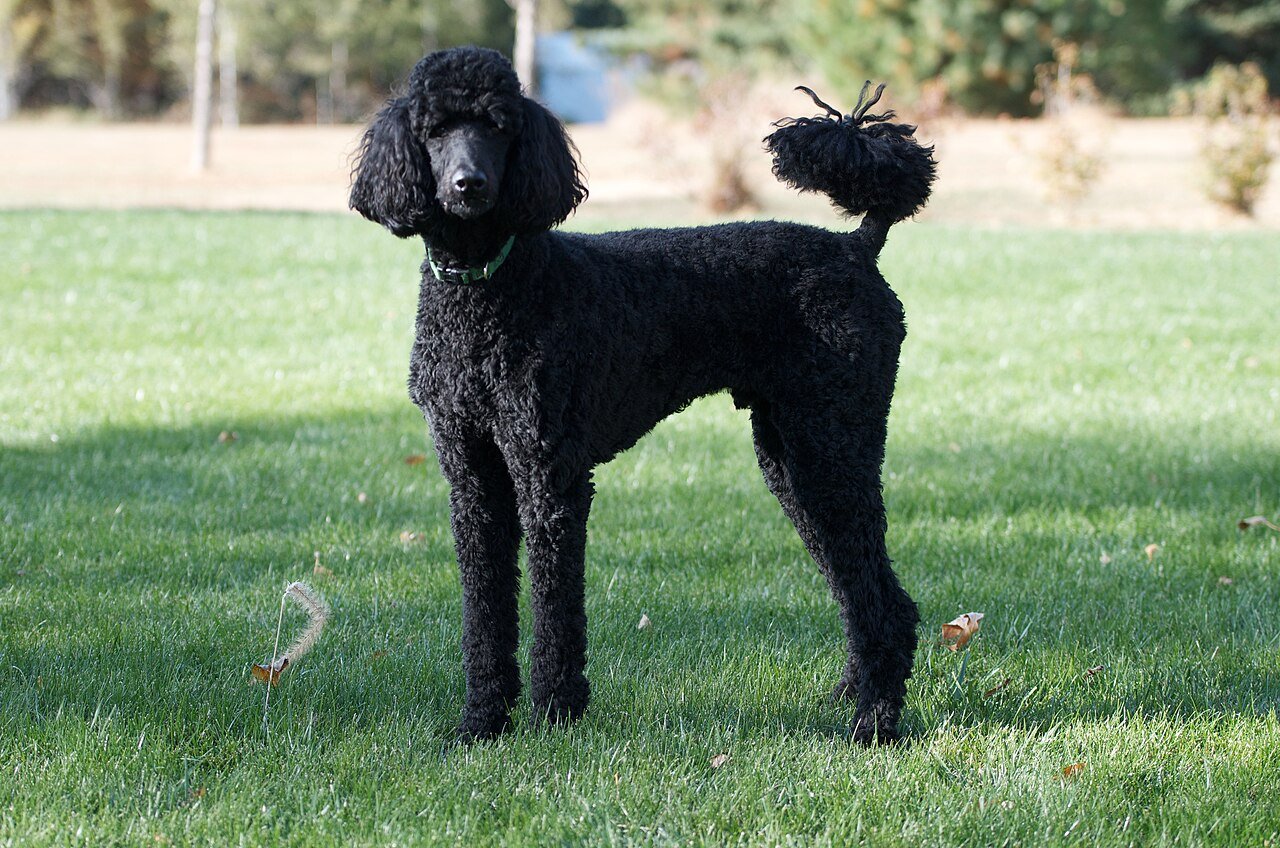
The Standard Poodle belongs to a European water-retrieving tradition, with German roots and an enduring association with France. The active working dog preceded elaborate show styling. A companion still benefits from retrieving, searching, and learning in a practical pet trim.
Training & behavior
Practice a quiet wait before releasing a retrieve and reward delivery into your hand. Teach comfortable standing, foot handling, and drying in brief sessions before a full haircut is necessary. Alternate familiar tasks with new problems and build relaxed time alone.
Daily needs & enrichment
Combine exploratory walks, swimming with safe access, retrieves, and scent problems. Condition gradually for running or demanding sports and choose low-impact coordination work during growth. Include a settled finish after play; constant ball throwing can build anticipation without teaching recovery.
Coat care
Lift the curls in layers, brush gently with a slicker, and check to the roots with a metal comb. A full coat can need daily attention, particularly behind ears, under the collar, in armpits, and around legs and groin. Keep the face, feet, and sanitary area practical without using blades against irritated skin.
A clipped pet trim commonly needs renewal around four to six weeks, adjusted to length and growth. Remove tangles before bathing, rinse dog shampoo thoroughly, and dry section by section with comfortable airflow and comb checks. Avoid bathing a tightly matted coat or leaving damp curls packed against skin. A low-shedding coat still requires substantial care.
Living Environment & Daily Needs
Give a Standard Poodle substantial activity and varied mental work, with comfortable full-sized rest afterward. Reserve time and resources for skilled grooming, since low shedding does not make the continuously growing coat effortless.
Practical question
Must a Standard Poodle wear a complicated show clip?
No. A practical pet trim can support an active routine, provided the remaining curls are combed to the roots and the skin stays clean and dry.
Plan care for the individual dog
Budget, time alone and household compatibility depend on the individual dog and your circumstances. Use our care budget guide, time-alone planning guide and questions before adopting alongside the breed-specific source information above.
Health questions for a veterinarian
Standard-variety screening includes hip evaluation, eye examination, thyroid assessment, and tests for neonatal encephalopathy with seizures and von Willebrand disease type I. These do not rule out Addison’s disease, sebaceous adenitis, or every bleeding or neurological problem. Recurrent vomiting, weakness, or unexplained coat loss needs assessment. Unproductive retching with a swollen abdomen or collapse is an emergency because gastric dilatation-volvulus can progress rapidly. Request variety-specific reports and discuss family history as well as DNA results.
Editorial update: October 24, 2026. General information; individual care requires veterinary assessment. No veterinary review is claimed. See our Editorial Policy for sourcing and review practices.