Ranges describe the registry profile, not a measurement, life expectancy, or health prediction for a particular dog. Separate sex or variety ranges are preserved where the source supplies them.
Source characteristics at a glance
The registry uses an ordinal 1–5 scale. A higher number indicates more of the named trait, not a better dog or a compatibility score. These descriptions are general and are not clinical measurements.
History and original work
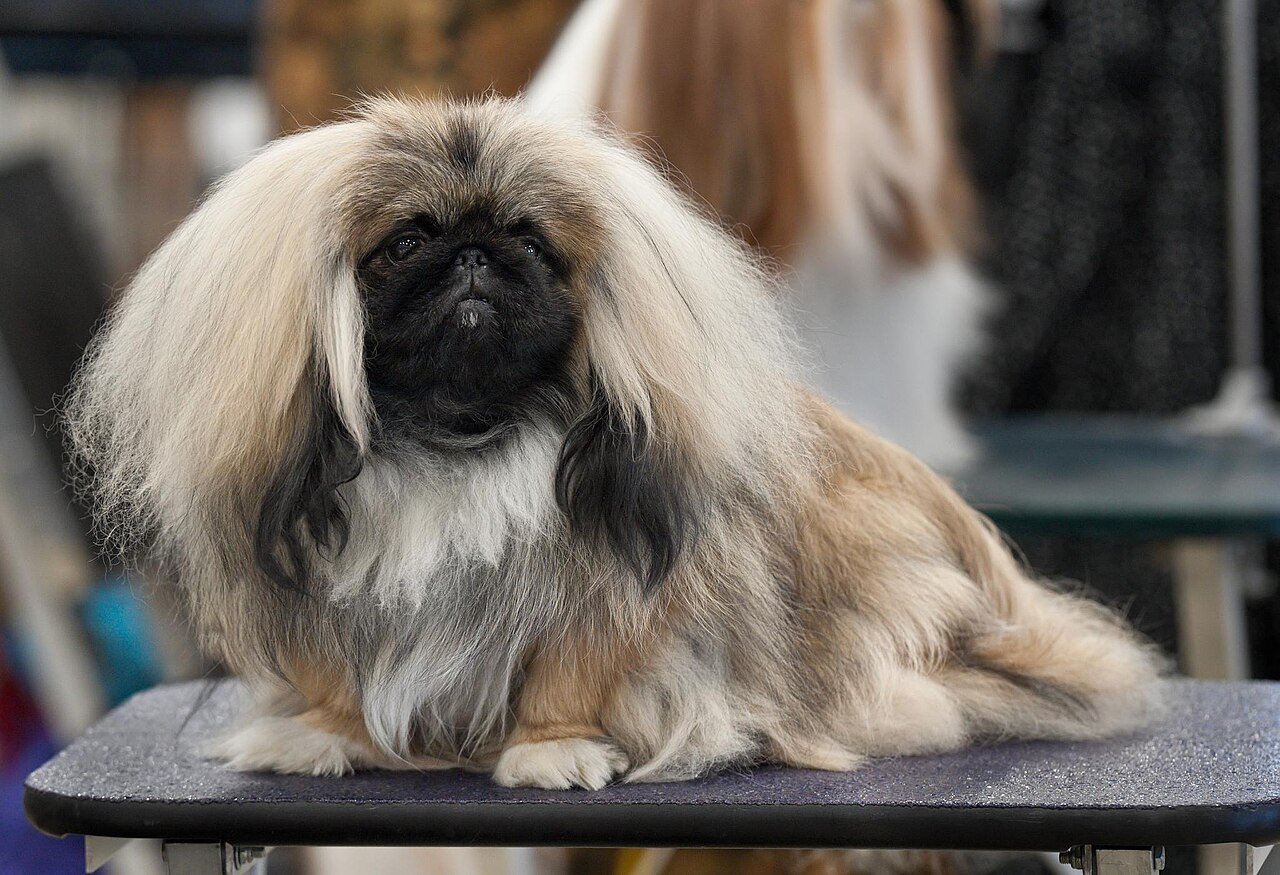
The Pekingese developed as a companion associated with China’s imperial households. It became known more widely outside China during the nineteenth century. Its broad short face, low body, and abundant coat are practical care considerations rather than reasons to expect effortless activity or grooming.
Training & behavior
Use small rewards for voluntary handling and short achievable lessons. Teach waiting while equipment is fitted and moving to a resting place as visitors arrive. Supervise children closely and prevent rough handling. Independence is better addressed with clear rewarding choices than physical pressure or repeated demands.
Daily needs & enrichment
Choose gentle sniffing walks and floor-level games in comfortable cool conditions. Watch breathing and recovery rather than aiming for a fixed distance. Provide breaks, shade, and water, and stop at signs of distress. Avoid heat, strenuous repetitive play, or forcing the dog to keep pace with a longer-legged companion.
Coat care
Lift sections of the double coat and gently brush and comb to the roots, checking behind ears, ruff, under elbows, belly, trousers, and feet. Keep facial hair and folds clean without rubbing the exposed eyes; dry folds after gentle wiping. Plan a thorough weekly comb-through, split into short comfortable sessions as needed, and check friction areas between sessions before knots accumulate.
Bathe as needed with dog shampoo, rinse thoroughly, and dry roots using towels and cool airflow while monitoring comfort and breathing. Limited foot and sanitary tidying can help. Avoid hot drying, harsh face products, scissors near unseen skin, and assuming a short clip removes the need to manage heat.
Living Environment & Daily Needs
Keep a Pekingese's activity and household access comfortable for the individual, with patient teaching and familiar company. Make regular grooming of the abundant coat practical alongside a restful area suited to its distinctive body.
Practical question
Is snoring with struggling breaths simply part of being a Pekingese?
It should be assessed. Breathing that is noisy, effortful, or disrupted during sleep can reflect obstruction and should not be dismissed as a harmless breed trait.
Plan care for the individual dog
Budget, time alone and household compatibility depend on the individual dog and your circumstances. Use our care budget guide, time-alone planning guide and questions before adopting alongside the breed-specific source information above.
Health questions for a veterinarian
The short skull can contribute to obstructed breathing, while exposed eyes are vulnerable to injury and corneal ulcers. Noisy or effortful breathing, disturbed sleep, gagging, or poor heat tolerance merits assessment rather than acceptance as normal. Respiratory distress, blue gums, or collapse requires emergency care. Squinting or a painful eye also needs prompt examination. A normal genetic panel or a historical absence of mandatory club tests does not rule out these anatomical problems.
Editorial update: October 26, 2026. General information; individual care requires veterinary assessment. No veterinary review is claimed. See our Editorial Policy for sourcing and review practices.