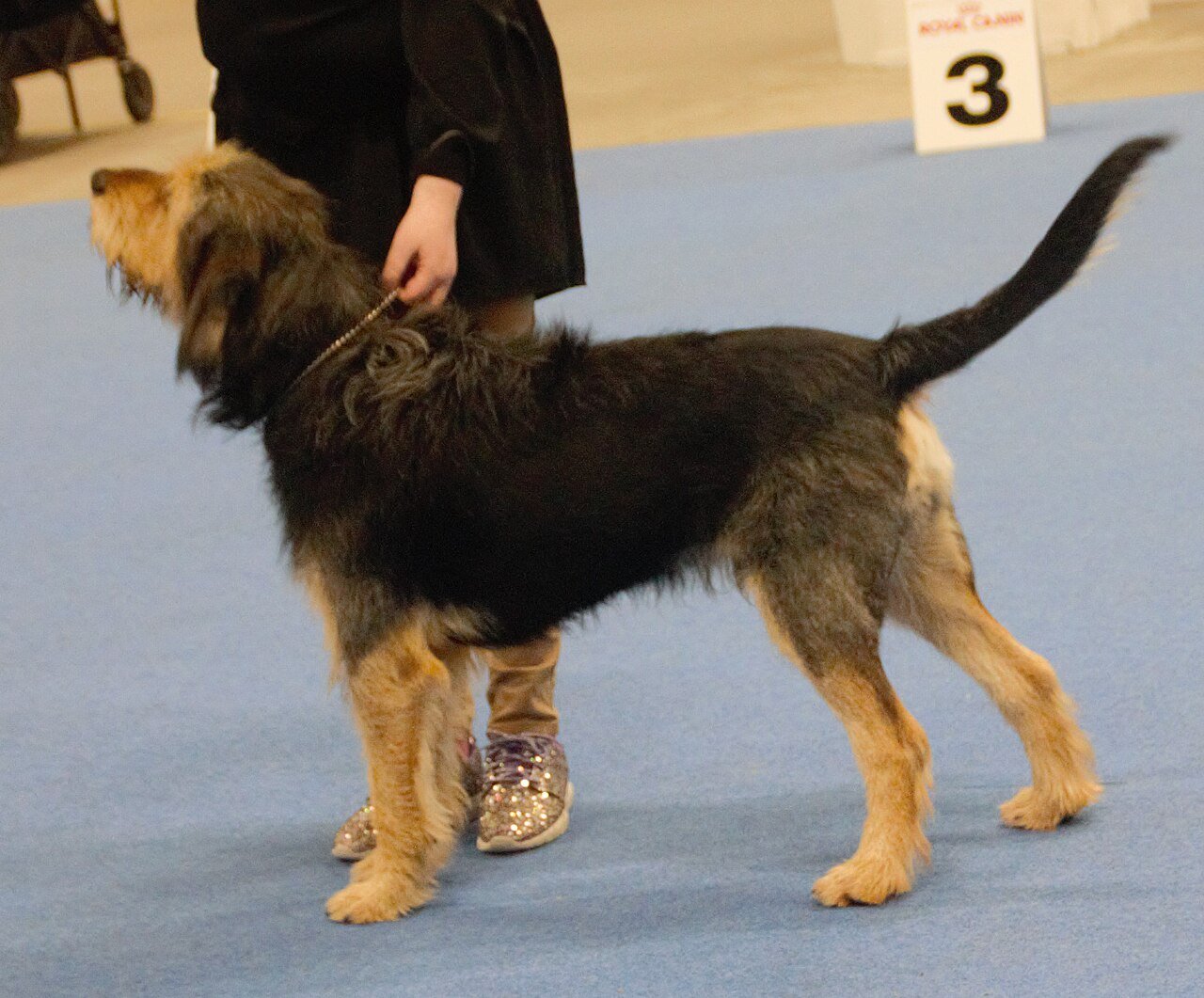
Ranges describe the registry profile, not a measurement, life expectancy, or health prediction for a particular dog. Separate sex or variety ranges are preserved where the source supplies them.
Source characteristics at a glance
The registry uses an ordinal 1–5 scale. A higher number indicates more of the named trait, not a better dog or a compatibility score. These descriptions are general and are not clinical measurements.
History and original work
The Otterhound developed in England for hunting otters with packs along waterways. Its nose, rough coat, and powerful swimming build supported that historical work. Modern care should provide controlled scent and water activities without recreating harmful wildlife pursuit or treating every dog as an expert swimmer.
Training & behavior
Reward a quiet wait before allowing a search and teach a gentle exchange for interesting finds. Practice loose-leash turns before the dog gains momentum. Use positive handling and barriers for household arrivals. Strength and a carrying voice need teaching, while sensitivity makes escalating force unhelpful.
Daily needs & enrichment
Offer long sniffing walks developed with fitness, laid trails, and carefully introduced swimming. Check water conditions and exits and provide breaks before fatigue. Young dogs need easier ground and coordination foundations. Enclosed land supports activity but will not guarantee a hound chooses to exercise itself.
Coat care
Brush once or twice weekly with a slicker and medium comb, checking the beard, ear bases, belly, armpits, and legs. Remove seeds and food gently before they tighten into knots. Keep the natural rough outline rather than sculpting or close-clipping the whole body.
Rinse mud or contaminants after water outings and dry the beard and dense roots. When shampoo is needed, use a dog product and rinse completely before towel-blotting and gentle airflow. Avoid leaving wet furnishings packed against skin or trying to cut a knot where the ear or folded skin is hidden.
Living Environment & Daily Needs
Arrange safe scent-led outings and dependable handling for an exuberant Otterhound. Full-sized rest, a plan for its carrying voice, and coat care after wet activity all matter to making home life manageable.
Practical question
Is a DNA-repository record a health clearance?
No. It records a stored sample. Ask which named tests and clinical examinations were actually performed and obtain their results.
Plan care for the individual dog
Budget, time alone and household compatibility depend on the individual dog and your circumstances. Use our care budget guide, time-alone planning guide and questions before adopting alongside the breed-specific source information above.
Health questions for a veterinarian
Hip and elbow evaluation and a specific Glanzmann thrombasthenia DNA test are documented breeding priorities. GT affects platelet function and can cause abnormal bleeding; tell the veterinarian about known results before procedures. A banked DNA sample is not itself a negative disease test. Epilepsy history also matters, and unproductive retching with abdominal swelling can indicate bloat requiring emergency care. Normal joint or clotting results do not exclude every later problem.
Editorial update: October 24, 2026. General information; individual care requires veterinary assessment. No veterinary review is claimed. See our Editorial Policy for sourcing and review practices.