Ranges describe the registry profile, not a measurement, life expectancy, or health prediction for a particular dog. Separate sex or variety ranges are preserved where the source supplies them.
Source characteristics at a glance
The registry uses an ordinal 1–5 scale. A higher number indicates more of the named trait, not a better dog or a compatibility score. These descriptions are general and are not clinical measurements.
History and physical characteristics
The Toller developed in Nova Scotia’s Little River district as a specialized waterfowl retriever. In tolling, activity near shore attracts birds’ attention before the dog retrieves shot game. This background helps explain enthusiasm for repeated games, but a pet still needs a reliable end to play.
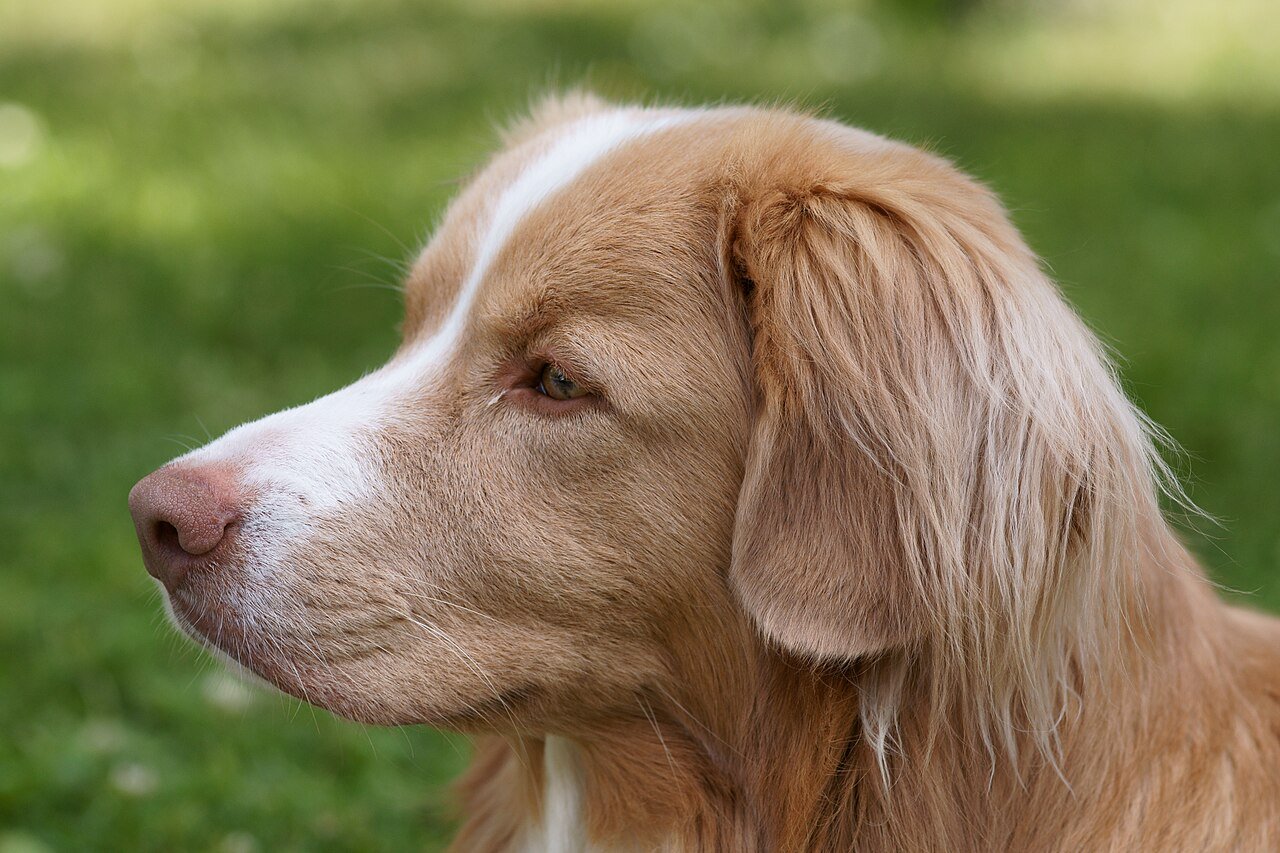
A compact sporting build, red coat, and feathered tail distinguish the breed. The water-resistant double coat needs attention under the ears and around feathering even when its surface looks tidy. Retrieving ancestry does not make unsupervised water activity safe.
Temperament and training
A Toller's readiness to retrieve supports enthusiastic learning, but teach a release and a clear end to games before excitement takes over. Use varied tasks and calm greetings. Give children supervised-play rules and assess the dog's response to noise and newcomers rather than expecting a working retriever to be universally easygoing.
Daily needs & enrichment
Combine retrieves with scent searches, exploratory walks, and tasks requiring waiting or choosing a cue. Provide rest instead of continually increasing throws. Water activity may suit an individual Toller but still needs supervision, gradual conditioning, and a way to stop comfortably.
Coat care
Brush at least weekly and check daily during shedding. Work through the double coat with a suitable brush and metal comb, especially behind and beneath ears, through feathering, and beneath equipment. Support small tangles at the roots rather than pulling; check feet after shore or woodland outings.
Rinse swimming residue as needed, bathe for actual dirt with dog shampoo, and dry to the roots with towels and comfortable airflow. Minimal tidying around ears and feet may help maintenance; routine body shaving is unnecessary. Avoid hot drying, cutting beneath mats, and leaving damp packed undercoat.
Living Environment & Daily Needs
Plan substantial activity and varied learning for a Toller, with sensible stopping points for retrieving. Comfortable recovery, other thinking tasks, and routine coat care matter as much as access to an outdoor play area.
Care through life stages
Puppies need calm retrieving foundations, a release, and gradual water introductions rather than repeated long throws. Condition adults progressively and plan an end to games. Adjust footing, distances, and recovery for seniors; investigate weight loss or weakness rather than trying to motivate the dog through it.
Frequently asked questions
Does buff testing tell me whether a Toller is healthy? No. It concerns coat-color inheritance. Ask separately for health reports and an explanation of any DNA clearance claimed through parentage.
Questions to ask before choosing a dog
How does this Toller respond when retrieving stops or excitement rises? Request hip, cardiac, eye, PRA-prcd, JADD, and cleft-palate-related results. Ask the breeder to distinguish buff coat-color testing from disease screening and explain any clearance by parentage.
Plan care for the individual dog
Budget, time alone and household compatibility depend on the individual dog and your circumstances. Use our care budget guide, time-alone planning guide and questions before adopting alongside the breed-specific source information above.
Health questions for a veterinarian
Review hip imaging, cardiac evaluation, and clinical eye records alongside PRA-prcd, JADD, and the relevant cleft-palate or cleft-lip/syndactyly DNA results. These address different inherited questions and do not replace examination or family history. Buff testing concerns coat color, not disease clearance.
Juvenile Addison’s disease testing should not be treated as excluding every form of Addison’s disease. The registry also discusses later-onset Addison’s and autoimmune concerns. Persistent vomiting, diarrhea, weight loss, or unusual weakness warrants assessment; collapse requires urgent care. Give the veterinarian actual reports rather than an all-clear summary.
Updated October 25, 2026. General information; see our Editorial Policy for sourcing and review practices.