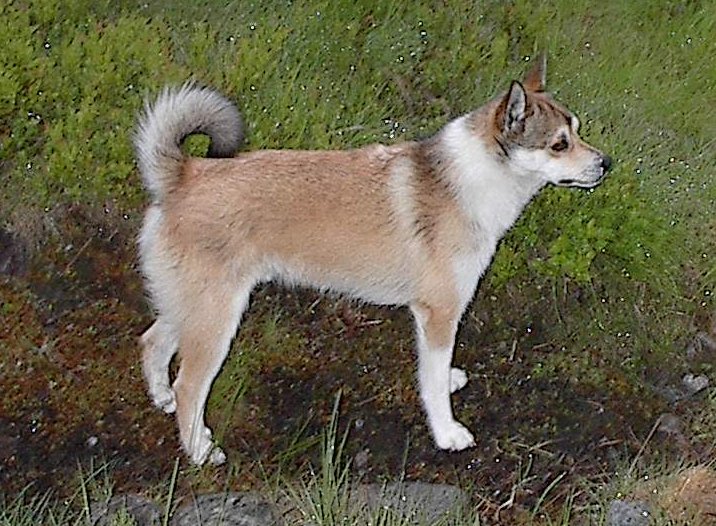
Ranges describe the registry profile, not a measurement, life expectancy, or health prediction for a particular dog. Separate sex or variety ranges are preserved where the source supplies them.
Source characteristics at a glance
The registry uses an ordinal 1–5 scale. A higher number indicates more of the named trait, not a better dog or a compatibility score. These descriptions are general and are not clinical measurements.
History and physical characteristics
The Lundehund was developed on Norway's rocky coast to retrieve puffins from narrow cliff crevices. Its name and unusual anatomy reflect that specialized role. The modern companion still benefits from secure exploration and patient teaching, without being encouraged to repeat dangerous cliff-working feats.
Extra toes, unusual joint flexibility, and ears capable of folding closely are distinctive features. Count and check the nails on all toes, and never force the neck or limbs into a demonstration of flexibility. An unusual range of motion does not make injury impossible.
Temperament and training
A Lundehund's climbing history and problem-solving ability make secure boundaries worth checking carefully. Use gentle lessons to build trust, and practice foot handling without forcing joints into demonstrations. Give children respectful-contact rules. Harsh corrections can undermine the cooperation needed for everyday care.
Daily needs & enrichment
Provide exploring walks, simple scent searches, and low-risk problem-solving activities. Unusual flexibility is not a reason to encourage difficult jumps or repeated stunts. Mix new experiences with predictable rest, and use secure equipment when curiosity draws the dog beyond the intended route.
Coat care
Brush the harsh outer coat and dense soft undercoat about weekly with a suitable brush and comb. Increase gentle sessions when loose hair builds up, checking the neck, belly, and areas under equipment. Inspect and maintain the nails on the additional toes as well as the main weight-bearing feet.
Bathe for soiling with dog shampoo, rinse completely, and dry the inner coat with towels and comfortable airflow. Routine shaving or stripping is unnecessary. Avoid forceful undercoat scraping, hot drying, and manipulating flexible joints to reach an awkward grooming position. Teach paw handling gradually and use a stable nonslip surface.
Living Environment & Daily Needs
Plan safe exploring and shared activities for a Lundehund's unusual athletic background. Consistent household habits and guidance around vocal alerts belong alongside rest and routine coat care; a friendly manner does not remove daily needs.
Care through life stages
Puppies need predictable routines, gentle foot handling, and safe exploration within secure boundaries. Adults benefit from activity that can be adjusted to digestive comfort and body condition. In seniors, new weight loss, diarrhea, weakness, or difficulty with familiar movement deserves assessment rather than simply reducing food or exercise on your own.
Frequently asked questions
Should a Lundehund's flexibility be tested by stretching its joints? No. The anatomy is distinctive, but forcing a range-of-motion display serves no household care purpose. Let the dog move voluntarily and ask a veterinarian about discomfort or limitations.
Questions to ask before choosing a dog
What digestive problems have occurred in this dog and close relatives? Ask about diarrhea, weight change, appetite, and any medical diet or medication. Review patella and eye records and observe foot handling and responses to secure confinement.
Plan care for the individual dog
Budget, time alone and household compatibility depend on the individual dog and your circumstances. Use our care budget guide, time-alone planning guide and questions before adopting alongside the breed-specific source information above.
Health questions for a veterinarian
Lundehund syndrome includes serious intestinal disease and protein loss, which is not excluded by normal knee or eye screening. Ask about digestive illness in relatives and the individual's appetite, stools, weight history, medication, and any prescribed diet. Persistent diarrhea, weight loss, poor appetite, unexplained swelling, or marked lethargy needs veterinary assessment; symptoms alone do not establish the diagnosis.
Patellar evaluation checks kneecap stability, and an ophthalmologist examination assesses inherited and other eye concerns. Request reports and discuss what follow-up applies rather than interpreting a short screening list as evidence of few health risks. Diet and supplements should follow the individual veterinary plan instead of an assumed universal Lundehund menu.
Updated October 25, 2026. General information; see our Editorial Policy for sourcing and review practices.