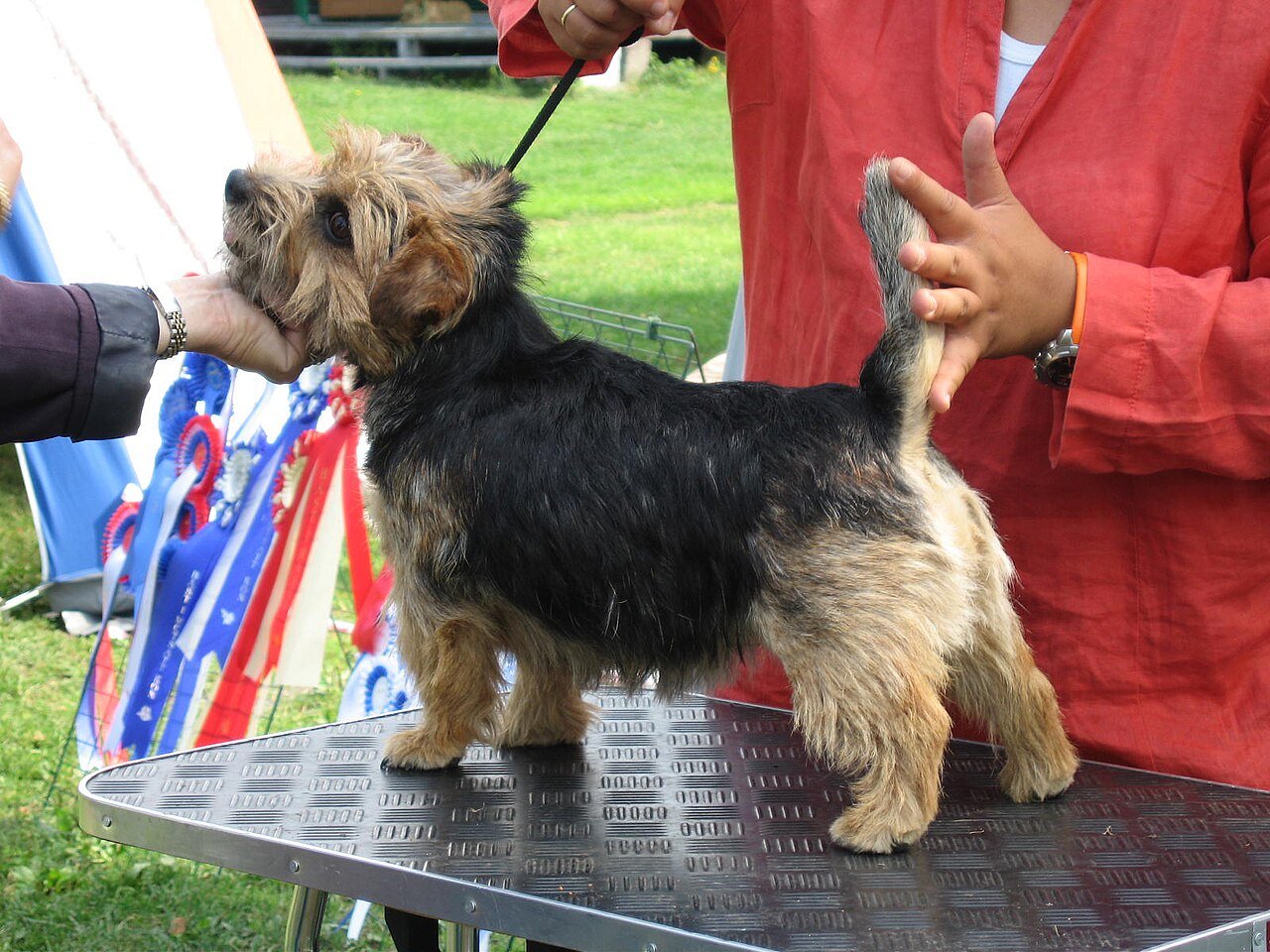
Ranges describe the registry profile, not a measurement, life expectancy, or health prediction for a particular dog. Separate sex or variety ranges are preserved where the source supplies them.
Source characteristics at a glance
The registry uses an ordinal 1–5 scale. A higher number indicates more of the named trait, not a better dog or a compatibility score. These descriptions are general and are not clinical measurements.
History and original work
The Norfolk Terrier developed in England among small working ratting and fox-bolting terriers. Drop-eared Norfolk and prick-eared Norwich dogs were once classified together before becoming distinct breeds. The compact companion still carries purposeful exploration and strong interest in small animals.
Training & behavior
Reward returning from a mild distraction and teach trading an object without a chase. Use distance and controlled introductions with other dogs. Keep rodents and other vulnerable pets securely separated. A sociable presentation does not mean prey interest is absent, so reinforce safe boundary habits daily.
Daily needs & enrichment
Provide exploring walks, hidden-toy searches, and enclosed play with suitable partners. Offer an approved digging area if needed and inspect fencing at ground level. Build effort progressively and allow rest. Varied problems can occupy a determined terrier without repeated high jumps or uncontrolled pursuit.
Coat care
Comb and brush the beard, legs, belly, armpits, and behind the folded ears each week. The harsh outer jacket is maintained by removing ready dead hair through hand-stripping, with instruction or skilled grooming as needed. Pulling attached hair is painful; clipping changes the maintenance and often the texture.
Clean and dry the beard after dirty meals. Bathe when soiled, rinse dog shampoo fully, and dry dense roots and furnishings gently. Keep feet and sanitary areas practical. Avoid forcing a stripping session on inflamed skin, cutting hidden mats, or assuming a scruffy natural look means knots are harmless.
Living Environment & Daily Needs
Give a Norfolk safe adventures and consistent lessons, with boundaries around chasing. Consider vocal responses near the household, and plan wiry-coat care and restful company after exploration rather than expecting persistence to disappear indoors.
Practical question
Are folded ears the only difference to consider from a Norwich?
They are a key visible distinction, but use records and health guidance for the actual breed and individual rather than assuming complete interchangeability.
Plan care for the individual dog
Budget, time alone and household compatibility depend on the individual dog and your circumstances. Use our care budget guide, time-alone planning guide and questions before adopting alongside the breed-specific source information above.
Health questions for a veterinarian
Cardiologist examination with Doppler ultrasound, ophthalmologist assessment, and patellar evaluation are documented priorities; hip and ichthyosis assessment may also be relevant. Doppler evaluation provides information about heart structure and flow, including mitral valve concerns, rather than a lifetime guarantee. Request reports and ask about older relatives. Persistent coughing, fainting, reduced stamina, skipping, or eye pain deserves investigation even when an earlier test was normal.
Editorial update: October 24, 2026. General information; individual care requires veterinary assessment. No veterinary review is claimed. See our Editorial Policy for sourcing and review practices.