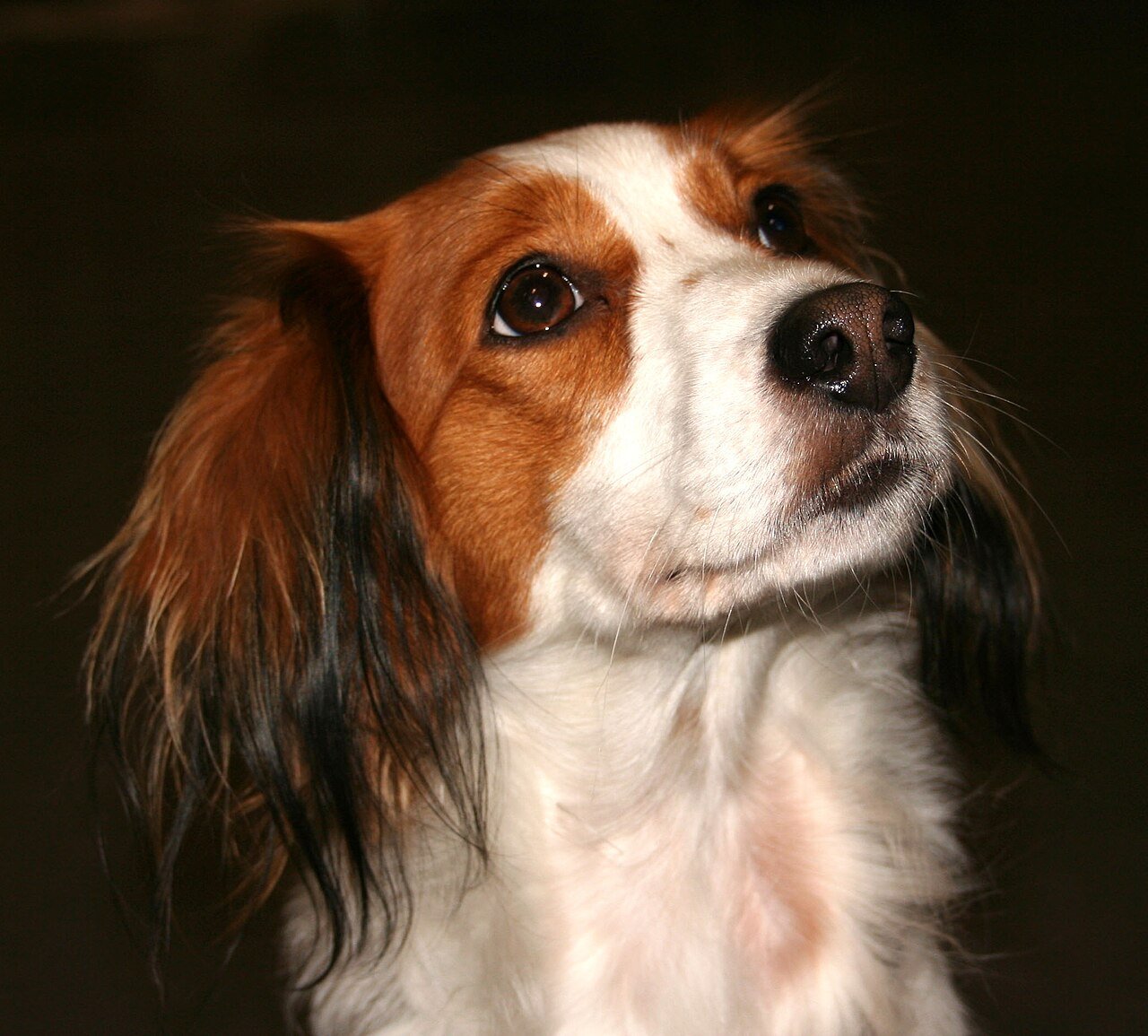
Ranges describe the registry profile, not a measurement, life expectancy, or health prediction for a particular dog. Separate sex or variety ranges are preserved where the source supplies them.
Source characteristics at a glance
The registry uses an ordinal 1–5 scale. A higher number indicates more of the named trait, not a better dog or a compatibility score. These descriptions are general and are not clinical measurements.
History and original work
The Nederlandse Kooikerhondje worked in Dutch duck decoys, using controlled movement and a conspicuous tail to lure ducks along screened channels into a trap. This differs from merely bringing birds within gun range. The modern breed was rebuilt from a small population with major help from Baroness van Hardenbroek.
Training & behavior
Reward following a hand signal and waiting before the next search. Introduce new people without crowding, using short clear sessions. Teach an exchange for found objects and a resting place during busy household activity. Sensitivity and sporting interest benefit from gentle guidance rather than escalating corrections.
Daily needs & enrichment
Use scent searches, cooperative direction games, and varied walks developed with fitness. Add obstacles gradually and protect growing joints. Provide concentration work as well as movement, then allow quiet recovery. Keep wildlife and small pets protected while the individual’s chasing responses are assessed.
Coat care
Brush and comb the feathering weekly, checking ear fringes, chest, belly, leg hair, and tail. Remove burrs after outdoor work, supporting the roots while easing tangles from the ends. The distinctive longer ear tips should be handled gently rather than pulled through a resistant knot.
Bathe when soiled, rinse dog shampoo thoroughly, and dry feathering to its roots with towels and gentle airflow. Keep feet or sanitary hair practical with limited tidying; routine close clipping is unnecessary. Avoid blind cutting beneath mats or leaving wet hair packed against ear skin.
Living Environment & Daily Needs
Provide a Kooikerhondje varied games, walks, and lessons that engage its sporting stamina. Arrange comfortable downtime with familiar people and feathering checks after outings as part of a manageable household schedule.
Practical question
Can normal routine clearances rule out new swallowing difficulty?
No. Swallowing problems can accompany muscle disease or other illness and need clinical assessment, regardless of earlier joint, eye, or DNA results.
Plan care for the individual dog
Budget, time alone and household compatibility depend on the individual dog and your circumstances. Use our care budget guide, time-alone planning guide and questions before adopting alongside the breed-specific source information above.
Health questions for a veterinarian
Patellar and hip assessment, eye examination, and specific tests for von Willebrand disease and hereditary necrotizing myelopathy address documented concerns. Normal results do not exclude polymyositis, an inflammatory muscle disease associated with weakness and sometimes swallowing difficulty, or other kidney and seizure disorders. New exercise intolerance, trouble swallowing, progressive gait change, or abnormal bleeding needs investigation. Family history matters, and the limited founding population does not justify invented population percentages.
Editorial update: October 24, 2026. General information; individual care requires veterinary assessment. No veterinary review is claimed. See our Editorial Policy for sourcing and review practices.