Ranges describe the registry profile, not a measurement, life expectancy, or health prediction for a particular dog. Separate sex or variety ranges are preserved where the source supplies them.
Source characteristics at a glance
The registry uses an ordinal 1–5 scale. A higher number indicates more of the named trait, not a better dog or a compatibility score. These descriptions are general and are not clinical measurements.
History and original work
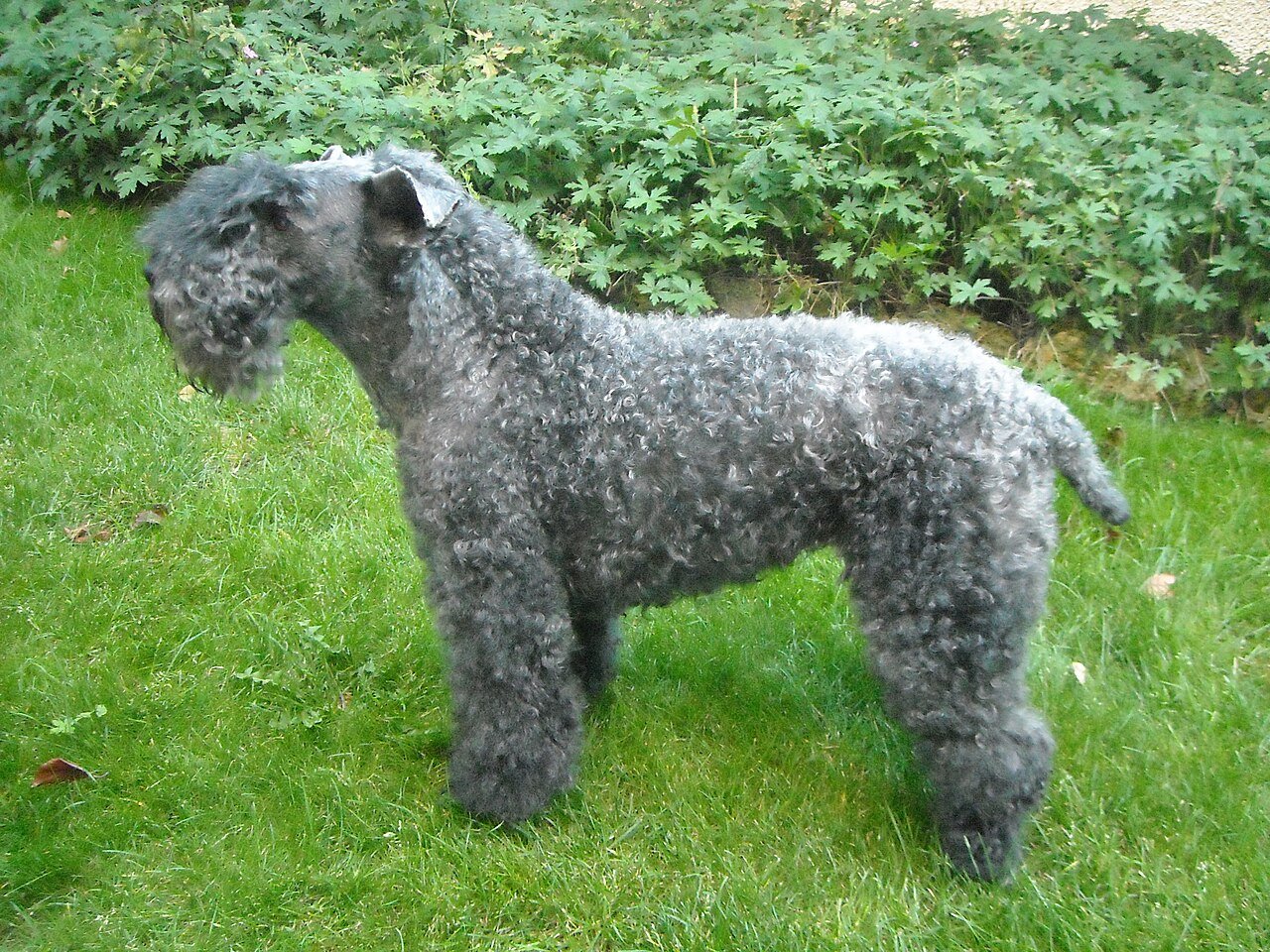
The Kerry Blue Terrier takes its name from County Kerry in Ireland. Established as a versatile farm dog, it worked with livestock, hunted vermin, and served as a companion. Colorful stories about its earliest ancestors are less certain than that practical working background.
Training & behavior
Use searches, a controlled tug release, and short obedience patterns to reward thoughtful choices. Introduce other dogs with space and the option to separate rather than expecting sociability with every unfamiliar animal. Teach standing for grooming and keeping feet still through gradual rewarded handling.
Daily needs & enrichment
Combine walks with searching games, retrieves, or suitable sport foundations. Build jumping and sustained running gradually as development permits. Shared work and quiet company both matter; a yard alone cannot provide the interaction needed to direct an animated terrier.
Coat care
Brush and comb the soft wavy coat thoroughly each week, checking the beard, armpits, legs, belly, and ear bases. Work in sections to remove loose trapped hair before it mats. This coat is maintained with clipping and scissoring, not the stripping routine of a hard-coated terrier.
A full trim commonly falls around six to eight weeks, adjusted to growth and comfort. Detangle before bathing, rinse dog shampoo completely, and dry roots while gently separating the coat. Clean and dry the beard after meals. Avoid scissors beneath mats, hot drying, and assuming little shedding eliminates grooming or allergy concerns.
Living Environment & Daily Needs
A Kerry Blue needs games and consistent lessons to channel an animated working character. Make grooming arrangements practical at home; low shedding does not remove regular coat maintenance or the need for comfortable downtime.
Practical question
Should the soft coat be hand-stripped because this is a terrier?
No. Maintain it by regular combing and an appropriate clipped and scissored trim rather than imposing a harsh-jacket technique.
Plan care for the individual dog
Budget, time alone and household compatibility depend on the individual dog and your circumstances. Use our care budget guide, time-alone planning guide and questions before adopting alongside the breed-specific source information above.
Health questions for a veterinarian
Hip evaluation and ophthalmologist examination are documented club recommendations. Hip imaging assesses joint structure, while an eye examination records findings at that time and cannot exclude every later disorder. Request family history and actual reports rather than relying on an undefined basic DNA panel. Persistent lameness, squinting, reduced vision, new lumps, or unexplained loss of stamina needs examination. Reliable frequencies for uncommon conditions are limited, so a healthy reputation should not substitute for assessment.
Editorial update: October 24, 2026. General information; individual care requires veterinary assessment. No veterinary review is claimed. See our Editorial Policy for sourcing and review practices.