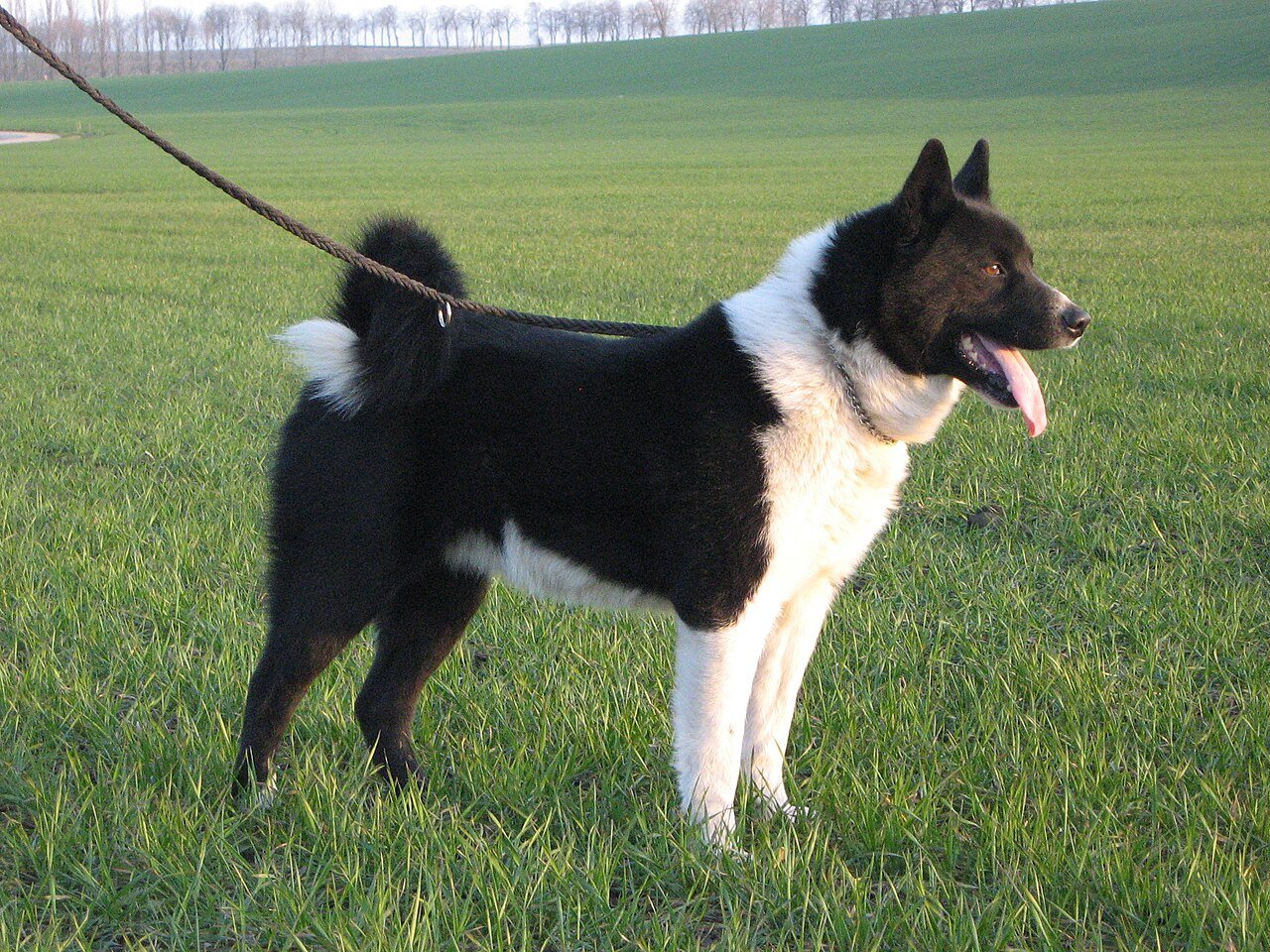
Ranges describe the registry profile, not a measurement, life expectancy, or health prediction for a particular dog. Separate sex or variety ranges are preserved where the source supplies them.
Source characteristics at a glance
The registry uses an ordinal 1–5 scale. A higher number indicates more of the named trait, not a better dog or a compatibility score. These descriptions are general and are not clinical measurements.
History and original work
The Karelian Bear Dog developed from hunting dogs of Karelia and was established as a Finnish breed. It locates and holds the attention of large game with persistence and voice. That specialist role requires realistic management; courage around quarry is not a reason to expose a companion to wildlife confrontations.
Training & behavior
Rehearse a turn away from manageable distractions and reward checking with you before resuming a search. Keep introductions to other dogs controlled and allow separation. Teach resting away from the boundary. Independence and quarry interest call for reliable containment, not harsher attempts to establish rank.
Daily needs & enrichment
Offer tracking, purposeful woodland walks, and gradually conditioned hikes with secure line handling. Do not use contact with bears or other wild animals as enrichment. Include recovery and quieter tasks; growing dogs need manageable footing before prolonged demanding work.
Coat care
Brush weekly through the coarse outer coat into the dense undercoat, using a pin brush and comb at the neck, thighs, and behind the ears. Increase removal of loose wool during shedding. After forest outings, inspect feet and the skin under equipment as well as the visible black-and-white coat.
Bathe when dirt requires it, rinse dog shampoo completely, and dry the dense layer with towels and cool airflow. Routine shaving or outline sculpting is unnecessary. Avoid forceful scraping or leaving wet compacted hair against skin; a stubborn mat needs safe removal instead of scissors pushed underneath.
Living Environment & Daily Needs
For a Karelian Bear Dog, plan purposeful activity and clear boundaries around persistent hunting instincts. Its quarry-locating voice deserves attention near neighbors, while independent decisions require thoughtful guidance rather than reliance on available land.
Practical question
Does barking at large wildlife show a safe activity outlet?
No. Avoid deliberately creating confrontations; use controlled scent tasks that provide concentration without exposing the dog, people, or wildlife to injury.
Plan care for the individual dog
Budget, time alone and household compatibility depend on the individual dog and your circumstances. Use our care budget guide, time-alone planning guide and questions before adopting alongside the breed-specific source information above.
Health questions for a veterinarian
Inherited retinal disease, including prcd-PRA, is documented in the breed. An ophthalmologist examination checks visible eye findings, while an appropriate DNA test addresses a specific inherited variant; neither alone excludes all eye disease. Ask for family and screening records rather than inferring health from working ability. New difficulty navigating, persistent squinting, or an altered gait needs assessment. Reliable breed-wide frequencies should not be inferred from a limited tested group.
Editorial update: October 24, 2026. General information; individual care requires veterinary assessment. No veterinary review is claimed. See our Editorial Policy for sourcing and review practices.