Ranges describe the registry profile, not a measurement, life expectancy, or health prediction for a particular dog. Separate sex or variety ranges are preserved where the source supplies them.
Source characteristics at a glance
The registry uses an ordinal 1–5 scale. A higher number indicates more of the named trait, not a better dog or a compatibility score. These descriptions are general and are not clinical measurements.
History and original work
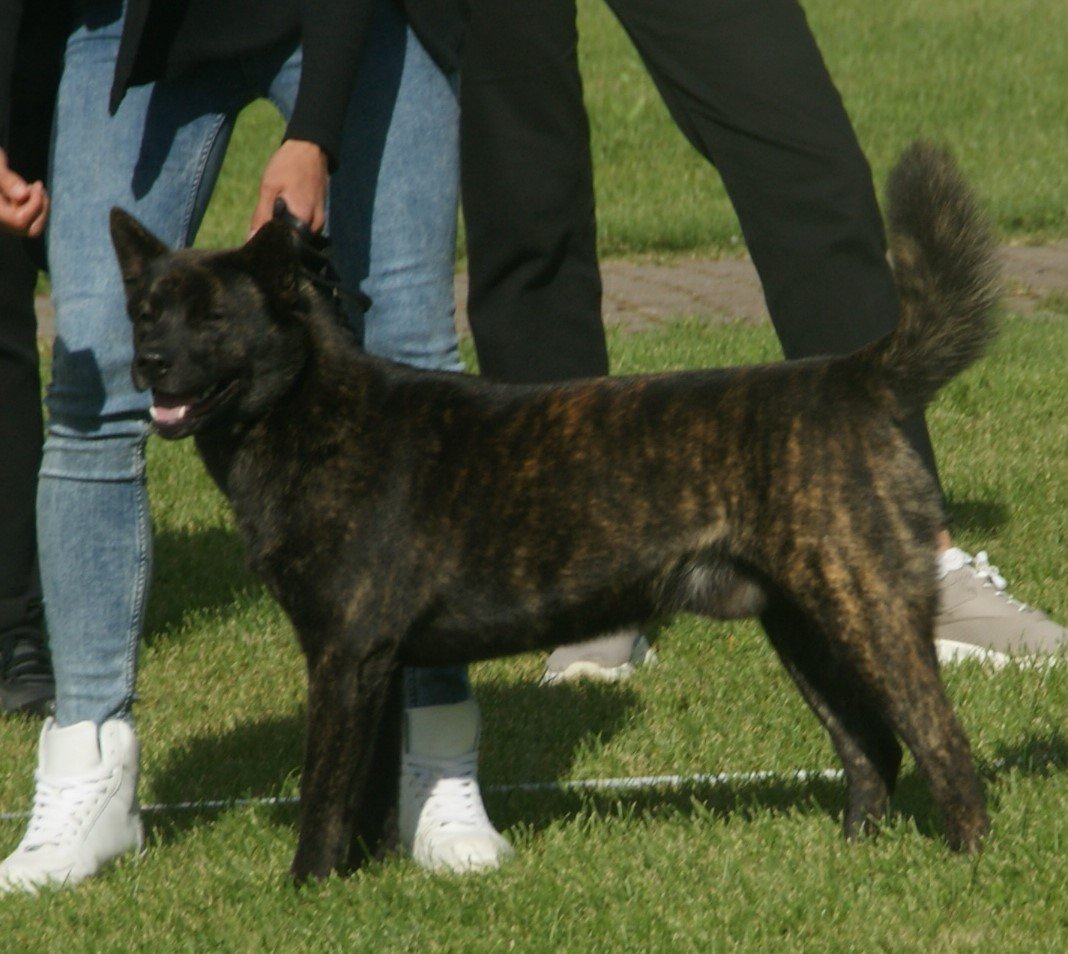
The Kai Ken comes from the mountain region historically known as Kai in Japan. Developed as a hunting dog, it is known for brindle coloring and agile movement over demanding ground. Patient cooperation and secure management of hunting interest remain more useful than treating its appearance as the main attraction.
Training & behavior
Reward voluntary returns and build a recall inside fencing before introducing wildlife distractions. Let strangers remain neutral while reinforcing relaxed observation. Use gentle handling and short problem-solving tasks; forcing physical greetings can undermine trust without teaching a safer response.
Daily needs & enrichment
Try scent trails, conditioned hikes, and body-awareness games over suitable surfaces. Inspect enclosure boundaries before free movement. Growing dogs need simpler terrain and recovery. A dog that learns household lessons readily may still make independent decisions when game becomes interesting.
Coat care
Brush the medium double coat regularly with a pin brush or slicker, checking with a comb at the neck, trousers, and friction areas. During an undercoat shed, additional gentle sessions release loose wool. Work in sections rather than dragging a rake repeatedly across one patch.
Bathe for accumulated dirt or a shedding-coat cleanout, rinse dog shampoo thoroughly, and dry dense roots with towels and cool moving air. Keep the natural outline; routine body clipping is unnecessary. Avoid leaving damp wool compacted beneath dry outer hair or assuming a naturally tidy dog cannot have hidden skin irritation.
Living Environment & Daily Needs
A Kai Ken needs secure boundaries even when patient lessons go well. Offer activities that engage agility and learning, and assess hunting responses around household outings alongside comfortable rest and time to build trust.
Practical question
Can successful obedience practice replace a secure boundary?
Not around hunting distractions. Rehearse within an enclosure and manage freedom according to the setting and the individual’s actual response.
Plan care for the individual dog
Budget, time alone and household compatibility depend on the individual dog and your circumstances. Use our care budget guide, time-alone planning guide and questions before adopting alongside the breed-specific source information above.
Health questions for a veterinarian
Patellar problems, allergies, and seizures have been reported, but reliable population frequencies and universal predictive tests are limited. Request family history and relevant patellar records rather than an unspecified genetic clearance. Persistent itching needs a skin assessment, and episodes of altered awareness or convulsions need veterinary investigation. Prolonged or repeated seizures require urgent help. A normal joint examination does not predict whether neurological or allergic disease will occur.
Editorial update: October 24, 2026. General information; individual care requires veterinary assessment. No veterinary review is claimed. See our Editorial Policy for sourcing and review practices.