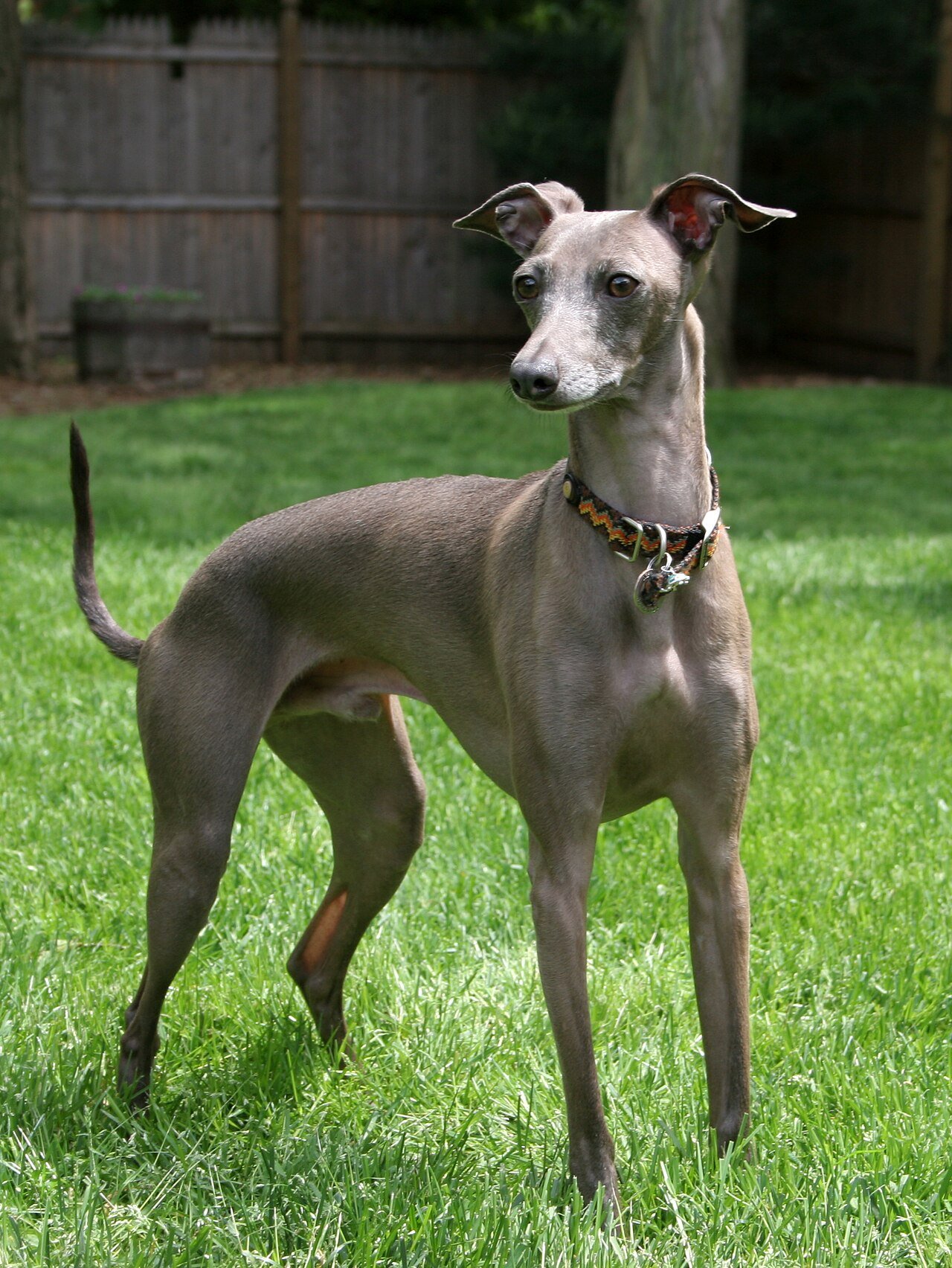
Ranges describe the registry profile, not a measurement, life expectancy, or health prediction for a particular dog. Separate sex or variety ranges are preserved where the source supplies them.
Source characteristics at a glance
The registry uses an ordinal 1–5 scale. A higher number indicates more of the named trait, not a better dog or a compatibility score. These descriptions are general and are not clinical measurements.
History and original work
The Italian Greyhound became especially associated with Renaissance Italy as a small companion sighthound. Earlier Mediterranean dogs are part of its broader historical background, but the established Italian development is more specific than an exact claim about ancient pedigrees. Small size does not remove an interest in visual pursuit.
Training & behavior
Reward toileting promptly in a comfortable accessible location, with frequent opportunities and gentle routines. Teach safe handling and waiting before doors open. Use small immediate rewards in brief sessions. Punishment after an accident or forceful correction can make a sensitive dog avoid the handler rather than understand the desired behavior.
Daily needs & enrichment
Offer lead walks, small searching games, and carefully supervised play on nonslip surfaces. Protect against falls from furniture and rough collisions with larger dogs, particularly while young. Use secure fencing for free movement. Adjust for cold, heat, and fatigue instead of assuming a small dog can simply be carried through every activity.
Coat care
Use a very soft brush or damp cloth to remove dirt from the fine short coat, applying light pressure. Check the skin and feet during handling, and inspect rubbing beneath clothing or equipment. The sparse covering needs little styling but offers limited protection from abrasion and cold.
Bathe only when soiling requires it, rinse mild dog shampoo fully, and towel-dry while keeping the dog comfortably warm. No coat trimming is normally needed. Maintain nails gradually without cutting the quick, and brush teeth daily with dog toothpaste. Avoid harsh shedding tools and treat persistent mouth pain or gum bleeding as a health issue.
Living Environment & Daily Needs
Plan considerate handling and secure activity for an Italian Greyhound's fine frame and interest in movement. Comfortable rest near familiar people belongs alongside small games and patient teaching around tempting chase distractions.
Practical question
Does being small make rough play with larger dogs harmless?
No. Choose compatible partners and controlled play, protecting against collisions and falls rather than assuming speed will prevent injury.
Plan care for the individual dog
Budget, time alone and household compatibility depend on the individual dog and your circumstances. Use our care budget guide, time-alone planning guide and questions before adopting alongside the breed-specific source information above.
Health questions for a veterinarian
Patellar assessment, thyroid evaluation, and regular ophthalmologist examinations are documented screening priorities. Breed-specific DNA tests can assess susceptibility to PRA, primary closed-angle glaucoma, and familial enamel hypoplasia; risk results need interpretation and do not diagnose every eye or dental problem. Protect against hazardous falls and investigate persistent limb pain. A red painful eye, sudden vision change, or suspected fracture needs prompt care. Routine dental assessment remains important even with a normal enamel test.
Editorial update: October 24, 2026. General information; individual care requires veterinary assessment. No veterinary review is claimed. See our Editorial Policy for sourcing and review practices.