Ranges describe the registry profile, not a measurement, life expectancy, or health prediction for a particular dog. Separate sex or variety ranges are preserved where the source supplies them.
Source characteristics at a glance
The registry uses an ordinal 1–5 scale. A higher number indicates more of the named trait, not a better dog or a compatibility score. These descriptions are general and are not clinical measurements.
History and physical characteristics
Large hunting hounds have a long history in Ireland, including work against wolves and other large quarry. As that work disappeared, numbers fell. Nineteenth-century preservation efforts led by George Augustus Graham helped establish the modern Irish Wolfhound; ancient stories should not be treated as a complete record of its ancestry.
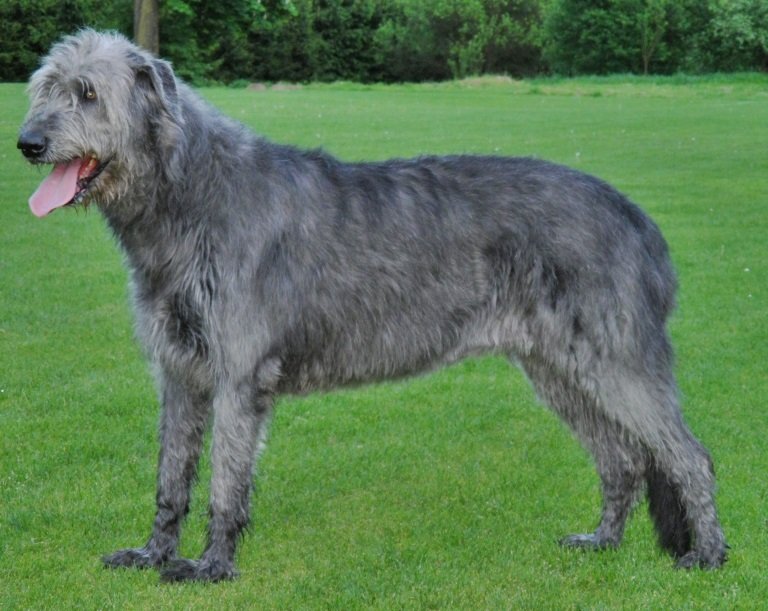
This is a very tall, rough-coated sighthound, built for long-striding movement. The AKC standard gives minimum height and weight thresholds for adults over 18 months; its 120-pound male and 105-pound female figures are not maximum weights. Plan around the measured individual, not an assumed upper limit.
Temperament and training
An Irish Wolfhound's gentle manner still needs teaching around its enormous reach and strength. Practice polite greetings, loose-leash movement, and waiting at doors. Its coursing background makes secure management around running animals important. Supervise children and small dogs rather than expecting a calm indoor impression to predict every encounter.
Daily needs & enrichment
Offer regular walks and safe movement, progressing with age and physical development. Avoid making a growing giant keep up with adult endurance work. Include comfortable rest, manageable transport, and a caregiver who can assist if mobility becomes limited.
Coat care
Brush and comb the harsh outer coat and soft undercoat thoroughly about weekly. Check the beard, ear bases, armpits, belly, and legs for debris and small tangles, supporting the roots as you comb. The coat sheds through the year rather than requiring the same seasonal blowout routine used for every double-coated breed.
Bathe for actual dirt, rinse dog shampoo fully, and dry the roots and facial furnishings with comfortable airflow. Ask a breed-experienced groomer about any limited tidying; avoid unnecessary body clipping and scissors beneath tight mats. Arrange nonslip footing and breaks, particularly for an older dog, and establish cooperative nail care before adult size makes handling difficult.
Living Environment & Daily Needs
Check generous resting space, household routes, and transport for an Irish Wolfhound's extraordinary height. Its gentle manner still calls for considerate handling, regular activity, and coat care arranged around the actual dog's needs.
Care through life stages
Growing Wolfhounds need suitable large-breed nutrition and progressive, comfortable movement rather than forced adult mileage. Do not add calcium or other supplements to a complete growth diet without advice. Adult and senior care should include ongoing cardiac discussion, generous comfortable rest, and a plan for assistance or transport if this very tall dog cannot walk.
Frequently asked questions
Is 120 pounds the largest an adult male should weigh? No. The cited AKC standard uses 120 pounds as a minimum for males over 18 months, with 105 pounds for females. It does not supply a reliable upper weight bound for a housing or transport decision; ask for the individual dog's current measured weight.
Questions to ask before choosing a dog
Ask for dated cardiac, hip, elbow, and eye reports and puppy bile-acid results. What health problems and ages at death are documented in close relatives? Observe leash handling and ask how transport would work if the dog could not walk.
Plan care for the individual dog
Budget, time alone and household compatibility depend on the individual dog and your circumstances. Use our care budget guide, time-alone planning guide and questions before adopting alongside the breed-specific source information above.
Health questions for a veterinarian
The breed club recommends parental hip and elbow evaluation, ophthalmologist examination, and cardiac assessment. Heart examination can include listening, ECG rhythm recording, and echocardiography; ask when follow-up is due because an earlier normal result does not exclude later disease. The club also recommends bile-acid testing for individual puppies to investigate possible portosystemic liver shunting; parental results do not replace the puppy's assessment.
Discuss bloat/GDV risk and prevention with a veterinarian. Repeated unsuccessful retching, abdominal swelling, sudden distress, or collapse needs emergency care. Investigate changes in appetite, stamina, movement, or breathing rather than attributing them to a serene temperament or large size. Family longevity and medical records add useful context but cannot guarantee the individual's future health.
Updated October 25, 2026. General information; see our Editorial Policy for sourcing and review practices.