Ranges describe the registry profile, not a measurement, life expectancy, or health prediction for a particular dog. Separate sex or variety ranges are preserved where the source supplies them.
Source characteristics at a glance
The registry uses an ordinal 1–5 scale. A higher number indicates more of the named trait, not a better dog or a compatibility score. These descriptions are general and are not clinical measurements.
History and original work
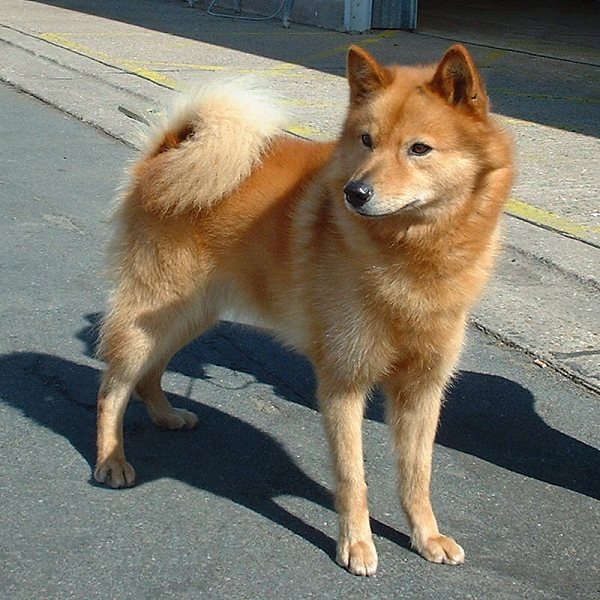
The Finnish Spitz developed as a Finnish hunting dog, especially for locating birds and announcing their position with voice. Its fox-like face, curled tail, and red coat accompany a working style that depends on alert observation. The ability to notice and announce activity remains relevant in a family setting, where frequent barking requires a realistic management plan.
Training & behavior
Reward a brief quiet pause after an alert and teach moving away from the window or boundary. Prevent repeated unsupervised fence-line barking rather than relying on punishment after a long rehearsal. Keep lessons short, varied, and rewarding, with gentle introductions to new people. A breed selected to announce game should not be promised to become universally quiet.
Daily needs & enrichment
Provide exploratory walks, short scent trails, and purposeful games within secure boundaries. Let the dog investigate while practicing check-ins before increasing distractions. Build stamina gradually and include rest with its household afterward. Fencing and leash management matter when a bird or small animal can draw attention beyond the intended route.
Coat care
A pin brush every few days, with a comb through denser areas, maintains the natural double coat. Check behind ears, around the neck, and through the trousers; during a heavy shed, gentle daily work can remove loose undercoat. Avoid scraping repeatedly or trying to remove firmly attached hair.
Bathe when needed, rinse dog shampoo fully, and dry with towels and cool airflow rather than hot air that dries the outer hair harshly. The coat is normally left natural, with only necessary foot tidying. Do not routinely shave the body, sculpt the outline, or trim whiskers for appearance. A thicker coat still needs a root-level check even when the surface looks neat.
Living Environment & Daily Needs
A Finnish Spitz's bird-announcing background makes vocal behavior a practical home consideration. Provide activity and rewarding lessons, give newcomers time, and assess individual noise responses rather than relying on the home's size to predict a fit.
Practical question
Can a Finnish Spitz be trusted off leash because it checks in on walks?
Not on that evidence alone. Interest in birds or other wildlife can override familiar routines; practice recall within fencing and use a long line where safe and permitted.
Plan care for the individual dog
Budget, time alone and household compatibility depend on the individual dog and your circumstances. Use our care budget guide, time-alone planning guide and questions before adopting alongside the breed-specific source information above.
Health questions for a veterinarian
Discuss hip, elbow, patellar, and eye screening when reviewing breeding records, and request actual results and family health history. Screening practice varies, and reliable breed-wide disease frequencies are limited; neither a sparse test record nor a normal result proves freedom from inherited illness. Persistent skipping, lameness, squinting, or a change in stamina needs examination. Decisions about surgery or neutering should reflect the individual’s development, health, and circumstances rather than a fixed age applied to the entire breed.
Editorial update: October 24, 2026. General information; individual care requires veterinary assessment. No veterinary review is claimed. See our Editorial Policy for sourcing and review practices.