Ranges describe the registry profile, not a measurement, life expectancy, or health prediction for a particular dog. Separate sex or variety ranges are preserved where the source supplies them.
Source characteristics at a glance
The registry uses an ordinal 1–5 scale. A higher number indicates more of the named trait, not a better dog or a compatibility score. These descriptions are general and are not clinical measurements.
History and original work
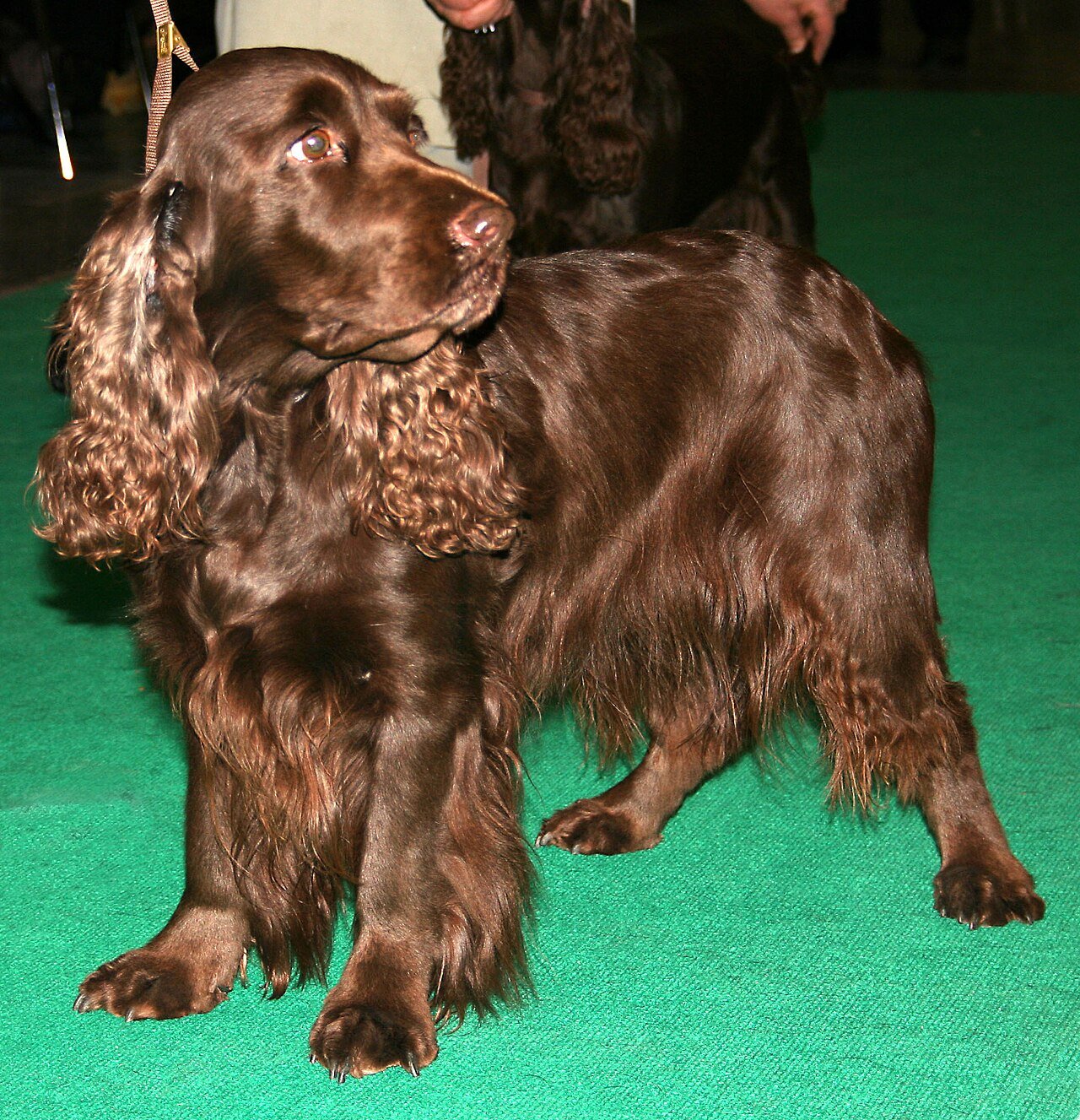
The Field Spaniel developed in Britain from working land spaniels. Exaggeration of its long, low shape in early show breeding reduced working usefulness, and later enthusiasts rebuilt a more practical sporting dog. Its history illustrates why functional movement and an individual health assessment matter more than selecting an extreme silhouette.
Training & behavior
Make the task clear, reward a successful retrieve or check-in, and change the game before repetition becomes frustrating. Use a gentle approach with a sensitive problem-solver. Practice voluntary ear and foot handling, and manage found objects with a trade rather than chasing. Supervise children's interactions around rest and food, even with a generally soft-mannered dog.
Daily needs & enrichment
Offer sniffing walks, searches for a dummy, and controlled retrieves over suitable ground. Increase field-style work progressively and include pauses rather than constant sprinting. Young or unconditioned dogs need easier tasks and forgiving footing. Shared exploration can meet sporting interests without requiring a hunting household to be the only possible setting.
Coat care
Brush and comb the single coat weekly, checking the longer hair beneath ears, on the chest and belly, and behind the legs. Remove burrs after outdoor work, and work carefully from the ends of tangles without pulling ear skin. The natural body coat should not be routinely clipped like a heavily sculpted spaniel trim.
A little head or foot tidying may keep hair practical. Bathe when soiled, rinse dog shampoo thoroughly, and dry feathering to the roots with towels and gentle airflow. Avoid hot fluff-drying, scissors under a tight mat, or leaving damp ear hair packed against skin. Persistent discharge or odor needs assessment before further home ear treatment.
Living Environment & Daily Needs
A Field Spaniel needs patient, encouraging learning and genuine outdoor activity despite an understated appearance. Arrange quiet company and feathered-coat care at home, with time for exploration woven into the daily schedule.
Practical question
Should a Field Spaniel receive the same close body clip as another pet spaniel?
Not as routine care. Maintain its natural single coat, using targeted tidying and regular combing instead of assuming all spaniel coats need one pattern.
Plan care for the individual dog
Budget, time alone and household compatibility depend on the individual dog and your circumstances. Use our care budget guide, time-alone planning guide and questions before adopting alongside the breed-specific source information above.
Health questions for a veterinarian
Hip evaluations, ophthalmologist examinations, and thyroid testing are documented screening topics. A thyroid blood test requires interpretation alongside clinical signs, not a conclusion based on coat quality alone. Ask about late-onset seizures and other illness in relatives because normal structural screens cannot exclude every later condition. Repeated limping, reduced stamina, squinting, or an episode of altered awareness should be examined. Recurrent ear or skin inflammation also warrants investigation rather than simply more grooming.
Editorial update: October 24, 2026. General information; individual care requires veterinary assessment. No veterinary review is claimed. See our Editorial Policy for sourcing and review practices.