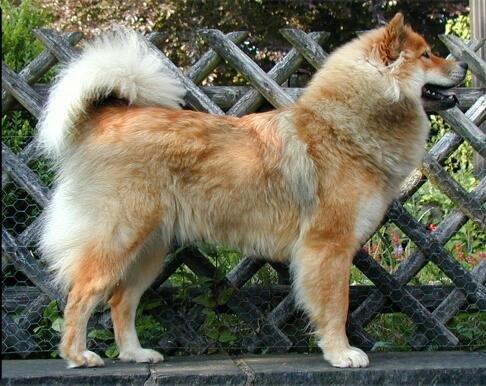
Ranges describe the registry profile, not a measurement, life expectancy, or health prediction for a particular dog. Separate sex or variety ranges are preserved where the source supplies them.
Source characteristics at a glance
The registry uses an ordinal 1–5 scale. A higher number indicates more of the named trait, not a better dog or a compatibility score. These descriptions are general and are not clinical measurements.
History and original work
The Eurasier was developed in Germany through a planned twentieth-century breeding program associated with Julius Wipfel. Chow Chow and Wolfspitz ancestry were later joined by Samoyed influence. The aim was a family-oriented companion; its name reflects European and Asian roots, not a requirement for working like every sled or guarding breed in its ancestry.
Training & behavior
Let unfamiliar people remain neutral while rewarding relaxed observation and voluntary approach. Keep lessons brief and varied with rewards the individual values. Build comfortable separation in gradual steps and arrange care rather than expecting a closely attached dog to tolerate a sudden long absence. Forceful greetings or repeated harsh corrections can undermine trust.
Daily needs & enrichment
Combine walks, scent searches, and relaxed play suited to the dog rather than imposing an endurance target from its spitz appearance. Introduce new routes at a comfortable pace, then allow recovery with familiar company. Keep boundaries secure around wildlife and assess actual recall before increasing freedom. Adapt outings for heat, age, and orthopedic comfort.
Coat care
Comb and brush thoroughly about weekly, checking behind ears, under elbows, in the trousers, and beneath the collar. During heavy undercoat shedding, gentle daily sessions remove loose wool before it compacts. Lift small sections with a pin brush and comb; a thicker coat after neutering may require additional root-level checks.
Bathing is generally infrequent unless dirty. Rinse dog shampoo completely and dry through the dense undercoat, using towels and cool airflow before replacing equipment. Routine body shaving is not a shortcut for managing a molt. Avoid yanking through knots, hot drying, or leaving a damp root layer because the surface already feels dry.
Living Environment & Daily Needs
Make regular household contact part of an Eurasier's care plan, with unpressured introductions to newcomers. Comfortable rest and consistent brushing belong alongside companionship; assess care coverage rather than expecting the dog to manage prolonged isolation.
Practical question
Does reserve with strangers mean the dog must be made to greet everyone?
No. Comfortable observation and freedom to retreat can support confidence without forcing physical contact.
Plan care for the individual dog
Budget, time alone and household compatibility depend on the individual dog and your circumstances. Use our care budget guide, time-alone planning guide and questions before adopting alongside the breed-specific source information above.
Health questions for a veterinarian
Hip and patellar assessment, eye examinations, and thyroid testing address recognized concerns, including autoimmune thyroiditis. The club also recommends a specific test for Dandy-Walker-like malformation, a disorder of cerebellar development associated with impaired coordination. That test does not diagnose every cause of an unsteady gait. Persistent lethargy, skin changes, weakness, or abnormal coordination needs assessment rather than a presumed temperament explanation. Normal results have defined limits; family history and follow-up remain important.
The club also identifies gastric dilatation-volvulus as a concern. Repeated unsuccessful retching, abdominal swelling, sudden severe distress, or collapse warrants immediate emergency care; a normal thyroid or joint screening does not protect against it.
Editorial update: October 26, 2026. General information; individual care requires veterinary assessment. No veterinary review is claimed. See our Editorial Policy for sourcing and review practices.