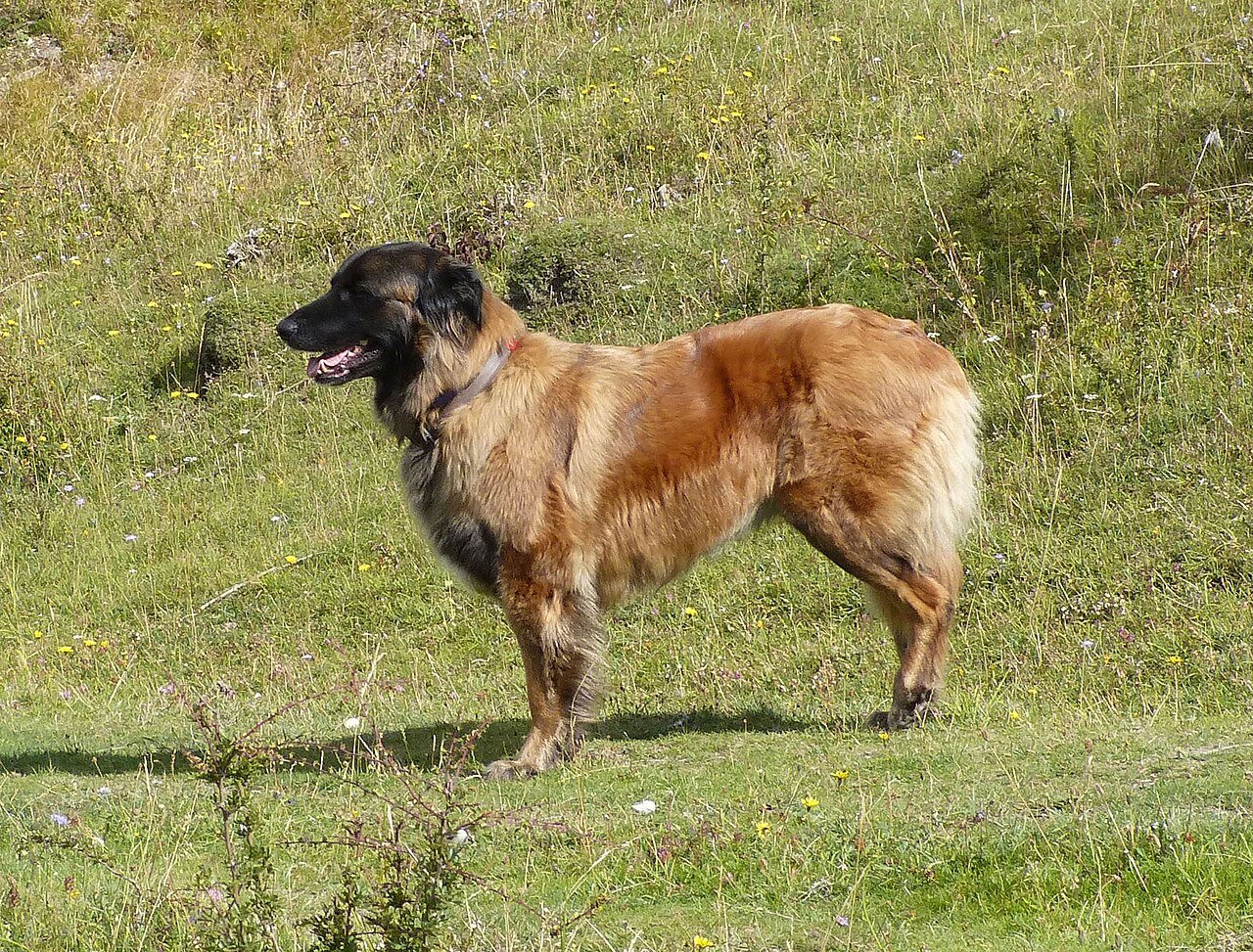
Ranges describe the registry profile, not a measurement, life expectancy, or health prediction for a particular dog. Separate sex or variety ranges are preserved where the source supplies them.
Source characteristics at a glance
The registry uses an ordinal 1–5 scale. A higher number indicates more of the named trait, not a better dog or a compatibility score. These descriptions are general and are not clinical measurements.
History and original work
The Estrela developed around Portugal's Serra da Estrela as a guardian accompanying shepherds and protecting livestock from predators and theft. Its exact distant ancestry is uncertain. This is protective work that requires independent judgment, unlike the close-direction work of a herding dog. Both long-haired and short-haired varieties are recognized in the FCI standard.
Temperament and training
An Estrela's guardian background can appear in independent decisions about arrivals. Teach handling, waiting in a designated place, and managed visitor routines while young. Use patient reinforcement and secure boundaries. Family affection does not establish safety during unsupervised contact with children, guests, or animals.
Daily needs & enrichment
Arrange steady walks and practical learning with quiet observation and rest. Aim for manageable participation rather than continually exciting a large guardian. Practice gates and transport and plan experienced backup care. A large property does not replace social introductions or a caregiver able to handle the individual safely.
Coat care
Brush to the roots at least weekly, using a pin brush or slicker and a metal comb suited to the actual long or short coat. Lift sections to check the undercoat, ear bases, neck, armpits, rear legs, and tail. Long-coated dogs need particular attention to feathering; either variety may need more frequent sessions when the undercoat sheds.
Remove loose hair and small tangles before bathing. Wash for soiling with dog shampoo, rinse thoroughly, and dry the inner coat with towels and comfortable airflow rather than leaving damp wool beneath a dry surface. Routine body shaving is unnecessary. Avoid forceful raking, hot drying, and scissors beneath mats. Teach grooming on stable nonslip footing, with breaks and a safe plan for moving a large dog.
Living Environment & Daily Needs
An Estrela's guardian background should shape plans for household visitors and unfamiliar situations. Check handling, full-sized rest, and access alongside ongoing teaching; affection within the family does not guarantee an easy welcome for everyone.
Care through life stages
Practice cooperative handling and visitor routines while a puppy is still easy to move safely. Growing Estrelas need appropriate nutrition and progressive activity rather than forced endurance work. Adults need dependable boundaries and experienced backup care. For seniors, review traction, steps, comfortable rest, and emergency transport, and investigate pain or reduced stamina.
Questions to ask before choosing a dog
Request parental hip and elbow reports and ask about heart disease, bloat, and ages at death in close relatives. What examinations has this dog had, and what follow-up was advised? Ask how visitor introductions, veterinary handling, and transport work if a full-grown Estrela cannot walk.
Plan care for the individual dog
Budget, time alone and household compatibility depend on the individual dog and your circumstances. Use our care budget guide, time-alone planning guide and questions before adopting alongside the breed-specific source information above.
Health questions for a veterinarian
Estrela breed clubs identify hip and elbow dysplasia and also document dilated cardiomyopathy (DCM), a disease of the heart muscle. Request parental joint reports and the dog's cardiac and family history. Joint imaging and heart examinations address different concerns; a screening result cannot guarantee lifelong health. Discuss appropriate examinations and follow-up with a veterinarian, particularly if relatives have had heart disease. Fainting, altered stamina, or breathing difficulty requires assessment; collapse or severe breathing distress is urgent.
Gastric dilatation-volvulus (GDV), in which the stomach expands and twists, is another documented concern. Repeated unsuccessful attempts to vomit, abdominal swelling, or sudden collapse call for emergency veterinary care. Ask about individual risk and preventive options rather than applying a universal procedure. Keep a growing Estrela lean, adapt activity to development and joint comfort, and plan transport if the adult cannot walk.
Editorial update: October 25, 2026. General information; individual care requires veterinary assessment. No veterinary review is claimed. See our Editorial Policy for sourcing and review practices.
Sources & further reading
Public sources checked October 23, 2026. Sources support general guidance; examples and checklists are editorial planning aids. This information does not replace individual professional advice.
- American Kennel Club registry profile - Estrela Mountain Dog
- ASPCA: How to Sniff Out a Good Dog Breeder
- Federation Cynologique Internationale, breed nomenclature