Ranges describe the registry profile, not a measurement, life expectancy, or health prediction for a particular dog. Separate sex or variety ranges are preserved where the source supplies them.
Source characteristics at a glance
The registry uses an ordinal 1–5 scale. A higher number indicates more of the named trait, not a better dog or a compatibility score. These descriptions are general and are not clinical measurements.
History and physical characteristics
Louis Dobermann developed a protective working dog in Apolda, Germany, during the nineteenth century. The precise contribution of each ancestral breed is uncertain, but the modern Doberman became established in police, military, service, and companion roles. Its working history explains the value of practiced cooperation without making every individual suitable for protective work.
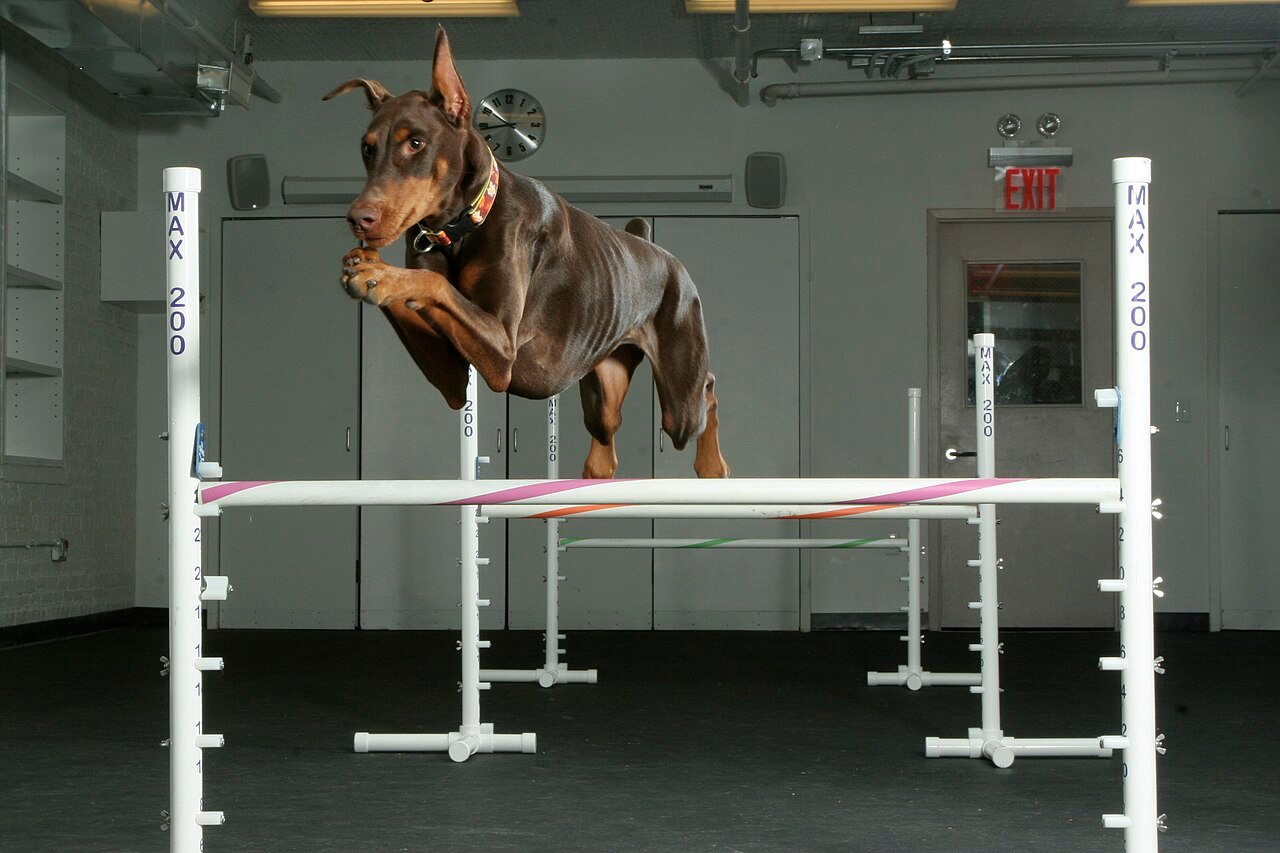
A muscular, streamlined body and short close coat contribute to an athletic appearance. Neither that outline nor a willingness to keep working demonstrates normal heart function. Assess conditioning and health alongside the temperament and handling of the actual dog.
Temperament and training
A Doberman's attention to people can support precise learning, but protective awareness needs guidance. Practice calm arrivals, loose-leash walking, and settling away from the front door. Use predictable, rewarding lessons. Family attachment does not remove the need to supervise children or assess other animals individually.
Daily needs & enrichment
Combine purposeful walks with searching, obedience skills, and controlled games. Provide mental work without repeatedly pushing to exhaustion. Fainting, weakness, or unusual exercise intolerance needs a veterinary assessment before strenuous work; athletic appearance does not establish normal cardiac function.
Coat care
A brief daily pass with a soft short-bristled brush or grooming mitt suits the sleek coat, with lighter sessions if the skin is sensitive. Inspect the belly, feet, and the areas beneath a collar or harness for rubbing after activity. Check nail length rather than relying on roadwork to wear every nail evenly.
Bathe when dirty, rinse dog shampoo fully, and towel-dry. Routine body clipping or stripping is unnecessary. Avoid abrasive brushing, hot drying, and leaving the lightly covered dog chilled after washing. Clean only the visible ear surfaces unless a veterinarian has demonstrated an appropriate routine; do not insert swabs or household oils into the canals.
Living Environment & Daily Needs
Build purposeful skills practice and physical activity into a Doberman's day. Protective awareness calls for steady teaching and thoughtful introductions, with safe household routes and comfortable rest for the actual dog.
Care through life stages
Puppies benefit from calm social introductions and cooperative handling before strength and speed increase. Condition adults gradually and review cardiac follow-up before demanding work. In seniors, changes in stamina, coordination, neck comfort, or willingness to rise need assessment rather than assuming a previously athletic dog only needs more exercise.
Frequently asked questions
Does a normal cardiac DNA result clear a Doberman for strenuous exercise? No. Available genetic results address particular risk information and cannot exclude all cardiomyopathy. Discuss dated heart imaging, rhythm monitoring, symptoms, and a suitable workload with the veterinarian.
Questions to ask before choosing a dog
When were the cardiac evaluations performed, and do they include echocardiography and Holter monitoring? Request relevant von Willebrand, hip, eye, and thyroid records. Ask how this dog responds to visitors and settles when a caregiver is occupied.
Plan care for the individual dog
Budget, time alone and household compatibility depend on the individual dog and your circumstances. Use our care budget guide, time-alone planning guide and questions before adopting alongside the breed-specific source information above.
Health questions for a veterinarian
Dilated cardiomyopathy can develop in an apparently active Doberman. Echocardiography evaluates heart structure and pumping function; Holter monitoring records rhythm over a longer period. Discuss ongoing assessment and family history rather than relying on one normal examination or a DNA result. Fainting or unexpected exercise intolerance needs prompt attention, and collapse or severe breathing difficulty is an emergency.
Review von Willebrand disease results before procedures because the condition can affect clotting. Hip imaging, thyroid assessment, and ophthalmologist examinations address separate joint, hormonal, and eye concerns. Request actual dated reports and discuss their limits. The breed is also susceptible to bloat/GDV: repeated unsuccessful retching, abdominal swelling, or sudden distress needs emergency care, without waiting to see whether the dog settles.
Updated October 25, 2026. General information; see our Editorial Policy for sourcing and review practices.