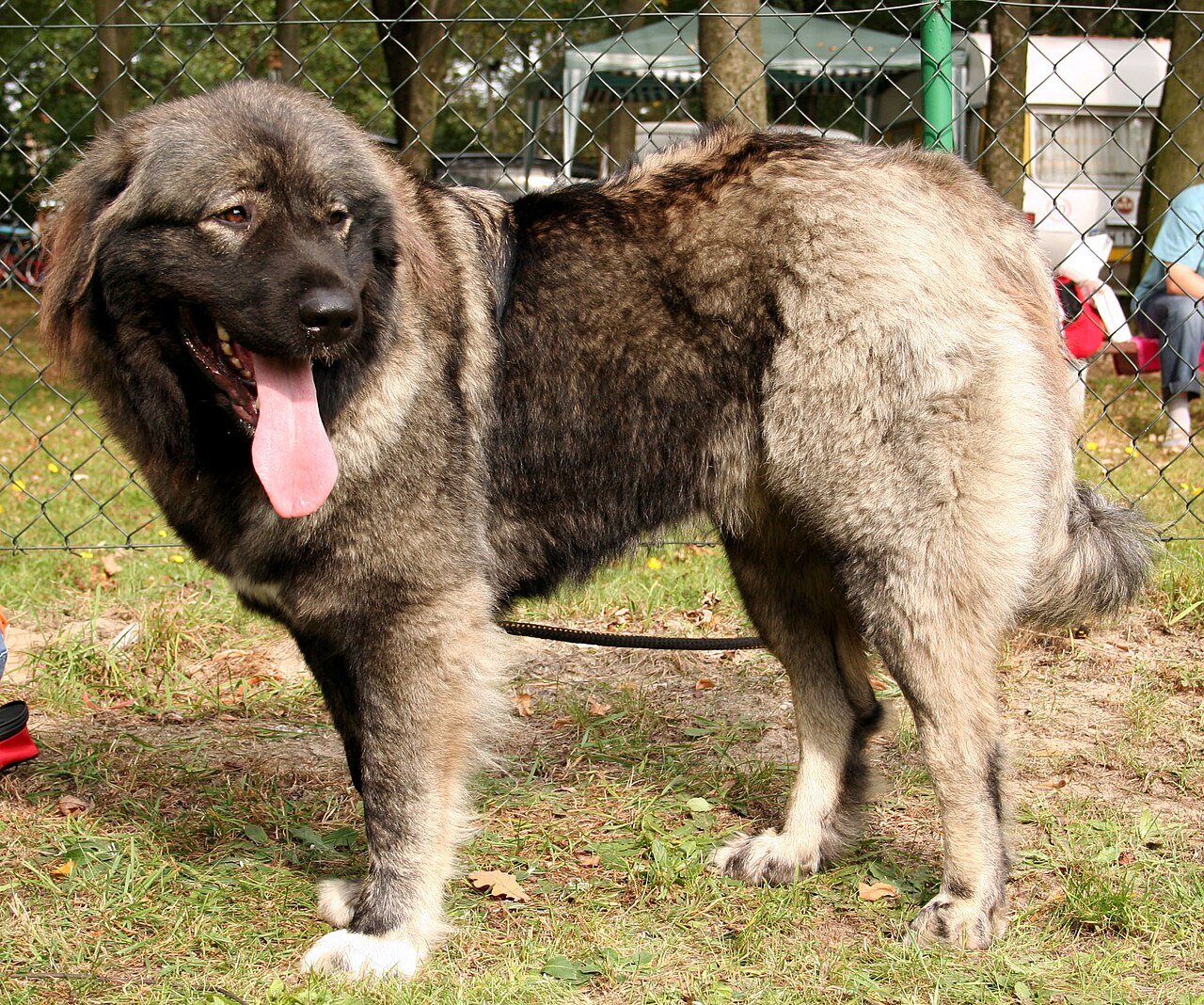
Ranges describe the registry profile, not a measurement, life expectancy, or health prediction for a particular dog. Separate sex or variety ranges are preserved where the source supplies them.
Source characteristics at a glance
The registry uses an ordinal 1–5 scale. A higher number indicates more of the named trait, not a better dog or a compatibility score. These descriptions are general and are not clinical measurements.
History and original work
The Caucasian Shepherd Dog developed from guardian dogs of the Caucasus region, protecting livestock and dwellings. Later organized breeding in the Soviet Union shaped the modern standardized dog. Mountain and other regional backgrounds can differ; a broad regional history should not be mistaken for one uniform household temperament.
Temperament and training
Plan separation from arrivals before opening a gate, using a resting area the dog has learned to enjoy. Reward checking back with the handler and accepting ordinary examination without force. An independent, substantial guardian may not respond like an obedience-focused herder. Visiting children and unfamiliar animals need deliberate management; affection toward familiar people cannot be used to predict those encounters.
Daily needs & enrichment
A controlled walk with sniffing stops can include returning from a boundary marker and settling when the handler pauses. Choose routes that allow distance from unfamiliar dogs instead of testing tolerance in a crowd. Match hills and duration to fitness and mobility. Secure space helps management, but repeated fence charging is not a useful substitute for shared activity.
Coat care
Long-coated Caucasian Shepherds need daily grooming; work in lifted sections with a suitable brush and comb, especially behind ears, beneath limbs, around the rear, and under equipment. A shorter coat still needs regular undercoat checks, with more attention during shedding. Reward cooperation and stop before handling becomes a confrontation.
Plan bathing only when the heavy coat can be rinsed and dried throughout. Use towels and comfortable airflow rather than hot drying, and avoid forceful raking or cutting beneath mats. Arrange skilled help and safe footing appropriate to the dog’s size and response to unfamiliar handlers.
Living Environment & Daily Needs
For a Caucasian Shepherd, prioritize responsible management of strength and protective responses around visitors. Check boundaries, full-sized rest, and access with experienced support; a large property does not remove the need for careful introductions and coat care.
Care through life stages
Puppies need calm handling and secure visitor routines without tests of toughness. Increase exercise in line with growth and joint comfort. Older dogs may need assisted transport and shorter grooming sessions; pain or reluctance to rise deserves assessment rather than pressure to comply.
Frequently asked questions
Will accepting one caregiver guarantee safe grooming by a stranger? No. Teach cooperative handling gradually and plan professional help around the individual’s responses. A familiar person’s access cannot establish safety for every examiner or groomer.
Questions to ask before choosing a dog
Can you show the parents' hip evaluations and explain other health checks performed? What happens when someone enters the property unexpectedly, and how is the dog separated safely? Ask who can groom, examine and transport this individual without relying on force or on its acceptance of one person.
Plan care for the individual dog
Budget, time alone and household compatibility depend on the individual dog and your circumstances. Use our care budget guide, time-alone planning guide and questions before adopting alongside the breed-specific source information above.
Health questions for a veterinarian
Published OFA hip-evaluation records document hip dysplasia in Caucasian Shepherds, but submitted dogs are not a representative population sample. Ask for parental hip reports and discuss any additional orthopedic evaluation with the veterinarian; neither impressive size nor a clean gait at one visit replaces records. The available evidence does not justify inventing a standard breed-wide DNA panel. Monitor comfortable rising, movement and body condition, and investigate persistent limping. Plan examination and transport around the adult dog's size and response to unfamiliar handling.
Updated October 25, 2026. General information; see our Editorial Policy for sourcing and review practices.