Ranges describe the registry profile, not a measurement, life expectancy, or health prediction for a particular dog. Separate sex or variety ranges are preserved where the source supplies them.
Source characteristics at a glance
The registry uses an ordinal 1–5 scale. A higher number indicates more of the named trait, not a better dog or a compatibility score. These descriptions are general and are not clinical measurements.
History and original work
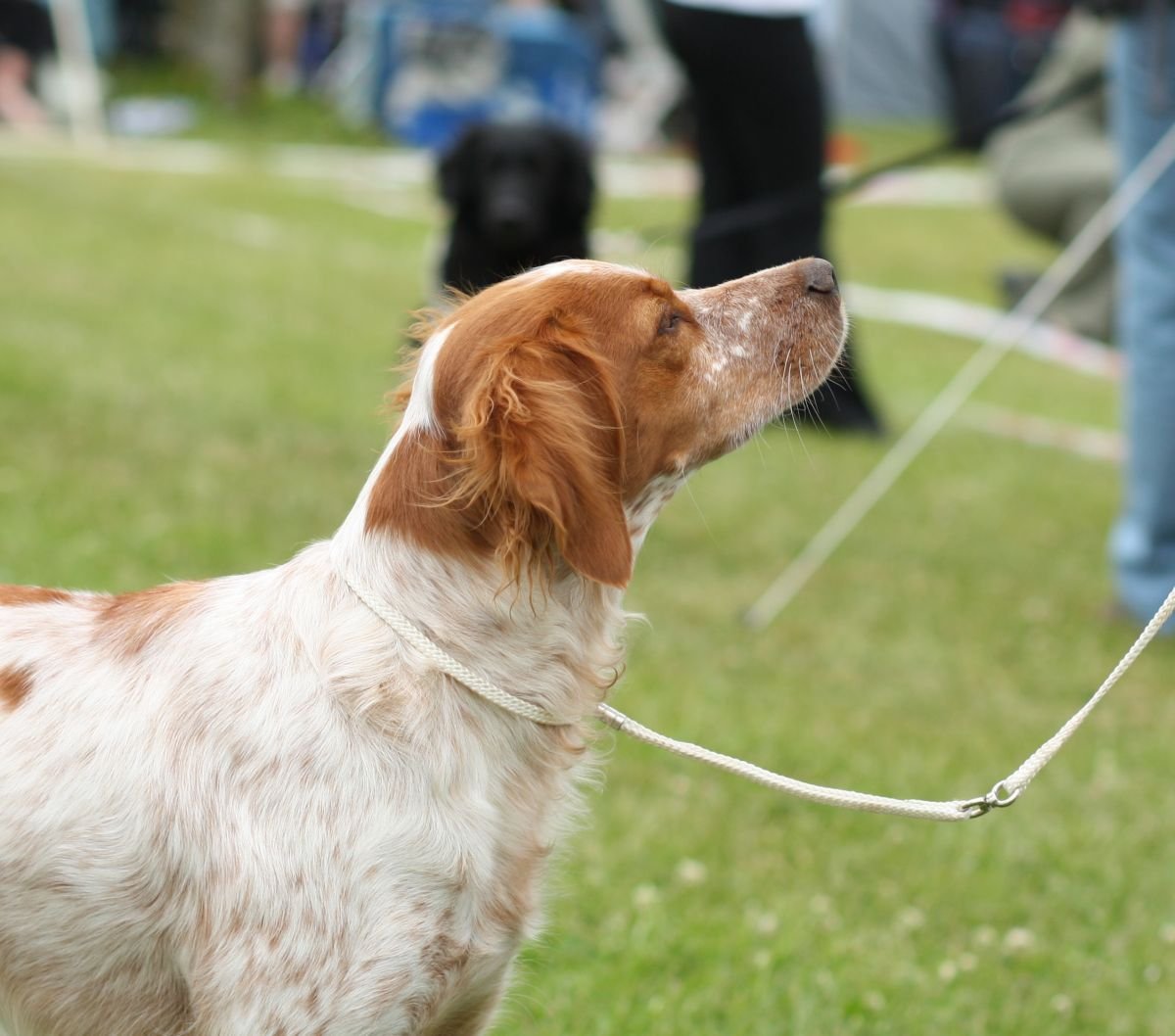
The Brittany developed in the French region of Brittany as a versatile bird dog. Historically called the Brittany Spaniel, it became especially associated with pointing and field work; American and French lines developed some differences. Its compact build can be misleading: this is an energetic sporting dog selected for searching ground and responding to a handler.
Training & behavior
Teach a check-in during searching, a steady wait before a retrieve, and a clear release to resume activity. Reward small successes before adding field distractions. Many Brittanys respond best to patient encouragement; repeated rough corrections can undermine their willingness to work. Keep birds and small household animals separated until the dog's behavior has been assessed under controlled conditions.
Daily needs & enrichment
Plan active walks, safe off-leash searching within secure boundaries, retrieving games, and age-appropriate dog sports. Vary the task so the dog uses its nose and makes controlled choices rather than only chasing a ball at full speed. Build stamina gradually and include recovery. A young Brittany needs low-impact exploration and learning before the workload of a conditioned adult field dog.
Coat care
Use a soft brush or hound glove over the relatively short body coat, then comb the feathering on the ears, belly, and legs. Check for burrs and plant fragments after field outings, particularly between the toes and beneath the ears. Do not mistake a smooth back for a tangle-free underside.
Bathe when dirt or odor calls for it, with dog shampoo rinsed completely from the feathering. Towel-blot and dry the ear fringes and belly before leaving the dog to rest. Only modest tidying of feet, ears, or sanitary hair is normally needed; an all-over close clip is not routine care. Avoid leaving damp knots in place or using scissors against skin hidden by feathering.
Living Environment & Daily Needs
A Brittany needs substantial exercise and mental engagement with an active caregiver. Identify dependable outlets and time to rest, while keeping coat care on the schedule; a yard or brisk walk alone should not stand in for the full routine.
Practical question
Is a Brittany satisfied by access to a yard?
A yard permits movement but does not organize the searching, learning, and interaction this sporting dog often seeks. Plan shared outings and tasks, and assess whether the individual can relax afterward.
Plan care for the individual dog
Budget, time alone and household compatibility depend on the individual dog and your circumstances. Use our care budget guide, time-alone planning guide and questions before adopting alongside the breed-specific source information above.
Health questions for a veterinarian
Hip imaging and ophthalmologist examinations are documented screening priorities. The club also identifies additional cardiac, elbow, patellar, or thyroid evaluation options, which assess different systems rather than interchangeable versions of one test. Keep results tied to the dog's identity and examination dates. A persistent limp or change in visual confidence needs assessment even after normal parental results. After field activity, investigate recurring head shaking or focal paw swelling because retained plant material can cause a problem under otherwise tidy hair. Normal screening does not prevent injuries or exclude all future disease.
Editorial update: October 24, 2026. General information; individual care requires veterinary assessment. No veterinary review is claimed. See our Editorial Policy for sourcing and review practices.