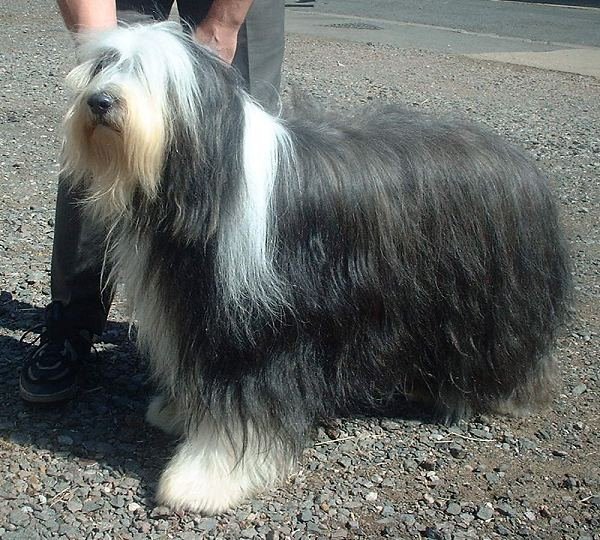
Ranges describe the registry profile, not a measurement, life expectancy, or health prediction for a particular dog. Separate sex or variety ranges are preserved where the source supplies them.
Source characteristics at a glance
The registry uses an ordinal 1–5 scale. A higher number indicates more of the named trait, not a better dog or a compatibility score. These descriptions are general and are not clinical measurements.
History and original work
The Bearded Collie worked as a herding and droving dog in Scotland's Highlands, moving livestock through rough terrain. Stories about the exact imported dogs behind the breed vary and are not a complete ancestral record. The modern Beardie retains the athleticism, initiative, and substantial weather-resistant coat of a dog expected to work beyond constant close direction.
Temperament and training
An exuberant Beardie may greet people with bouncing or try to organize movement around the home. Reward four feet on the ground and a change of activity before excitement builds. Lessons can combine a clear cue with a small problem to solve, rather than repeated drills. Introduce children and unfamiliar dogs with room to pause, and teach restful behavior as well as energetic participation.
Daily needs & enrichment
Herding instruction, suitable agility foundations, and hidden-object searches can add purpose to walks and free movement in secure ground. Choose activity that fits the dog's development and recovery, even if it is eager to continue in wet weather. Build in a finish to games. Time outdoors also brings a practical coat-care cost, so leave room in the routine for post-outing combing.
Coat care
Part the long outer coat and comb through the softer undercoat to the skin, especially at friction points and behind the ears. Remove burrs after outings and attend to tangles before they become felted mats. Adolescent coat changes can increase the work. Keep the beard clean and comfortable after meals and wet activity; surface brushing alone can leave hidden knots pulling on skin.
Use brief daily tangle and debris checks plus a thorough weekly section-by-section groom with a pin brush and metal comb. Coat change may increase the workload. Address small tangles before bathing, rinse fully, and dry to the roots; avoid hot drying or scissors beneath mats.
Living Environment & Daily Needs
A Bearded Collie's home routine needs active shared outings, patient learning, and regular coat work. Consider the individual's vocal responses and provide space to rest after activity rather than expecting a quiet routine from housing size alone.
Care through life stages
Teach puppies calm grooming and greetings before hair and exuberance increase. Adults need active work and a taught finish. In seniors, adapt standing time and footing; recurrent digestive illness, weakness, or changes in skin and coat deserve veterinary assessment.
Frequently asked questions
Is brushing the outer surface enough for a Beardie? No. Part the hair and check through the undercoat to the skin, especially at friction points. A smooth-looking outer layer can hide knots that pull on skin.
Questions to ask before choosing a dog
Will someone comb the entire coat after outdoor activity and during the adolescent coat change? Ask how this individual greets visitors, handles grooming, and settles when play ends. Review joint, eye, and thyroid reports and family histories of Addison's or other immune illness. Consider the combination of energetic engagement and patient coat handling rather than either commitment separately.
Plan care for the individual dog
Budget, time alone and household compatibility depend on the individual dog and your circumstances. Use our care budget guide, time-alone planning guide and questions before adopting alongside the breed-specific source information above.
Health questions for a veterinarian
The parent club recommends hip, eye, and thyroid screening and discusses elbow assessment. Bearded Collies also have documented susceptibility to Addison's disease, in which adrenal hormone production is inadequate. Episodes of poor appetite, vomiting, diarrhea, or weakness can come and go and resemble many other illnesses; a veterinarian may use an ACTH stimulation test as part of diagnosis. Severe weakness, repeated vomiting, or collapse needs urgent care. Routine thyroid or DNA results do not exclude Addison's or every autoimmune condition. Ask about endocrine and immune illness in older relatives as well as the parents' current reports. New exercise intolerance, recurrent illness, or persistent changes in skin, nails, or coat deserve assessment rather than being dismissed beneath abundant hair.
Updated October 25, 2026. General information; see our Editorial Policy for sourcing and review practices.