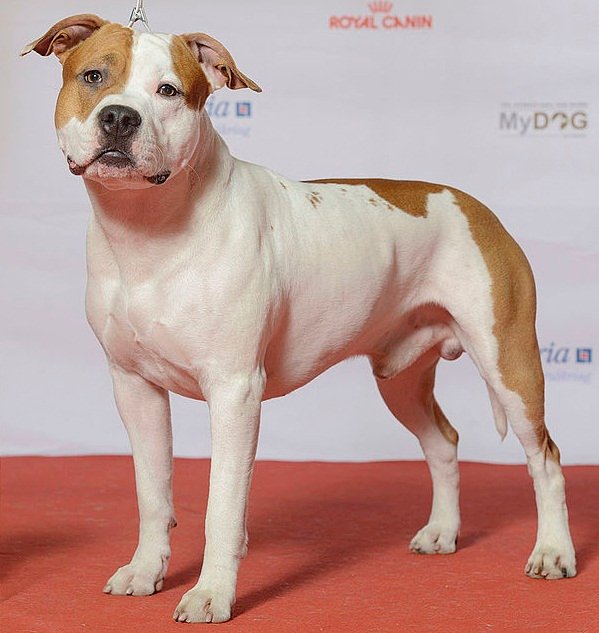
Displayed with responsive cropping.
Ranges describe the registry profile, not a measurement, life expectancy, or health prediction for a particular dog. Separate sex or variety ranges are preserved where the source supplies them.
Source characteristics at a glance
The registry uses an ordinal 1–5 scale. A higher number indicates more of the named trait, not a better dog or a compatibility score. These descriptions are general and are not clinical measurements.
History and original work
The American Staffordshire Terrier developed in the United States from British bull-and-terrier stock. Its history includes dogs used in blood sports, followed by a separate American breed identity and selection. That history deserves accurate description without making it entertainment or treating it as a prediction of what one modern dog will do.
Temperament and training
Prioritize an easy release from toys, loose-leash movement, and calm greetings before excitement meets adult strength. Reward pauses during play and provide appealing items the dog may chew. Carefully assess dog-to-dog introductions and have a reliable separation plan; socialization is useful but does not guarantee compatibility. Supervise children and avoid games that encourage grabbing hands or clothing.
Daily needs & enrichment
Shared searches, controlled tug, retrieval exercises, and suitable obedience or agility foundations can give athletic effort a purpose. Vary routes and tasks rather than relying on solitary yard time. Build physical difficulty gradually and preserve breaks during enthusiastic play. If interaction with unfamiliar dogs is uncomfortable, meaningful activity with a person is still a valid plan.
Coat care
The short, stiff coat can be maintained with a soft brush or mitt, but the skin needs attention where a harness contacts it and wherever redness or itching recurs. Rinse off dirt when necessary and avoid treating every skin flare as ordinary shedding. Practice comfortable nail and mouth handling while the dog is relaxed, with brief sessions and rewards.
Brush weekly with a soft bristle brush or mitt. Bathe for actual dirt or soiling, rinse fully, and dry comfortably. Avoid harsh scraping and repeated shampoo changes for persistent irritation; introduce supported nail care on stable footing.
Living Environment & Daily Needs
Practice dependable handling and thoughtful introductions with an AmStaff before assuming that affection ensures household compatibility. Shared training and play, clear routes through the home, and a comfortable resting area help make the care plan practical.
Care through life stages
Puppies need calm greetings, exchanges, and cooperative handling before adult strength develops. Build mature sports gradually with recovery. Seniors may need easier access and modified tasks; imbalance, persistent pain, or reduced stamina needs veterinary assessment.
Frequently asked questions
Does a muscular young AmStaff need no joint or cardiac records? Appearance cannot establish those findings. Ask for the named reports and relevant family history, and have new lameness or exercise intolerance investigated.
Questions to ask before choosing a dog
Can the caregiver describe this individual's relationships with other dogs, including how disagreements are managed? Ask for the NCL4A and orthopedic results and the details of cardiac and thyroid screening. Establish a daily plan for cooperative exercise, comfortable handling, and safe separation of animals. Judge the actual dog's behavior rather than relying on either reassuring or alarming breed stereotypes.
Plan care for the individual dog
Budget, time alone and household compatibility depend on the individual dog and your circumstances. Use our care budget guide, time-alone planning guide and questions before adopting alongside the breed-specific source information above.
Health questions for a veterinarian
The parent club recommends hip, cardiac, thyroid, and NCL4A screening discussions. NCL4A, also described as hereditary cerebellar ataxia, can cause a progressive loss of coordination; a DNA result concerns that inherited form rather than all causes of stumbling. Hip imaging, a cardiology assessment, and thyroid testing cannot be replaced by a broad genetic panel. Ask to see reports and discuss illnesses in mature relatives, as some problems appear after puppyhood. Persistent itching may need investigation for allergy or infection rather than a breed label alone. New imbalance, exercise intolerance, collapse, or continuing lameness requires veterinary attention. A young dog's muscular appearance is not evidence that these systems have been assessed.
Updated October 25, 2026. General information; see our Editorial Policy for sourcing and review practices.