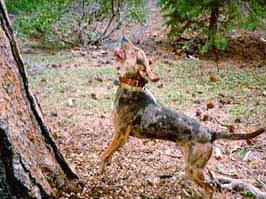
Ranges describe the registry profile, not a measurement, life expectancy, or health prediction for a particular dog. Separate sex or variety ranges are preserved where the source supplies them.
Source characteristics at a glance
The registry uses an ordinal 1–5 scale. A higher number indicates more of the named trait, not a better dog or a compatibility score. These descriptions are general and are not clinical measurements.
History and original work
The American Leopard Hound developed in the United States as a versatile treeing dog. Accounts of earlier Spanish and Mexican ancestry differ, so a precise founding cross should not be presented as settled history. Preservation work in the twentieth century helped maintain dogs once registered as American Leopard Curs; the modern name reflects their hound role.
Temperament and training
Use the dog's interest in tracking to practice returning attention to the handler before a scent takes over. Reward a response and allow another controlled search, so cooperation does not always end the enjoyable part. Teach calm arrivals and a release from an interesting find. Affection toward familiar people does not establish compatibility with every child, cat, or unfamiliar dog.
Daily needs & enrichment
A short laid trail, searches for a hidden scented item, and varied exploratory walks can use the hunting nose without pursuing live wildlife. Choose enclosed ground or a suitable line where a trail could otherwise lead off the property. Give the dog a way to finish the task and settle near the family rather than leaving it to patrol and entertain itself.
Coat care
A rougher outer layer covers a finer undercoat despite the coat's smooth outline. Brush through loose hair and inspect for burrs or skin irritation after outdoor searches. Check ears, toes, and the underside of the dog where brush and moisture collect. An occasional bath may be enough for dirt, but persistent odor or scratching needs a different explanation.
Brush weekly with a suitable brush or mitt and comb loose undercoat where needed, adding checks after brushy trails. Bathe occasionally for soiling, rinse fully, and dry comfortably. Avoid harsh scraping and routine shaving, and introduce foot and ear handling calmly.
Living Environment & Daily Needs
Provide secure opportunities to investigate scents and work with people. The American Leopard Hound's tracking drive and noticeable voice require a household plan for engagement and noise, even where outdoor space is readily available.
Care through life stages
Puppies need documented sensory assessment when concerns arise and secure, low-pressure exploration. Adults need organized scent work and recovery. Adapt terrain and care positions for seniors, and investigate changes in hearing, vision, or gait rather than assuming the dog is distracted.
Frequently asked questions
Does merle coloring mean a dog is deaf or blind? No. Risk depends on the genetic situation and individual findings. Request parental information and appropriate eye or BAER testing rather than diagnosing from coat appearance alone.
Questions to ask before choosing a dog
What health information is available for the parents and older relatives, and, if merle is involved, how was the pairing evaluated? Ask how this dog returns from a trail, rests after work, and behaves with smaller animals. Meet the individual away from a hunting demonstration and plan secure scent outlets that fit the household's regular routine.
Plan care for the individual dog
Budget, time alone and household compatibility depend on the individual dog and your circumstances. Use our care budget guide, time-alone planning guide and questions before adopting alongside the breed-specific source information above.
Health questions for a veterinarian
Merle-to-merle breeding can produce puppies with an increased risk of hearing or vision impairment. Ask how the parents' merle status was established; coat appearance alone may not explain the genetic picture. When hearing or vision is uncertain, a veterinary eye assessment and BAER hearing test provide different information, and a puppy's response to a household noise is not a substitute for ear-specific testing. Other breed-wide medical data and standardized screening recommendations are limited. Request individual records and illnesses in adult relatives rather than accepting a blanket claim that the breed has no problems. Trouble navigating, inconsistent sound responses, or recurrent eye irritation warrants assessment without assuming every merle dog is impaired.
Updated October 25, 2026. General information; see our Editorial Policy for sourcing and review practices.