Displayed with responsive cropping.
Ranges describe the registry profile, not a measurement, life expectancy, or health prediction for a particular dog. Separate sex or variety ranges are preserved where the source supplies them.
Source characteristics at a glance
The registry uses an ordinal 1–5 scale. A higher number indicates more of the named trait, not a better dog or a compatibility score. These descriptions are general and are not clinical measurements.
History and original work
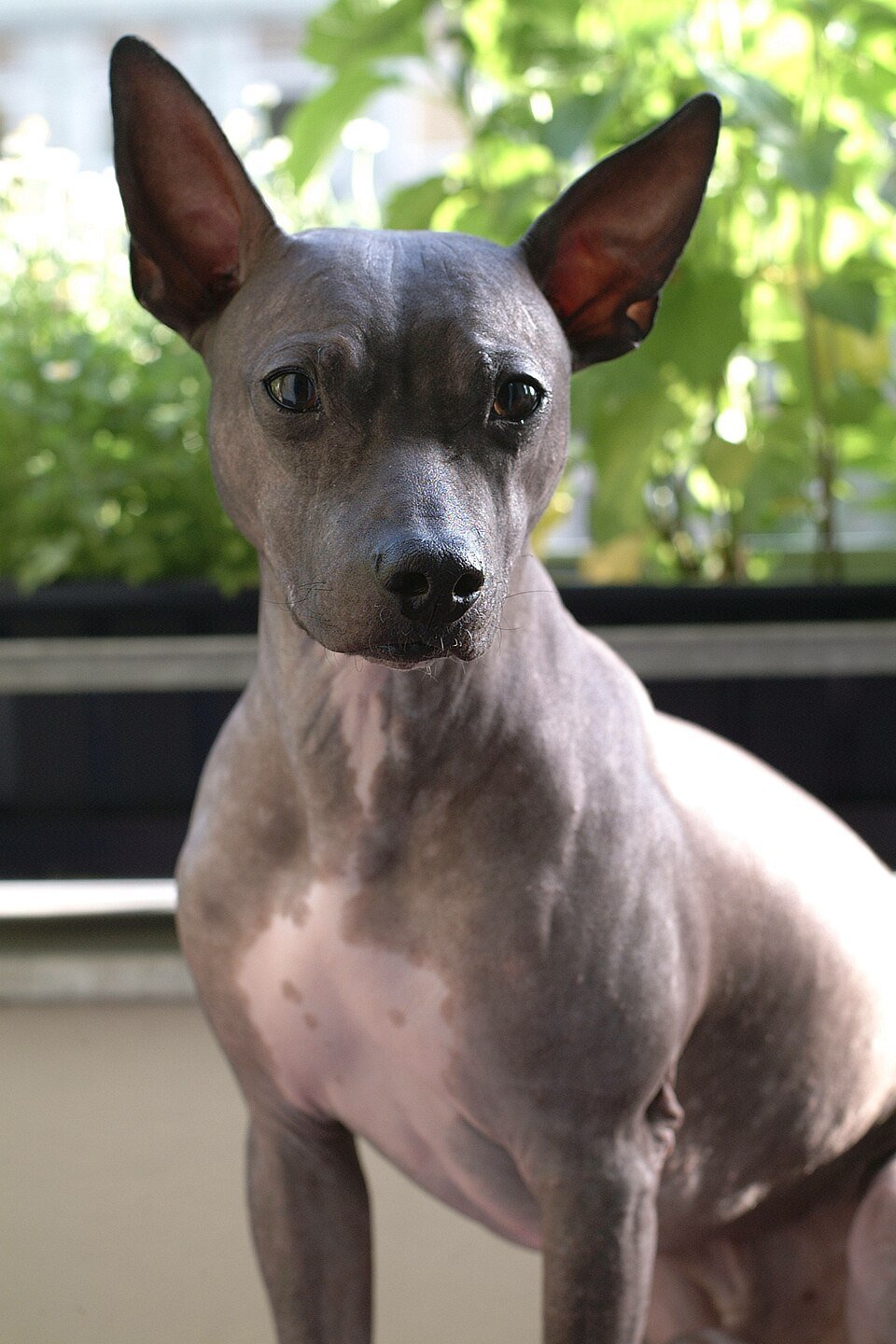
The American Hairless Terrier developed in Louisiana from hairless dogs born in Rat Terrier lines. Its roots are in a small vermin-hunting terrier, although exposed skin changes the suitability of rough outdoor work. Both hairless and coated dogs occur; coat variety matters more to daily skin care than the breed name alone.
Temperament and training
Channel a terrier's interest in small moving animals into a toy search, then reward leaving the toy and returning to you. Practice handling with treats so skin checks and protective clothing are not a daily struggle. Supervise play with children who may pick up a small dog, and assess other household animals through observed behavior rather than assuming sociability eliminates pursuit.
Daily needs & enrichment
A walk with sniffing stops can lead into finding a hidden toy and a short trick lesson. Vary the challenge without turning each outing into a chase. For a hairless dog, choose surfaces and vegetation that will not scrape exposed skin, and adapt the outing to sun exposure and comfort.
Coat care
For a coated dog, brush weekly with a soft bristle brush and bathe occasionally for dirt. For a hairless dog, inspect exposed skin and collar or clothing contact points daily; use a gentle cleaning plan matched to the individual rather than scrubbing skin as if it were a coat.
Arrange shade and comfortable shelter and ask the veterinarian which sun protection and bathing products suit the dog. Avoid human acne products, unapproved sunscreen, harsh rubbing, and leaving wet clothing against skin. Both varieties need nail maintenance and cooperative mouth and ear handling.
Living Environment & Daily Needs
Offer an American Hairless Terrier walks, games, and patient learning despite a modest brushing commitment. For the hairless variety, plan comfortable shelter and protection from sun and cold as part of daily access arrangements.
Care through life stages
Puppies need comfortable handling and gradual introductions to protective clothing where useful. Adults still need walks, games, and learning despite modest brushing needs. In seniors, review skin changes and adapt outings and footing; persistent limping or handling discomfort warrants assessment.
Frequently asked questions
Does hairlessness guarantee no allergy symptoms? No. An individual person’s response cannot be predicted from visible hair alone. Spend appropriate time with the actual dog before making a commitment if allergy tolerance matters.
Questions to ask before choosing a dog
Which coat variety is this dog, and what has worked for sun and cold protection? Ask for hip, patella and cardiac reports and whether Legg-Calve-Perthes was assessed. How does the terrier respond to small animals, grooming, and having clothing put on?
Plan care for the individual dog
Budget, time alone and household compatibility depend on the individual dog and your circumstances. Use our care budget guide, time-alone planning guide and questions before adopting alongside the breed-specific source information above.
Health questions for a veterinarian
The American Hairless Terrier Association identifies hip, kneecap and cardiac assessments and includes Legg-Calve-Perthes evaluation in its health guidance. Legg-Calve-Perthes affects the hip; it is not the same diagnosis as hip dysplasia. Request the actual parental reports rather than a claim that the dog passed a general DNA panel. Skipping on a hind leg, persistent limping or discomfort during handling needs examination. Exposed skin also needs protection from sunburn and injury, independently of inherited-disease screening.
Updated October 25, 2026. General information; see our Editorial Policy for sourcing and review practices.