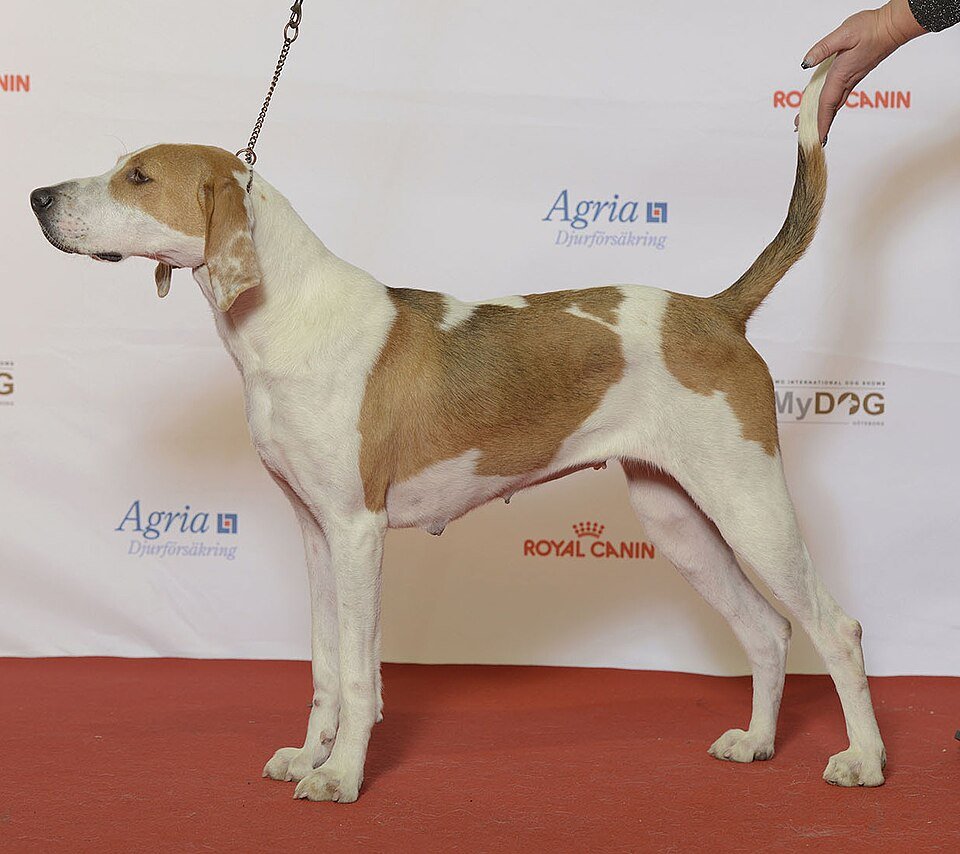
Displayed with responsive cropping.
Ranges describe the registry profile, not a measurement, life expectancy, or health prediction for a particular dog. Separate sex or variety ranges are preserved where the source supplies them.
Source characteristics at a glance
The registry uses an ordinal 1–5 scale. A higher number indicates more of the named trait, not a better dog or a compatibility score. These descriptions are general and are not clinical measurements.
History and original work
American Foxhounds developed from imported European hunting hounds refined in the United States. George Washington's recorded breeding, including British and French stock, formed part of that history rather than a single founding event. Selection for following a trail with a pack helps explain the breed's endurance, musical voice, and independent decisions outdoors.
Temperament and training
Build cooperation through short, rewarding exercises before the dog is absorbed in a trail. Release back to sniffing can reward a successful check-in. A hound accustomed to canine company may need careful help with changes in household company or routine. Introductions to small pets still require assessment; a sociable pack background does not remove pursuit behavior.
Daily needs & enrichment
Give scent work a deliberate place in the routine: a trail on a long line, a search in secure ground, or an exploratory hike at a comfortable pace. Work on returning from a scent before moving into more distracting areas. Physical stamina calls for conditioning and recovery, not a fixed exercise quota copied from a different dog. Keep off-leash opportunities inside suitable containment.
Coat care
The close, hard coat benefits from a bristle brush or grooming mitt after outdoor work. Check the long ears and the skin around equipment for trapped debris, and inspect feet after rough trails. Allow wet ears and coat to dry comfortably without putting cleaning products into an irritated canal. A persistent smell or head tilt needs assessment rather than an extra bath.
A weekly bristle-brush or grooming-mitt session usually suits the coat; bathe when an outing leaves substantial dirt. Rinse fully and dry comfortably. Avoid harsh scraping and putting swabs into ear canals, and teach supported nail care before a sore foot makes it urgent.
Living Environment & Daily Needs
A Foxhound's scent interest calls for secure outings and a substantial activity plan. Consider how the individual's carrying voice affects the household and neighbors, and check resting space and transport for a long-legged dog.
Care through life stages
Puppies need gradual check-in and handling practice without adult-distance exercise. Condition adults for longer routes and include recovery. Seniors may need shorter trails and improved footing; unusual bleeding, lameness, or ear pain warrants assessment despite continued enthusiasm.
Frequently asked questions
Does a normal blood count exclude a platelet-function disorder? Not necessarily. Tell the veterinarian about unusual bruising, prolonged bleeding, and family history, especially before procedures, and ask which specific investigation is appropriate.
Questions to ask before choosing a dog
Has this individual lived as a household dog, a pack hound, or both? Ask about its voice, comfort when company changes, and response to a strong scent near a road. Request the actual orthopedic records and discuss any unusual bleeding in relatives. Arrange secure, purposeful exercise before assuming a mild indoor manner means a modest outdoor commitment.
Plan care for the individual dog
Budget, time alone and household compatibility depend on the individual dog and your circumstances. Use our care budget guide, time-alone planning guide and questions before adopting alongside the breed-specific source information above.
Health questions for a veterinarian
Hip dysplasia and thrombocytopathy are health concerns discussed for American Foxhounds. Thrombocytopathy concerns platelet function and can cause abnormal bleeding; ask about family history and any specific diagnostic testing, rather than assuming a routine blood count excludes it. Hip evaluation requires appropriate imaging, not an observation that the dog can run for a long time. These discussions do not establish breed-wide disease rates or a single mandatory U.S. screening panel. Tell the veterinary team about unusual bruising or prolonged bleeding before procedures. Recurring ear pain or lameness also deserves investigation, particularly if the dog continues willingly despite discomfort.
Updated October 25, 2026. General information; see our Editorial Policy for sourcing and review practices.