Displayed with responsive cropping.
Ranges describe the registry profile, not a measurement, life expectancy, or health prediction for a particular dog. Separate sex or variety ranges are preserved where the source supplies them.
Source characteristics at a glance
The registry uses an ordinal 1–5 scale. A higher number indicates more of the named trait, not a better dog or a compatibility score. These descriptions are general and are not clinical measurements.
History and original work
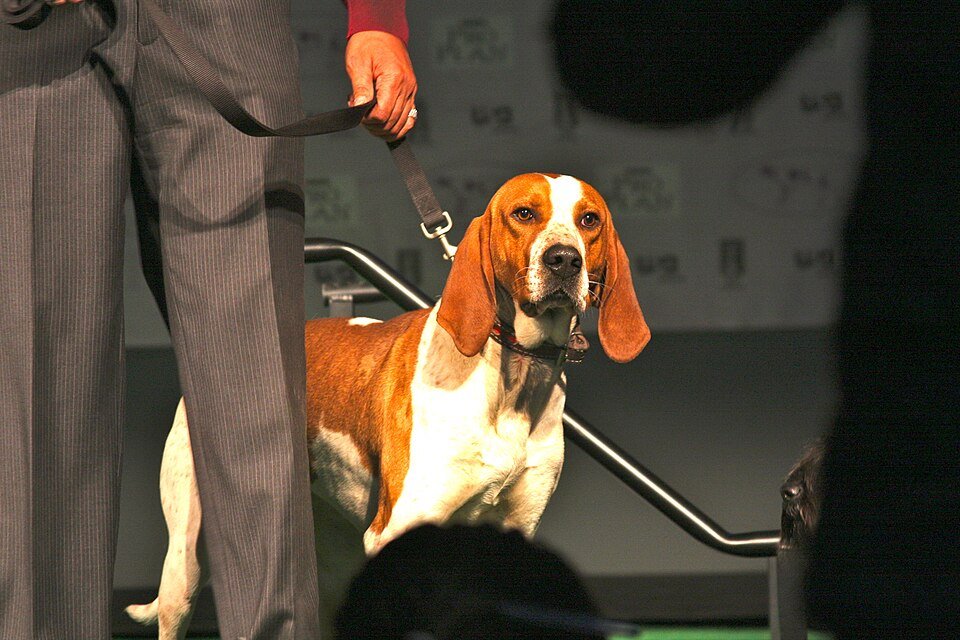
The American English Coonhound developed in the United States from foxhound-related stock selected for tracking and treeing game. The older English Fox and Coonhound name reflected work on more than one quarry. Night hunting helped favor persistence, endurance, and a carrying voice; a relaxed household manner does not cancel that outdoor working heritage.
Temperament and training
Practice turning back toward you while a scent is still a manageable distraction. Reward a voluntary check-in with another chance to sniff, rather than making every response end the outing. Introduce food and toy exchanges without confrontations. The breed's ringing voice and sustained interest in a trail are practical household questions, not habits that obedience alone is guaranteed to remove.
Daily needs & enrichment
Lay an easy scent trail or hide a scented article, then let the dog work at a controlled pace on a suitable line. Longer walks and hikes can complement searches when conditioning and weather allow. Secure boundaries matter even after successful recall practice. Add quiet recovery after demanding scent work instead of assuming a pack hound needs continual stimulation.
Coat care
The short, hard coat is straightforward to brush with a grooming mitt, but ears and field debris need closer attention. Check the ear opening and skin after wet or brushy outings; repeated head shaking is not a request for more vigorous cleaning. Inspect toes and pads after tracking, and keep equipment clean where it contacts the neck and chest.
Use a rubber-nub grooming mitt or suitable brush at least weekly, with extra checks after tracking. Bathe when genuinely dirty, rinse fully, and dry comfortably, including the visible ear surfaces. Avoid probing ear canals, harsh scraping, and repeatedly cleaning a painful ear instead of seeking advice.
Living Environment & Daily Needs
Arrange secure scent exploration and purposeful activity for the American English Coonhound. Listen to the individual's baying and consider nearby households; resting space and boundaries deserve attention in rural settings as well as shared buildings.
Care through life stages
Puppies need calm exchanges and gradual scent-game foundations. Adults need progressive conditioning and recovery after demanding searches. For seniors, adapt terrain and check feet, hearing, and movement rather than relying on continuing willingness to follow a trail.
Frequently asked questions
Will obedience alone remove baying and scent-following interests? It cannot guarantee that. Hear the individual’s voice, practice check-ins, and plan secure scent outlets and rest with consideration for neighbors.
Questions to ask before choosing a dog
Have you heard this dog's voice during excitement and when separated from familiar company? Ask how it responds to a scent at a gate and whether it can recover after a search. Request records of eye and orthopedic assessment and discuss bloat readiness. Arrange a secure exercise plan that makes room for tracking without giving the nose unrestricted access to roads or wildlife.
Plan care for the individual dog
Budget, time alone and household compatibility depend on the individual dog and your circumstances. Use our care budget guide, time-alone planning guide and questions before adopting alongside the breed-specific source information above.
Health questions for a veterinarian
Hip and elbow dysplasia and inherited eye disease, including retinal degeneration and cataracts, are health concerns to discuss with the breeder and veterinarian. Ask for actual orthopedic and eye records, identifying which DNA tests, if any, apply to the family. Imaging and an eye examination provide information that a general DNA panel cannot replace. As a deep-chested hound, it can also experience bloat; unsuccessful retching, abdominal enlargement, or sudden distress requires emergency care. Persistent ear pain, lameness, or loss of vision warrants a veterinary examination. There is no basis here for presenting a particular disease frequency or a universal screening panel.
Updated October 25, 2026. General information; see our Editorial Policy for sourcing and review practices.