Displayed with responsive cropping.
Ranges describe the registry profile, not a measurement, life expectancy, or health prediction for a particular dog. Separate sex or variety ranges are preserved where the source supplies them.
Source characteristics at a glance
The registry uses an ordinal 1–5 scale. A higher number indicates more of the named trait, not a better dog or a compatibility score. These descriptions are general and are not clinical measurements.
History and original work
The Afghan Hound developed as a hunting sighthound in the region centered on present-day Afghanistan. Rugged terrain and pursuit helped shape an athletic dog beneath the long coat. Precise ancient origins remain uncertain; stories about being the oldest breed are not a documented pedigree. Imports to Europe around the turn of the twentieth century helped establish the modern show population.
Temperament and training
An Afghan may prefer to consider an invitation rather than immediately repeat an exercise. Use rewards the dog actually values, keep lessons purposeful, and make handling predictable. Teach recall in secure surroundings while planning for pursuit outdoors; successful practice does not erase an instinct to chase. Children should avoid grabbing the coat or crowding a dog that moves away.
Daily needs & enrichment
Provide room for controlled, enclosed running as well as exploratory leash walks. Inspect the enclosure for jumping and escape opportunities before release. A supervised introduction to lure coursing may suit a physically ready adult. Warm up with easier movement and allow recovery; a dramatic sprint is not a reason to repeat high-speed turns until the dog tires.
Coat care
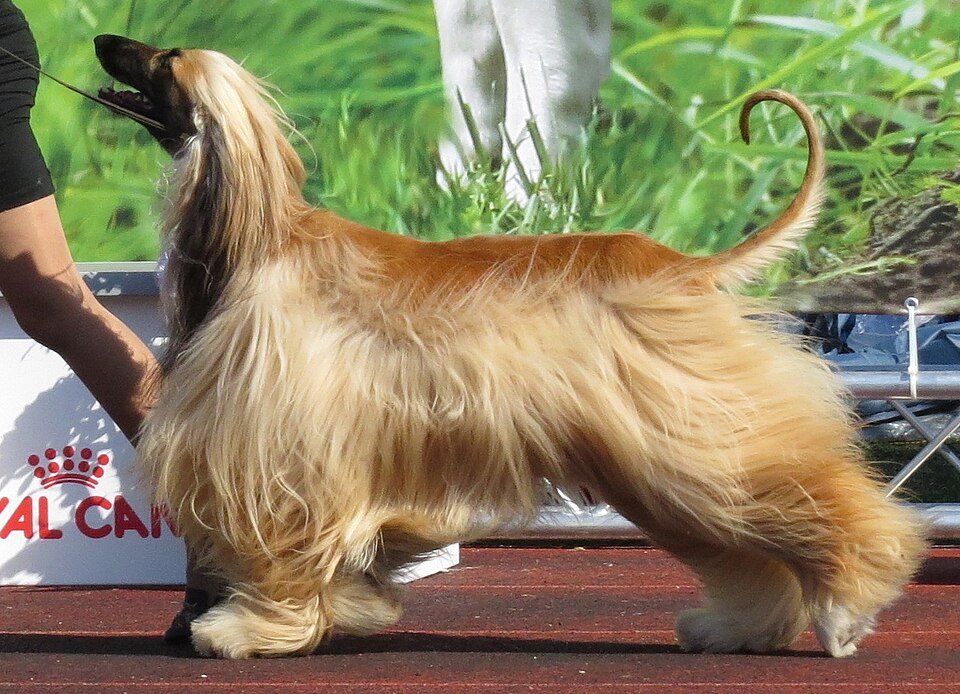
An adult's long, silky coat needs careful work through tangles, not a quick brush over the top. Pay attention to armpits, ears, and areas contacting a harness, and arrange bathing and coat maintenance before mats become tight against the skin. Puppy fuzz changes substantially with maturity. Ask for a hands-on grooming demonstration and decide on a manageable pet trim with a knowledgeable groomer.
Plan several hours of grooming each week for an adult coat. Work in sections with a suitable brush and comb, and use dog shampoo and conditioner suited to the coat for regular baths. Rinse thoroughly and dry to the roots with comfortable airflow. Avoid hot drying and scissors beneath mats; seek help for tight matting.
Living Environment & Daily Needs
Allow an athletic Afghan Hound room to rest comfortably and a dependable exercise routine. Introduce unfamiliar people patiently, and make the long coat's grooming requirements workable within your household schedule.
Care through life stages
Puppies’ short fuzz does not predict the eventual coat workload; introduce relaxed grooming early. Adults need secure running, conditioning, and recovery. Seniors may need shorter standing sessions and better traction; changes in movement or willingness to be groomed can signal discomfort.
Frequently asked questions
Does an Afghan puppy’s easy coat predict adult grooming needs? No. The long adolescent and adult coat requires sustained work. See an adult coat-care demonstration before deciding how much maintenance and professional help you can provide.
Questions to ask before choosing a dog
Can you maintain the adult coat, including the areas that mat under equipment, and arrange secure opportunities to run? Ask how the dog responds to grooming, unfamiliar people, and moving smaller animals. Review hip, eye, and thyroid reports and discuss an emergency plan for bloat. Meet an adult Afghan before judging the commitment from a puppy's shorter coat.
Plan care for the individual dog
Budget, time alone and household compatibility depend on the individual dog and your circumstances. Use our care budget guide, time-alone planning guide and questions before adopting alongside the breed-specific source information above.
Health questions for a veterinarian
The breed club's screening guidance includes hips, specialist eye examinations, and thyroid testing. Hip images assess joint structure, eye examinations can identify visible disease, and thyroid tests require clinical interpretation; none is a general certificate of health. Deep-chested Afghans can develop gastric dilatation-volvulus: repeated unsuccessful retching, a swollen abdomen, or sudden distress is an emergency. Before anesthesia, tell the veterinary team the dog's breed, condition, medications, and previous responses so it can plan monitoring and recovery; do not substitute an internet drug-avoidance list for an individual protocol. New stiffness, changes in vision, or unexplained loss of condition should be assessed rather than attributed to an aloof personality.
Updated October 25, 2026. General information; see our Editorial Policy for sourcing and review practices.