Picture a small Day of the Dead memorial for dogs, with a photograph on a table: ears lifted, eyes on someone just outside the frame. Beside it sit a carefully saved collar, a water bowl, and orange flowers. A family gathers, and someone remembers how that dog used to arrive at the kitchen before anyone opened the refrigerator.
In parts of Mexico, scenes like this belong to a growing practice of including departed pets in Día de los Muertos remembrance. The objects are modest. What they hold is not.
For readers discovering Day of the Dead dogs traditions, the most remarkable story begins long before photographs or modern pet memorials. In ancient Mexico, dogs could occupy a place in people’s ideas about death itself. Some were understood as companions capable of helping the dead travel where the living could not follow.
Do dogs come back on Día de los Muertos? For some families, their return is a cherished spiritual belief. It is not a scientifically established event. Yet the act of making room for an absent companion has a meaning that readers of many beliefs can recognize: this animal belonged here, and still belongs in our story.
What Is Día de los Muertos?
Día de los Muertos, also commonly called Día de Muertos in Mexico, is a season of remembrance centered on relationships between the living and the dead. Its forms reflect Indigenous traditions and centuries of interaction with Catholic observances introduced during Spanish colonization.
November 1 and 2 are especially important, corresponding to All Saints’ Day and All Souls’ Day. In many communities, remembrance of deceased children and adults follows different days or hours. However, there is no single calendar that describes every Mexican household. Preparations, cemetery visits, prayers, meals, and public gatherings vary by region and community.
In 2008, UNESCO inscribed the Indigenous festivity dedicated to the dead on its Representative List of the Intangible Cultural Heritage of Humanity, following its original proclamation in 2003. The recognition concerns a living cultural practice rooted in Indigenous communities. It does not certify every modern custom associated with the holiday as ancient.
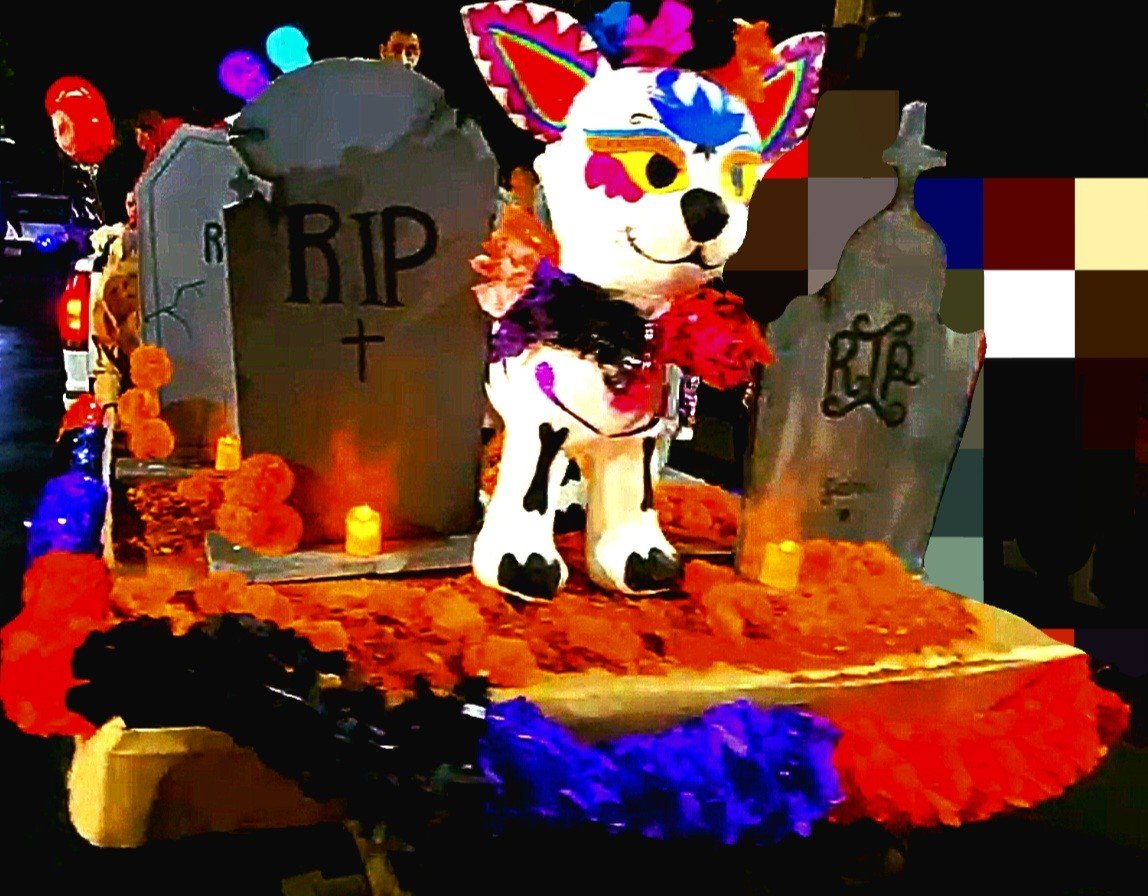
An ofrenda is an offering, often arranged on an altar, that welcomes and remembers the deceased. Photographs identify loved ones; familiar belongings give the space personal meaning. Cempasúchil flowers, with their vivid orange or yellow blooms, traditionally help mark a path for returning souls. Candles likewise symbolize light and guidance.
These are expressions of belief, hospitality, and memory. They should not be reduced to a decorative checklist. A household altar can contain a family’s particular faith, history, humor, and grief.
Nor is the celebration simply Mexican Halloween. The two may share calendar space and appear together in contemporary life, but Día de los Muertos has its own histories and purposes. Remembering a beloved person through their favorite meal is a different gesture from dressing as a frightening character.

Dogs in Ancient Mexico: Companions With Complicated Histories
Long before Spanish colonization, dogs lived among the peoples of Mesoamerica. Their roles crossed boundaries that modern pet owners often keep separate: everyday companionship, hunting, food, ritual, and the symbolic world of the dead.
That complexity matters. A responsible history cannot turn every ancient household into a modern dog-loving family. Dogs could receive care and carry spiritual importance while also being consumed or sacrificed in particular contexts. Affection and practices that trouble present-day readers could exist in the same society.
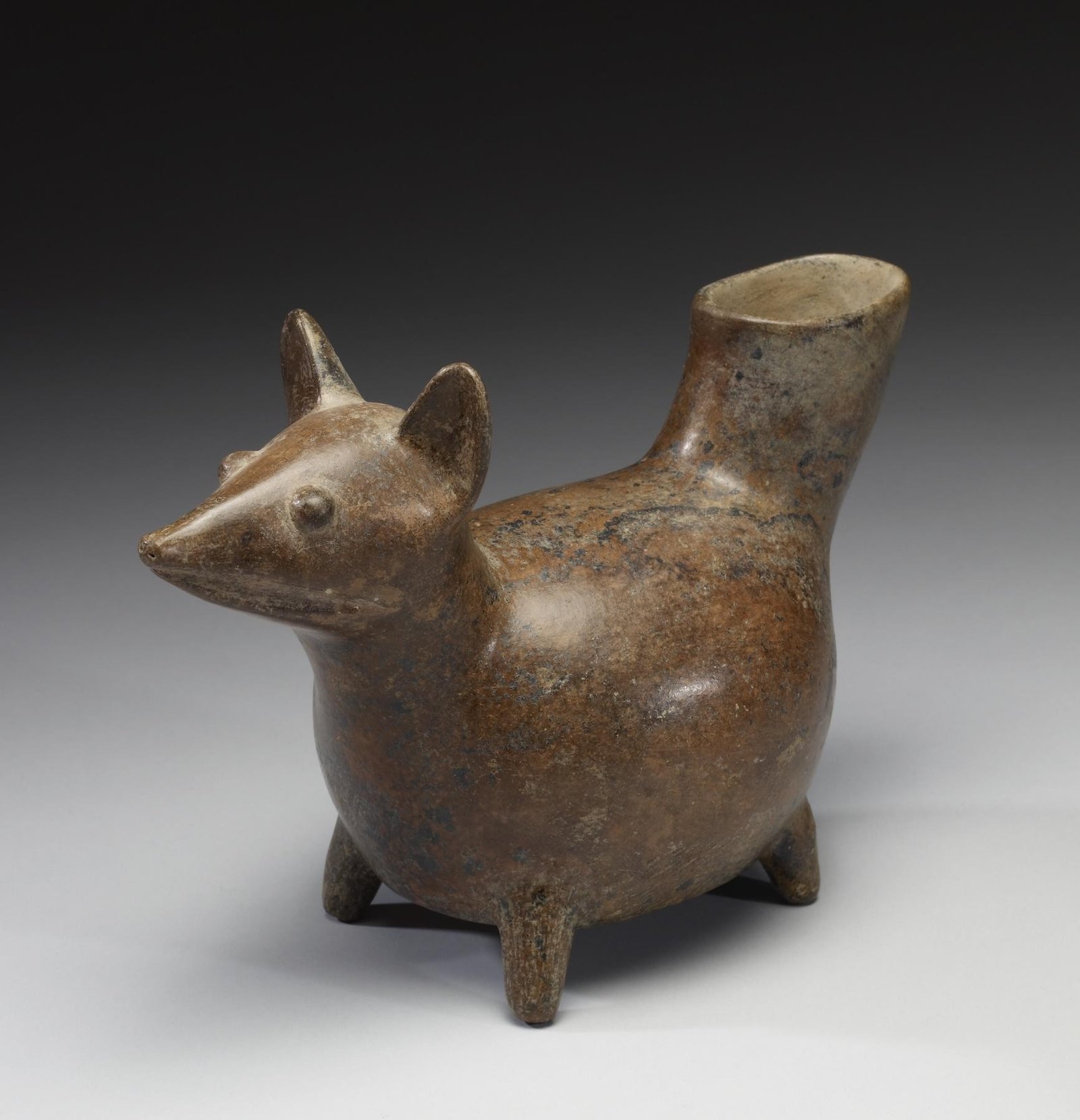
Objects provide one way into this history. Ancient western Mexico produced striking ceramic dogs, including vessels associated with the shaft-tomb traditions of the region. Rounded bodies, upright ears, and attentive faces make these animals recognizable across a great distance in time.
The Walters Art Museum holds a Colima dog-shaped vessel dated to 300 BCE–200 CE. Its collection account describes dogs as companions, hunting partners, and underworld guides, while also acknowledging their use as food. It notes the abundance of canine ceramics in western Mexican tombs and the possible connection between plump dog figures and provisions for the dead.
A separate seated-dog vessel at Emory University’s Michael C. Carlos Museum carries the same broad date range. Such objects establish that dogs held artistic and cultural importance centuries before the Mexica empire. They do not, by themselves, reveal the exact belief of every person who made or buried one.
Archaeology requires that restraint. A dog figure from Colima is not automatically an illustration of a later Mexica account. Different places, centuries, and peoples must remain distinct, even when their objects invite comparison.
There is nevertheless something arresting about a dog represented among the things that accompanied a human burial. An animal familiar from daily life also belonged to the imagination of departure. The relationship between people and dogs had already become larger than the practical work of sharing a home.
Day of the Dead Dogs: The Xoloitzcuintli and the Journey of Souls
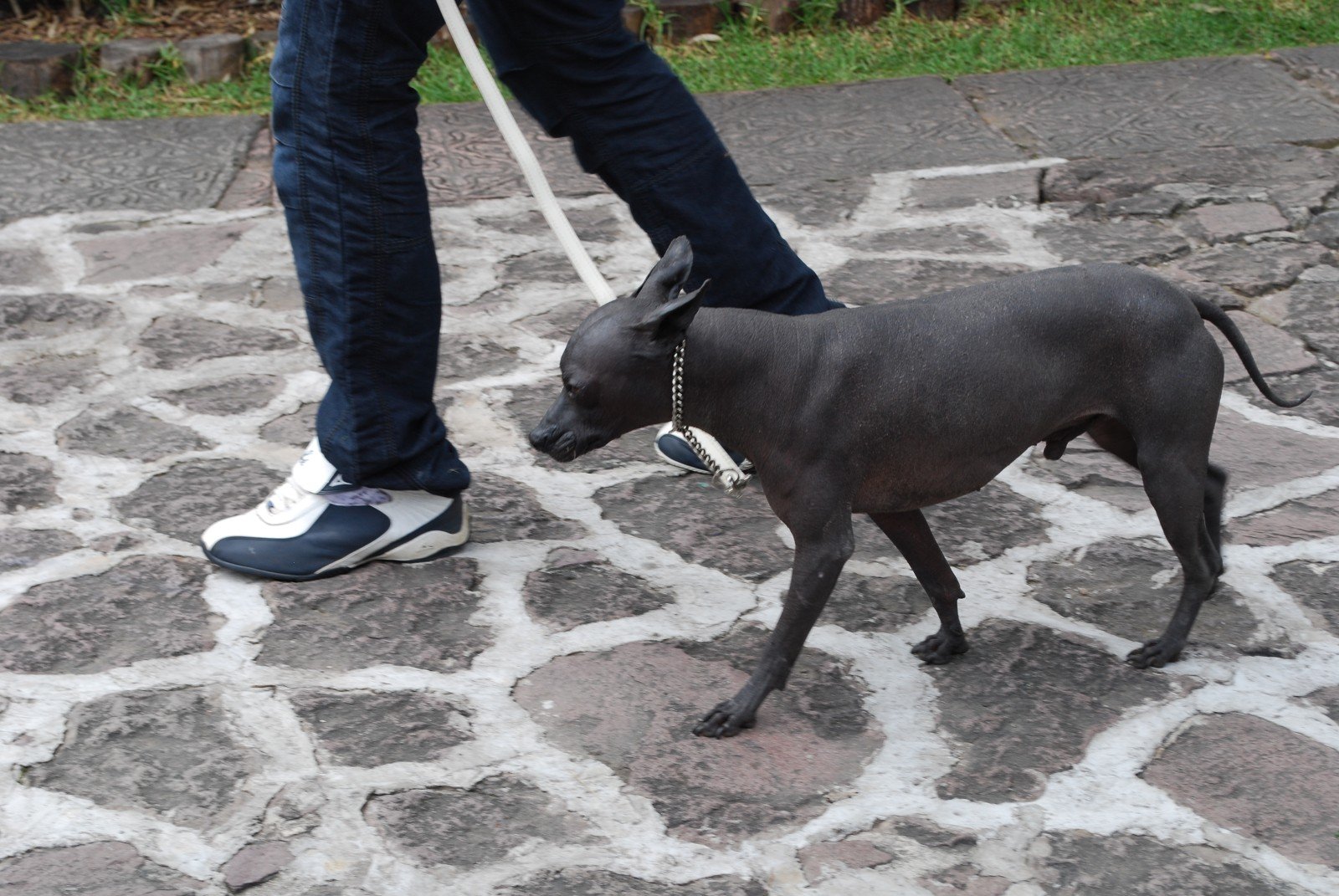
The Xoloitzcuintli, often shortened to Xolo and known in English as the Mexican Hairless Dog, stands at the center of this story. The name also appears as Xoloitzcuintle. Mexico is the breed’s country of origin, and modern Xolos include both hairless and coated varieties.
The hairless dog’s appearance can seem almost sculptural: smooth skin, an alert face, and ears that catch every sound. Yet the living animal should not disappear behind its symbolism. A Xolo is also a dog with ordinary needs for warmth, care, security, and companionship.

Xólotl, the dog, and Mictlán are different parts of the story
Xólotl is a deity in Nahua mythology, associated with canine imagery and linked with Quetzalcóatl. The Xoloitzcuintli is a dog. Mictlán is a destination of the dead in Mexica cosmology. Keeping those terms separate prevents a memorable legend from becoming a muddled claim about history.
In accounts of Mexica belief, the destination after death depended on circumstances such as the manner of dying. Mictlán was therefore not simply a universal equivalent of heaven, nor should it be described as a Christian place of punishment.
Dogs were believed to help the deceased on the difficult journey there, particularly in crossing a river. Mexico’s Secretariat of Culture describes this guiding role through the work of researcher Patrick Johansson. The powerful idea is assistance: the person who can no longer continue alone depends on an animal companion.
Imagine that scene as a way of understanding the belief, not as a reconstructed historical event. There is water ahead, an unfamiliar shore, and a dog able to cross. An animal known for following a person in life becomes the one who knows the way.
What the evidence can—and cannot—tell us
Historical descriptions and archaeological finds support the importance of dogs in funerary practices. INAH’s account of a Late Postclassic burial in Xochimilco explains that some traditions placed a dog with the deceased as a guide. It also emphasizes variation by culture, region, and social position.
Some mortuary rites included killing a dog. That is a difficult but necessary part of the record. Contemporary pet ofrendas are acts of remembrance; this historical practice is not an instruction for honoring animals today.
We should also avoid identifying every ancient canine representation as a modern pedigree Xolo. Ancient dog populations, artistic conventions, and today’s breed standards are not interchangeable evidence. The association between Xolos and the afterlife is meaningful without making that unsupported leap.
For the same reason, there is no single “Indigenous belief” shared unchanged across Mexico. Nahua traditions offer one important body of accounts. Other Mesoamerican communities had their own relationships with dogs, death, and sacred places.
October 27: A Contemporary Day for Remembering Pets
Today, October 27 is widely associated in popular Mexican observance with deceased pets. According to the belief followed by some families, animal companions return to visit their homes around this date. An altar may be ready the evening before; another household may include its animals during the main November remembrance instead.
The specific October 27 pet observance should not be presented as a documented ancestral date. Its visibility has grown in recent years through public celebrations, media, and social sharing. The much older symbolism of dogs and death does not establish an unbroken history for this particular calendar custom.
Claims that one organization invented the date in a precise year require evidence that is often missing from popular accounts. It is more accurate to acknowledge a contemporary practice whose exact origin is not securely established than to repeat an appealing origin story.
Recent public memorials show how visible animal remembrance has become. In Mexicali, municipal authorities reported a second annual pet ofrenda in 2022. Families contributed to a community space dedicated to departed companions. Such examples document modern participation; they do not prove that every Mexican family observes the same day.
That distinction does not make the practice less heartfelt. Living traditions can accommodate changing family relationships. A place for a dog’s photograph can be a recent addition and still carry deep meaning for the people who put it there.
How Mexican Families Honor Dogs on the Day of the Dead
A pet ofrenda often borrows the language of remembrance used for human loved ones while adding objects specific to an animal’s life. The photograph might show a muddy face or a sleeping dog. A collar, a worn toy, or a small bowl recalls the companion behind the image.
Water traditionally offers refreshment after the soul’s journey. Favorite foods express welcome. In an animal memorial, families may place a familiar treat, an empty dish, or a symbolic representation of something the pet enjoyed. These choices reflect household practice rather than a universal requirement.
Cempasúchil can connect the memorial visually and symbolically with the wider season. Candlelight traditionally helps guide the visiting dead. Papel picado and other decorations may join the arrangement, but an intimate remembrance does not depend on elaborate construction.
The most revealing object may be the least impressive one: a tennis ball with a split seam, a tag polished smooth, or a blanket that no longer needs washing. Its meaning comes from use. Someone knows why that particular thing belongs beside the photograph.
Families can tell stories while arranging the space. One person remembers a long walk; another remembers the dog stealing a place on the sofa. Children may contribute drawings. A pet’s name returns to ordinary conversation, where grief sometimes makes it difficult to speak.
This contemporary inclusion of animals should remain distinct from ancient funerary rites. A bowl placed beside a photograph is not evidence that today’s family is reproducing a pre-Hispanic ceremony. It is a present-day gesture within a larger culture of remembrance.
A Day of the Dead Memorial for Your Dog
American readers can create a quiet remembrance inspired by what they have learned, while acknowledging its Mexican origins. A personal memorial does not need to claim the authority of a traditional ritual. Begin with the animal you knew and the memories you want to preserve.
Choose objects that tell a particular story
Select one photograph that feels like your dog. A formal portrait may be less evocative than the blurry picture taken after a favorite game. Place a collar or toy nearby, then add a short note explaining why it matters. Years later, that detail may tell someone more than the object alone.
You could write a letter, list favorite nicknames, or invite each family member to contribute a memory. Leave room for different responses. Someone may want to talk; someone else may prefer to place a photograph and sit quietly.
Remember the small routines, too. Was your companion always nearby, like the dogs explored in our guide to why dogs follow their people? Did the best part of the day begin with a leash? Those details give a memorial its individual voice.
Protect the animals still sharing your home
Choose LED candles instead of open flames. Keep batteries, cords, ribbons, small decorations, and fragile objects out of reach. A raised table is not secure if a dog can pull its cloth or a cat can jump onto it.
Do not assume flowers or plants are safe because they belong to a celebration. Identify each plant and keep arrangements inaccessible to pets. Consider photographs or paper flowers if you cannot confidently manage access.
Food offerings also need care. Chocolate, alcohol, grapes, raisins, and other unsuitable foods must stay away from living animals; our guide to foods dogs should not eat explains common hazards. An empty bowl, a drawing, or a written memory can represent a favorite food without leaving it available.
Keep the space calm and optional for visitors. If gatherings include loud celebrations, plan for the comfort of surviving pets; our article on helping dogs frightened by fireworks offers relevant practical context. Remembering one animal should fit gently around the needs of another.
Why the Love for a Dog Does Not Simply Disappear
A dog’s place in a family is built through repetition. Breakfast arrives with an expectant face. A walk divides the afternoon. A chair has a companion beside it. Over time, these ordinary arrangements become part of how home feels.
After a death, the absence can be surprisingly specific. You reach for the second bowl. You pause before opening a door that no longer needs guarding. The quiet is not an abstract loss; it has a location and a time of day.
There is no need to minimize that grief because the companion was an animal. Nor does everyone need the same form of remembrance. Some people welcome a visible memorial immediately. Others put belongings away, return to them later, or remember through walks and conversations instead.
Rituals may offer a place for feelings, but they cannot promise relief on a schedule. An altar is not a test of love, and taking one down is not abandonment. What matters is whether the gesture feels right to the person making it.
Our stories about canine companionship and Patrick Stewart’s bond with rescue dogs explore other ways dogs become woven into human lives. The individual details differ, but the relationship is made through shared attention.
For readers whose dogs are growing older, remembrance can also sharpen awareness of the present. A slower walk is still time together. Practical adjustments, such as those in our guide to caring for a senior dog at home, can make room for a changing companion without measuring the relationship only by what they once could do.
A Bridge Between the Past and the Present
Ancient accounts imagine dogs helping humans face the uncertainty of death. Contemporary Mexican pet memorials make room for animals within the remembrance of a family. These are different historical expressions, connected by a recurring willingness to give dogs a place beyond their practical usefulness.
The distinction protects the story’s depth. If every modern ofrenda becomes an unchanged ancient ritual, centuries of adaptation disappear. If the old beliefs become only a charming legend, the people who lived by them disappear too.
Instead, we can attend to both: the historical dog at the imagined river, and the remembered dog whose collar rests beside a photograph. Neither needs to become the other for the connection to move us.
The past does not provide proof that a companion will return. It offers something different: evidence that people have long found dogs important enough to include in their most serious questions about life, death, and belonging.
Day of the Dead Dogs: Questions Readers Ask
What is the Day of the Dead for dogs in Mexico?
It refers to contemporary ways of remembering deceased dogs during the Día de Muertos season, including photographs and pet ofrendas. Participation and timing vary among families.
Why are pets remembered on October 27?
October 27 has become a popular date for welcoming departed pets symbolically or spiritually. Its precise origin is uncertain; it should not be called a proven ancient calendar observance.
What connects Xoloitzcuintli dogs with the afterlife?
Xolos are associated with Xólotl and with Nahua accounts of canine guides for the dead. Dogs were believed to help souls on the journey toward Mictlán, including crossing a river.
Do Mexican families make ofrendas for dogs?
Some do, using photographs, collars, toys, water, flowers, and other meaningful objects. Others remember pets differently or include them in a shared family altar.
Can I honor my dog without sharing the spiritual belief?
Yes. You can create a personal memorial, acknowledge the Mexican tradition that inspired it, and focus on gratitude and memories without claiming to reproduce a community’s ritual.
Is Día de los Muertos the same as Halloween?
No. Despite overlapping dates and contemporary imagery, Día de los Muertos has distinct cultural and religious histories centered on remembrance and relationships with the dead.
Some Paw Prints Never Fade
Eventually, the flowers are cleared away. The photograph may return to a shelf. The collar goes back into its box, or stays where someone can see it every morning. A memorial need not remain assembled for the relationship to remain meaningful.
Perhaps the most lasting tribute is a story told without hurry: how your dog greeted a particular person, chose a sleeping place, or made an ordinary day easier to inhabit. Memory gives those details somewhere to go.
Some dogs stay beside us for years. Others stay in our memories for a lifetime.
Whether your companion is sleeping nearby or lives now in photographs, there is room to pause and remember the life you shared.
If you could see your dog one more time, what would you say?
General guidance does not replace individual veterinary or behavior assessment.