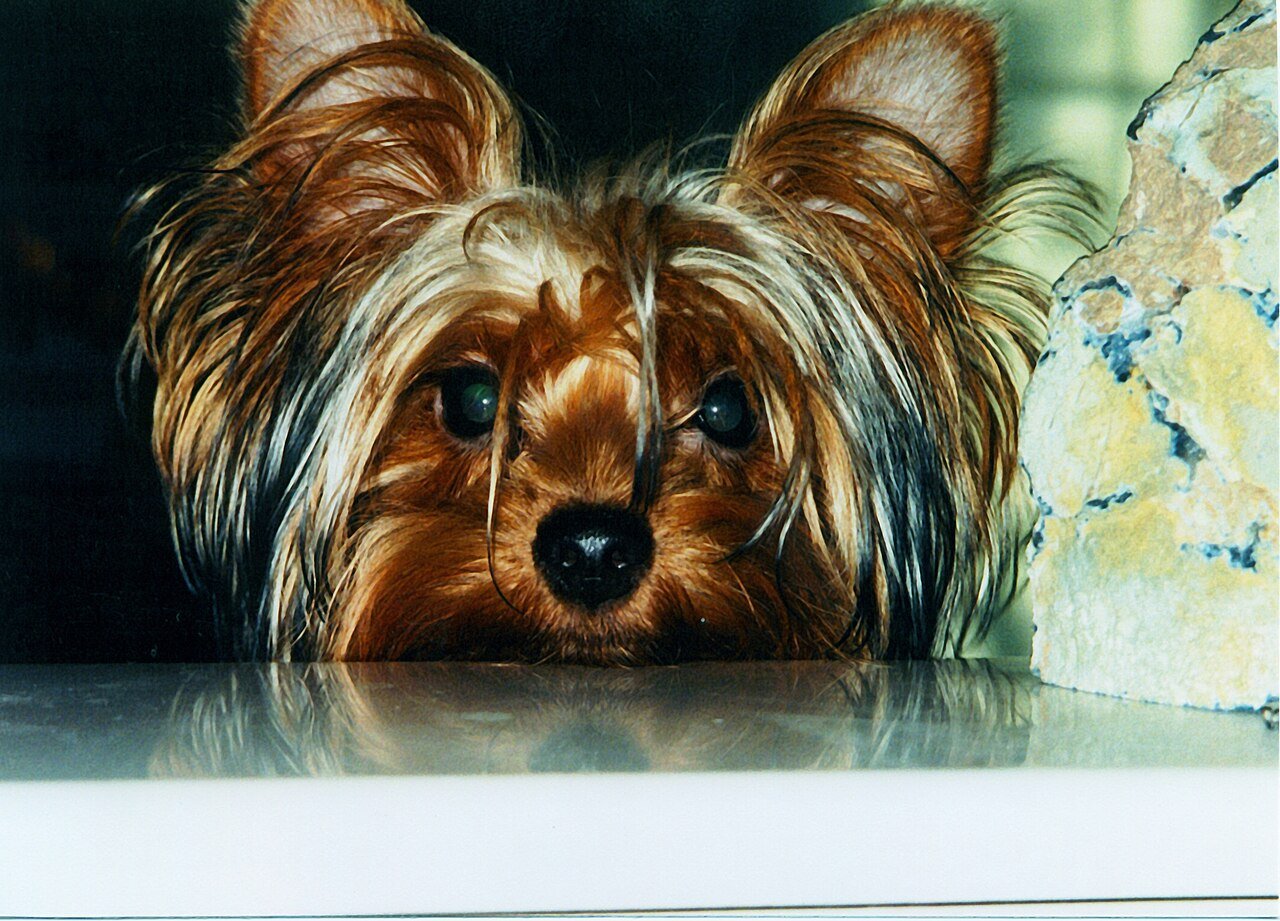
Ranges describe the registry profile, not a measurement, life expectancy, or health prediction for a particular dog. Separate sex or variety ranges are preserved where the source supplies them.
Source characteristics at a glance
The registry uses an ordinal 1–5 scale. A higher number indicates more of the named trait, not a better dog or a compatibility score. These descriptions are general and are not clinical measurements.
History and original work
The Yorkshire Terrier developed in northern England’s Yorkshire and Lancashire working communities during the nineteenth century, with Scottish terrier ancestry associated with early breeding. Vermin work preceded later fashionable companionship. The long silky coat should not obscure the persistent investigative dog beneath it.
Temperament and training
A Yorkie's ratting heritage helps explain its curiosity, persistence, and interest in movement. Make lessons short and rewarding, practice recall around mild distractions, and reinforce quiet pauses instead of letting barking become the way to request everything.
Daily needs & enrichment
Offer neighborhood walks with time to sniff, supervised toy games, and small searches for part of the daily food allowance. A silky coat does not remove the terrier's appetite for investigating; use secure boundaries around small animals and unfamiliar dogs.
Coat care
Brush a long coat daily and comb gently through lifted layers at ear bases, armpits, collar line, groin, and legs. Keep head hair clear of the eyes with a practical trim or a comfortable loose arrangement that does not pull skin. A shorter pet clip still needs root-level checks and renewed shaping.
A maintained long coat may need bathing about weekly, adjusted to its condition. Remove tangles first, use dog shampoo, rinse thoroughly, and dry sections with comfortable airflow. Keep feet and sanitary hair practical. Avoid human hair products by default, tight bands, scissors beneath hidden mats, and leaving fine wet hair compacted against skin.
Living Environment & Daily Needs
Arrange a predictable route to the toilet area and a resting place away from busy feet. Manage views or sounds that repeatedly trigger alert barking, then teach a calmer alternative. Store brushes and combs where daily coat care is practical.
Care costs and grooming budget
Request prices for the coat length you can maintain, including professional trims and tools for daily combing. Add dental care, routine prevention, and training to the budget; a seven-pound reference weight does not establish inexpensive ownership.
Independence and backup care
Assess how the Yorkie settles after activity and how it responds to short departures. Provide toilet access and a safe resting area, and arrange help if barking or distress escalates. Terrier confidence in play does not predict independence when alone.
Safe family and animal introductions
Supervise floor-level games and prevent children from pulling the coat or lifting the dog without adult help. Introduce larger dogs carefully, and securely separate small rodent pets. Judge comfort through observed interactions rather than a breed label.
Comfort in different weather
The fine coat may offer limited protection in cold or wet weather, even when worn long. Monitor the individual and use appropriate shelter or a comfortable layer when needed; adjust outings rather than treating coat length as insulation.
Preparing for your first dog of this breed
A Yorkie may suit a beginner who enjoys consistent teaching and daily coat work. Prepare for terrier persistence, alert barking, and patient toilet training, and choose a groomer before a long coat becomes tangled.
Care through life stages
Prevent puppy falls and build acceptance of combing, paw handling, and toothbrushing through rewards. Adults still need exploration and lessons. In seniors, review dental comfort and movement with the veterinarian before assuming reduced activity is simply aging.
Questions to ask before choosing a dog
Does this Yorkie tolerate combing, cooperate with handling, settle after visitors arrive, and respond to other animals? Request knee and eye evaluation records where relevant and discuss the family's medical history. Ask which coat routine the dog already knows.
Practical question
Should silky hair be washed with ordinary human shampoo because it resembles human hair?
Use suitable dog products instead. Skin needs differ, and rinsing and drying matter as much as appearance. Investigate persistent irritation rather than masking it with cosmetic products.
Health and screening questions
Patellar and ophthalmologist evaluations are documented core recommendations, with additional genetic eye testing relevant to family lines. Liver shunt and microvascular dysplasia are also concerns: bile acid testing can suggest a problem, while diagnosis of a shunt may require imaging. Ask for actual records rather than a broad tested label. Repeated skipping, visual change, poor growth, unusual neurological episodes, or persistent digestive signs need assessment. Maintain dental care, and do not assume a normal screening report excludes every future condition.
Editorial update: October 26, 2026. General information; individual care requires veterinary assessment. No veterinary review is claimed. See our Editorial Policy for sourcing and review practices.