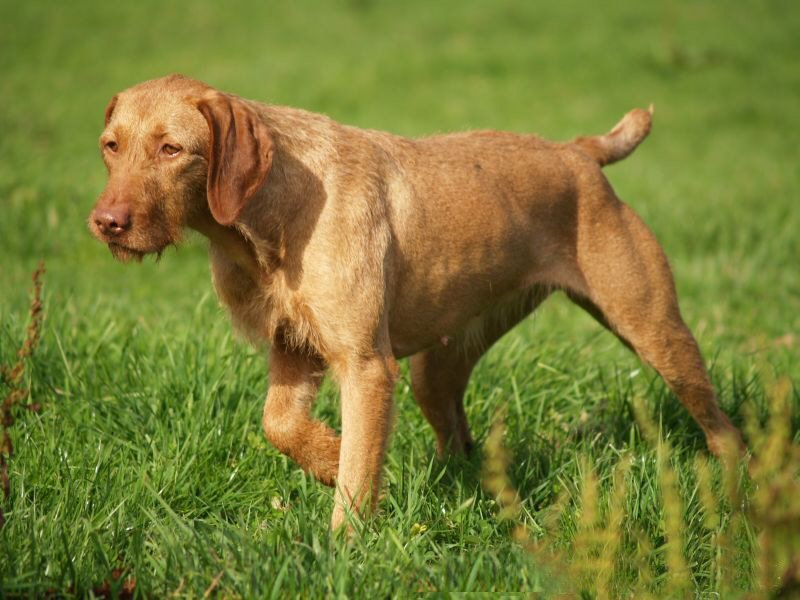
Ranges describe the registry profile, not a measurement, life expectancy, or health prediction for a particular dog. Separate sex or variety ranges are preserved where the source supplies them.
Source characteristics at a glance
The registry uses an ordinal 1–5 scale. A higher number indicates more of the named trait, not a better dog or a compatibility score. These descriptions are general and are not clinical measurements.
History and original work
The Wirehaired Vizsla developed in Hungary in the 1930s from Vizsla and German Wirehaired Pointer ancestry. Hunters wanted similar versatile work with a sturdier frame and denser covering for difficult terrain and weather. It is a separately developed breed rather than merely a grooming variation of the smooth Vizsla.
Training & behavior
Reward a steady wait before releasing a retrieve and make gentle delivery worthwhile. Vary short searching exercises and practice comfortable separation in small steps. Introduce feet, beard, and ear handling cooperatively. Clear structure and rewards suit a sensitive dog better than escalating pressure when distractions appear.
Daily needs & enrichment
Combine scent searches, controlled land and water retrieves, and progressively conditioned hikes or running after maturity. Provide secure opportunities to move and safe water exits. Inspect feet after cover and include recovery, adapting the challenge to growth and fitness rather than treating every energetic dog alike.
Coat care
Wipe ordinary surface dirt with a damp cloth and brush loose hair gently, checking the harsh jacket, beard, ear bases, armpits, and feet after fieldwork. Texture varies, so remove debris and ready loose coat without scraping with a sharp shedding blade or imposing an elaborate terrier pattern.
Bathe when dirt requires it with dog shampoo, rinse thoroughly, and dry the inner coat and beard with towels and comfortable airflow. Limited foot and sanitary tidying may help while preserving the natural covering. Avoid routine body shaving, pulling firmly attached hair, and leaving wet facial hair tangled against the skin.
Living Environment & Daily Needs
Give a Wirehaired Vizsla substantial exercise and engaging lessons alongside gentler familiar downtime. Secure outings, comfortable rest, and routine coat care should accompany purposeful activity rather than demand being judged from appearance.
Practical question
Is the wire coat simply a smooth Vizsla left untrimmed?
No. This is a distinct breed with a harsh working covering. Groom for its actual texture and maintain the beard and inner coat rather than copying the smooth variety’s routine.
Plan care for the individual dog
Budget, time alone and household compatibility depend on the individual dog and your circumstances. Use our care budget guide, time-alone planning guide and questions before adopting alongside the breed-specific source information above.
Health questions for a veterinarian
Hip evaluation and regular eye examination are core club recommendations, with elbow, cardiac, and hyperuricosuria assessment also relevant. Hyperuricosuria can increase susceptibility to urinary stones; a specific genetic result does not assess every cause of urinary trouble. Request actual reports and family history. Straining without passing urine is urgent, while persistent lameness or visual change also needs assessment. Share previous medication or anesthetic reactions with the veterinary team rather than independently withholding preventive care.
Editorial update: October 24, 2026. General information; individual care requires veterinary assessment. No veterinary review is claimed. See our Editorial Policy for sourcing and review practices.