Ranges describe the registry profile, not a measurement, life expectancy, or health prediction for a particular dog. Separate sex or variety ranges are preserved where the source supplies them.
Source characteristics at a glance
The registry uses an ordinal 1–5 scale. A higher number indicates more of the named trait, not a better dog or a compatibility score. These descriptions are general and are not clinical measurements.
History and original work
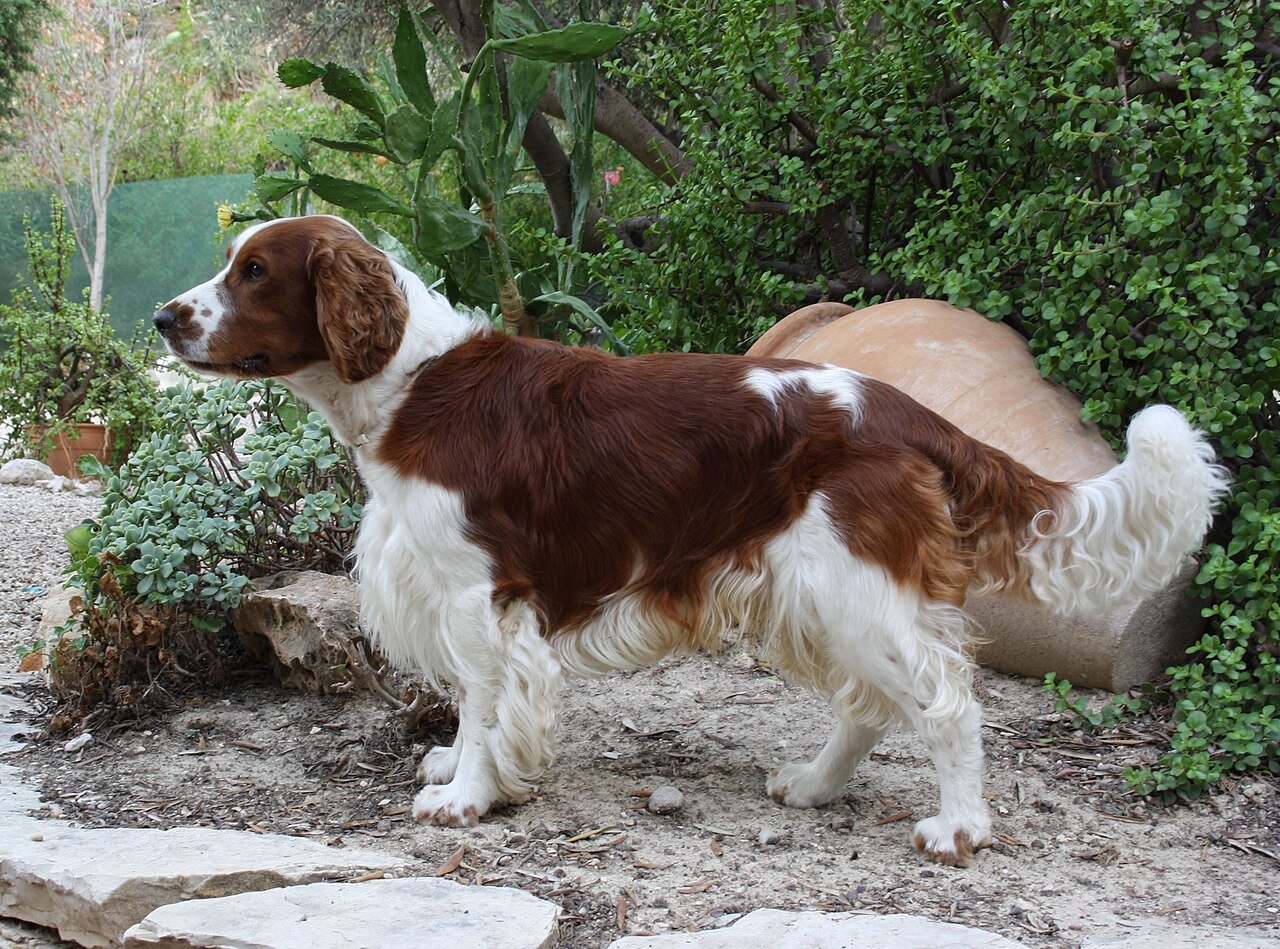
The Welsh Springer Spaniel developed in Wales as a red-and-white bird dog working through cover. Welsh and English Springers became separately maintained breeds in the early twentieth century. Stories projecting modern breed identity into very ancient images should be treated cautiously rather than as a complete historical pedigree.
Training & behavior
Reward a steady wait, controlled searching, and gentle delivery during retrieves. Let a reserved dog observe newcomers without forced greetings. Practice returning attention around birds at a manageable distance and keep safe boundaries. Introduce ear and foot handling early so routine care remains cooperative.
Daily needs & enrichment
Combine exploring walks, scent tasks, and land or safely introduced water retrieves. Build stamina progressively and choose suitable footing for turns and longer routes. Inspect feathering and feet after cover and provide quiet recovery. Close company is valuable alongside activity, not a replacement for useful sporting work.
Coat care
Brush at least weekly with a soft brush and use a slicker or metal comb gently through ear hair, chest, armpits, belly, leg feathering, and tail. Check these areas after brushy outings and remove seeds before a knot tightens. Keep the red-and-white coat’s natural practical outline.
Bathing around monthly may suit the individual, with spot cleaning for actual dirt. Detangle first, rinse mild dog shampoo thoroughly, and dry roots and ear furnishings with comfortable airflow. Limited foot and sanitary tidying can help. Avoid scissors against hidden ear skin, damp compacted feathering, and routine body shaving to avoid combing.
Living Environment & Daily Needs
Provide a Welsh Springer active games and training alongside everyday walks. Plan dependable guidance around tempting distractions, comfortable rest, and regular feathering care so its sporting energy has useful, safe outlets.
Practical question
Does reserve with unfamiliar people mean a puppy should be passed from person to person?
No. Allow observation and a voluntary approach, reward calm behavior, and increase familiarity gradually instead of forcing contact.
Plan care for the individual dog
Budget, time alone and household compatibility depend on the individual dog and your circumstances. Use our care budget guide, time-alone planning guide and questions before adopting alongside the breed-specific source information above.
Health questions for a veterinarian
Hip and elbow evaluation, ophthalmologist examination, and thyroid assessment are documented club recommendations. Joint imaging, eye inspection, and thyroid testing answer different questions, so request the actual dated reports rather than one generic clearance. Persistent limping, visual change, unexplained weight or activity changes, or painful recurring ears need assessment. A normal parental result does not exclude every later condition, and apparent enthusiasm in the field should not override a change in comfort or recovery.
Editorial update: October 26, 2026. General information; individual care requires veterinary assessment. No veterinary review is claimed. See our Editorial Policy for sourcing and review practices.