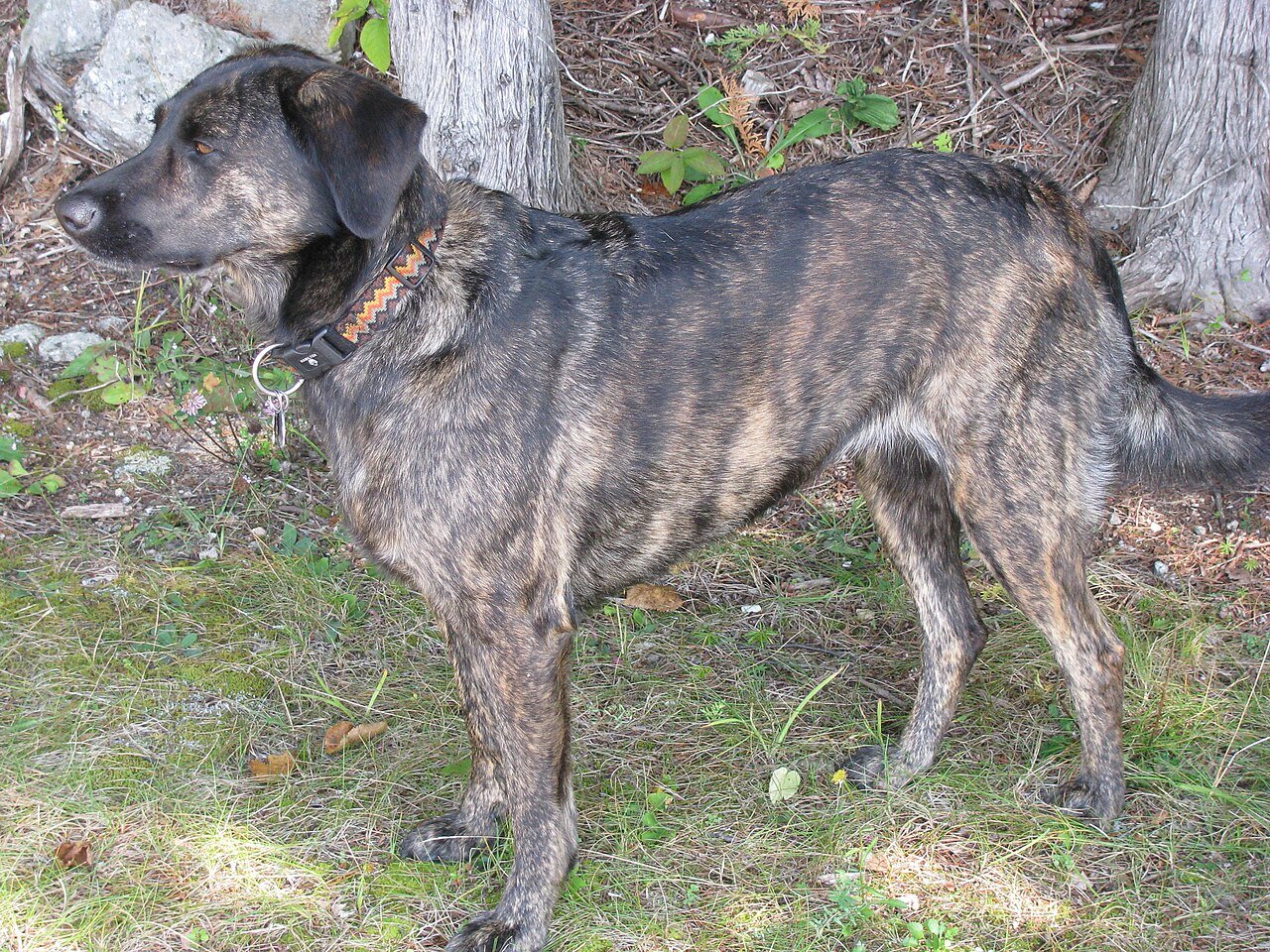
Ranges describe the registry profile, not a measurement, life expectancy, or health prediction for a particular dog. Separate sex or variety ranges are preserved where the source supplies them.
Source characteristics at a glance
The registry uses an ordinal 1–5 scale. A higher number indicates more of the named trait, not a better dog or a compatibility score. These descriptions are general and are not clinical measurements.
History and original work
The Treeing Tennessee Brindle developed in the United States from brindle cur-type tree dogs, with organized preservation led by Reverend Earl Phillips in the 1960s. Dogs from Appalachian and Ozark regions contributed. Its carrying voice has a working purpose: announcing treed game.
Training & behavior
Use a clear cue to begin a search and reward quiet attention when it ends. Teach returning from mild distractions within secure boundaries and rehearse gates on a lead. Do not punish baying while repeatedly leaving the dog in situations that trigger it. Provide useful alternatives and a predictable resting routine.
Daily needs & enrichment
Lay scent trails, vary exploring walks, and develop stamina gradually for longer woodland routes. Keep pursuit away from roads with a suitable line or enclosure. Inspect feet and skin after cover and give recovery after focused work rather than using unsupervised roaming as the activity plan.
Coat care
Brush the short smooth coat weekly with a soft-bristle brush or hound glove. Brindle hair can obscure a small irritated patch, so part it when checking the belly, toes, and harness line. Remove surface debris gently and look beneath ear flaps after outdoor work.
Bathe occasionally for soiling, rinse dog shampoo completely, and towel-dry. No routine body trim is needed. Keep nails comfortable for a secure gait and dry outer ears after wet outings. Avoid abrasive scraping, deep cotton swabs, and repeated cosmetic cleaning of a painful or persistently smelly ear.
Living Environment & Daily Needs
A Treeing Tennessee Brindle needs safe outlets for hunting determination and regular work with a caregiver. Plan boundaries around scents and patient guidance of baying near neighbors, with comfortable rest after shared activity.
Practical question
Is baying always a sign that the dog is ignoring training?
No. It is part of the treeing background. Teach a clear finish, reward quiet alternatives, and manage repeated triggers rather than treating every vocal response as a personal challenge.
Plan care for the individual dog
Budget, time alone and household compatibility depend on the individual dog and your circumstances. Use our care budget guide, time-alone planning guide and questions before adopting alongside the breed-specific source information above.
Health questions for a veterinarian
Breed-wide disease frequencies and formal screening recommendations are limited. Request actual family records and discuss appropriate clinical evaluations rather than treating a sparse disease list as proof of freedom from inherited illness. Persistent lameness, altered hearing, recurrent ear discharge, or unexplained poor recovery warrants assessment. Check field injuries and maintain individual preventive care. A normal commercial DNA panel cannot exclude every joint, ear, internal, or neurological problem.
Editorial update: October 24, 2026. General information; individual care requires veterinary assessment. No veterinary review is claimed. See our Editorial Policy for sourcing and review practices.