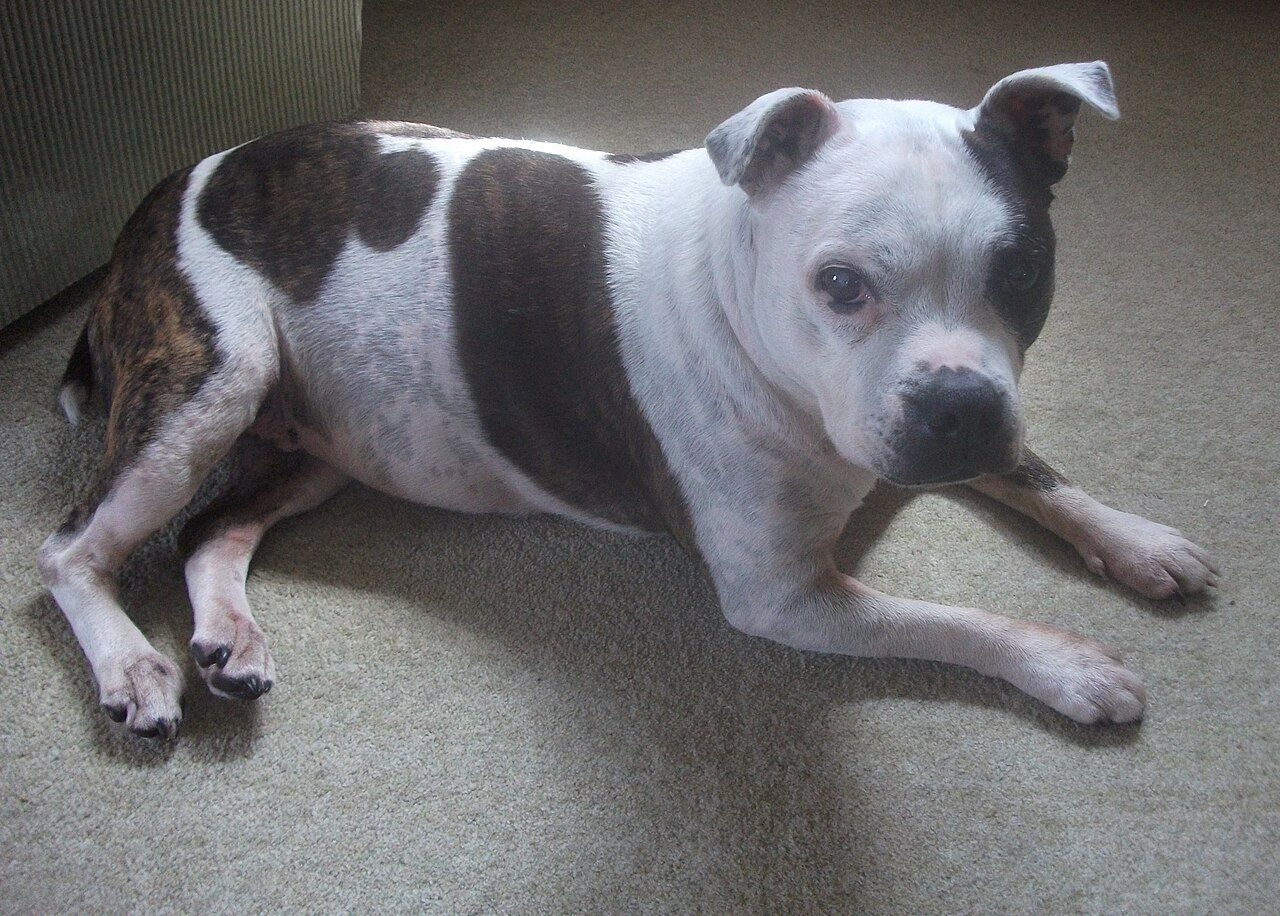
Ranges describe the registry profile, not a measurement, life expectancy, or health prediction for a particular dog. Separate sex or variety ranges are preserved where the source supplies them.
Source characteristics at a glance
The registry uses an ordinal 1–5 scale. A higher number indicates more of the named trait, not a better dog or a compatibility score. These descriptions are general and are not clinical measurements.
History and original work
The Staffordshire Bull Terrier developed in England from bull-and-terrier ancestry associated with historical fighting and other blood sports. Modern breed development established a distinct compact, muscular terrier. Household affection should coexist with realistic individual assessment and responsible management of interactions.
Training & behavior
Reward loose-lead walking and a calm greeting before excitement escalates. Teach releasing a tug toy in exchange for restarting play. Supervise dog interactions with room for separation and stop when play becomes tense. Social experience is useful but cannot guarantee compatibility with every dog or vulnerable animal.
Daily needs & enrichment
Use controlled tug, scent searches, and progressively conditioned walks or hikes. Avoid repetitive abrupt turns and strenuous work before appropriate maturity. Choose cool conditions and stop for breathing difficulty or poor recovery. Strength and enthusiasm are reasons to plan carefully rather than push through heat or exhaustion.
Coat care
Brush weekly with a hound glove or soft grooming mitt, checking the close coat over elbows, belly, toes, and harness contact points. Remove loose hair with light pressure and inspect any abrasion after vigorous play. The short covering needs no stripping or routine body clipping.
Bathe occasionally for soiling with dog shampoo, rinse thoroughly, and towel-dry. Check ear flaps and wipe visible debris gently without forcing swabs into canals. Keep nails comfortable for traction. Avoid abrasive scrubbing and repeated perfumed baths for persistent itching or odor; investigate the cause instead.
Living Environment & Daily Needs
Plan play, activity, and reliable household manners for a muscular Stafford. Thoughtful social experiences and responsible handling should accompany exercise and rest, with individual interactions assessed rather than predicted from an engaging familiar manner.
Practical question
Does being affectionate with people guarantee relaxed play with every dog?
No. Assess individuals, supervise closely, and interrupt tense interactions early. Reward calm alternatives and maintain practical separation when needed.
Plan care for the individual dog
Budget, time alone and household compatibility depend on the individual dog and your circumstances. Use our care budget guide, time-alone planning guide and questions before adopting alongside the breed-specific source information above.
Health questions for a veterinarian
Specific DNA testing addresses L-2-hydroxyglutaric aciduria and hereditary juvenile cataracts, alongside eye and joint evaluation. L-2-HGA is a metabolic disorder that can cause neurological signs; the cataract test does not exclude every other eye condition. Clinical eye examination remains important. Ask for actual reports, including any hip and elbow assessments. A new seizure, altered coordination, repeated lameness, or painful eye needs attention despite normal screening. Genetic clearance is not a general health guarantee.
Editorial update: October 24, 2026. General information; individual care requires veterinary assessment. No veterinary review is claimed. See our Editorial Policy for sourcing and review practices.